Commemoration DAY of
St. Stephen of Ulne
and the Holy Martyrs Goharine,
Tsamides, Tyukikos, and Ratikos
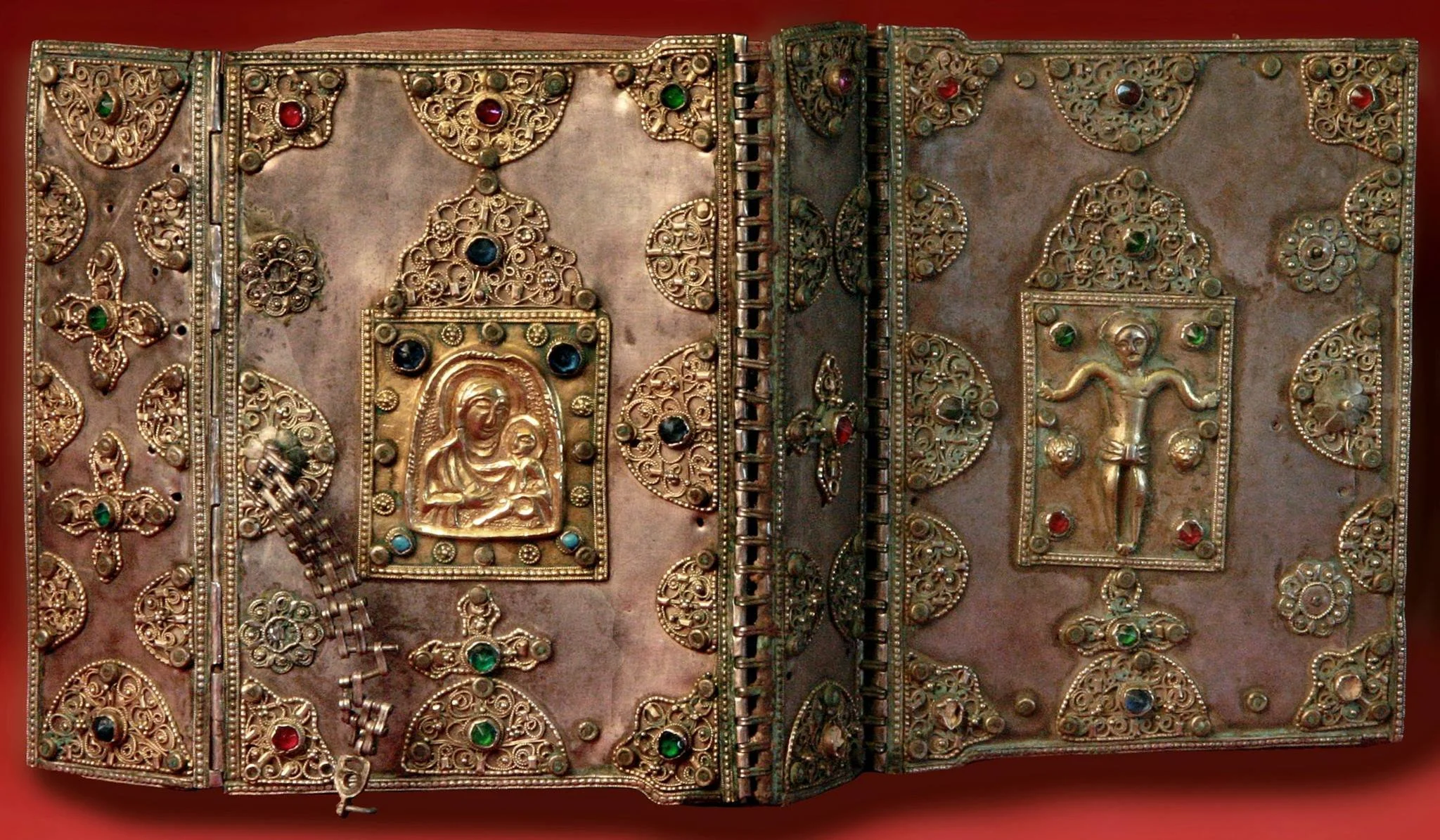
St. Stephen of Ulne (†363)
Saint Stephen was born in the city of Kokison, on the slopes of the Taurus Mountains. His parents were Lazarus and Mary. He was considered a child granted in answer to prayer and was raised under the care and spiritual guidance of the priest who baptized him.
Tradition relates:
"This venerable priest celebrated the Divine Liturgy every day, and every Sunday, together with the other Christians, he gave Stephen Communion of the life-giving Body and Blood of the Lord. Thus the young Stephen grew in wisdom and in the gifts of the Holy Spirit. By the age of fifteen he had already been instructed in the divine commandments and was well versed in the Holy Scriptures."
When the priest sensed that his earthly life was drawing to an end, he summoned Stephen and said:
"My son, you have now reached maturity. First remain steadfast in your own faith, and then strengthen the little flock, so that they may not waver or fall into doubt until God sends them another shepherd."
When Emperor Julian the Apostate marched against the Persians, he arrived at Caesarea and dispatched persecutors throughout the surrounding regions to compel Christians to return to pagan worship. One of his officials came to Kokison, spreading terror everywhere.
Seeing the fear among the Christians, Stephen worried that some might be enticed by promises of favor or lose their faith under torture. He urged them to leave the city and take refuge in the mountains, where they could continue living as Christians in greater safety.
Taking with him his family, companions, and seven consecrated virgins—a total of thirty-three people—he fled into the mountains. Along the way, his father Lazarus died a righteous death. The others found shelter in a large cave beside a spring of fresh water.
There they gave thanks to God, and:
"Under Stephen's leadership they continually praised God with hymns and psalms."
A shepherd discovered their hiding place and reported them to the newly appointed persecuting governor, who sent soldiers to arrest them.
When some began to weep and lose heart, Stephen encouraged them:
"Do not be afraid. Let us go. We have lived together until now; let us also receive together the crown of martyrdom."
Brought before the governor, they were told:
"Abandon your stubbornness, obey the emperor's command, and no one will harm you. You will live peacefully again in your city."
Speaking on behalf of all, Stephen replied that they could never renounce their faith and were prepared to endure every torture, even death itself.
The governor ordered the women imprisoned and the men bound, severely beaten, and subjected to various tortures. During these sufferings, a young man named Bagrat died.
The imprisoned women were then brought before the governor and urged to deny Christ. Stephen's mother, Mary, stepped forward and declared that they were prepared to die for the Creator of heaven and earth rather than worship idols.
The women were led outside the city and beheaded one by one.
The men were first condemned to be burned alive. When it became evident that the flames did not harm them, they too were taken outside the city and beheaded near the place where the women had suffered martyrdom.
The Armenian Synaxarion preserves the names of each of the martyrs individually.
The courage and serenity with which they met death deeply moved many pagans. As a result, instead of only thirty-three martyrs, more than ninety new converts embraced Christianity.
By this time Emperor Julian had been killed during his Persian campaign, and his successor brought the persecutions to an end.
Three churches were later built on the sites of their martyrdom. One was erected where the women had been beheaded, not far from the present-day city of Maraş. Stephen came to be known as "Stephen of Ulne" because the church dedicated to him stood near that town.
The ancient Armenian Synaxaria commemorate Stephen and his companions on August 1. Today, the Armenian Apostolic Church celebrates their feast on the third Monday after the Feast of the Assumption of the Holy Mother of God.
Hymn to Saint Stephen of Ulne
The Armenian Church has preserved a unique hymn in his honor, consisting of two sections (seven stanzas).
Martyr and witness of Christ, O holy Stephen,
You accepted sufferings
And became a companion of the heavenly hosts.
Pray to God to grant us everlasting life.True to your name, you became the crown of the Church,
Adorning the path with your guiding light.
You encouraged the chosen saints who followed you.
Pray to God to grant us everlasting life.You were chosen by the Spirit to become the Church's joy,
And you enlightened the sons of Torgom.
Today the faithful rejoice
And celebrate the memory of your ascetic struggle.
Pray to God to grant us everlasting life.
The Holy Martyrs Goharine, Tsamides,
Tyukikos, and Ratikos
These four saints were brothers, the sons of an Armenian nobleman from Sebastia named David.
David had been taken captive and was released only after accepting Islam together with his eldest son, Areg. David's wife, however, remained a Christian and raised her four younger sons in the Christian faith. Their names were Goharinos, Ratikos, Tsamidos, and Tyukikos.
When they came of age, they enlisted in the army of Sebastia while openly practicing Christianity.
Eventually it became known that they were the sons of a Muslim father. They were accused of having abandoned Islam and were brought before the governor for interrogation.
Their elder brother Areg, who had embraced Islam, succeeded in obtaining their release. The four brothers, however, were dissatisfied with this outcome because it implied that they had been regarded as Muslims.
Consequently, they left military service. Ratikos entered the Monastery of the Holy Sign (Surb Nshan) as a monk, while the others continued to live openly as Christians.
They were once again denounced to the governor of Sebastia. During questioning, they openly confessed that they were Christians. Neither threats, promises, nor torture could persuade them to renounce their faith.
Finally, an order was issued for their execution, and on January 28, 1156, all four brothers were beheaded.
Their bodies and heads were buried beside a river near a place known as the Crossroads.
St. Theodore
Goharinos' son Theodore, who had become a monk as an adult, was later accused before the governor of speaking against him for ordering the deaths of his father and uncles.
He was arrested and, according to the usual custom, urged to renounce Christianity. He firmly refused.
As a result, he was beaten, tortured, and imprisoned.
Later he was forcibly taken from prison and compelled to enter a mosque. Although soldiers tried to force him inside with swords and clubs, he steadfastly refused. Frustrated, they returned him to prison.
Eventually he was handed over to an apostate judge named Thotos, who had him brutally beaten through the streets of the city before putting him to death by cutting his body into pieces. Theodore suffered martyrdom five months after his father's execution.
The Armenian Apostolic Church commemorates the Goharine Martyrs together with Saint Stephen of Ulne on the Monday following the Sunday of the Assumption of the Holy Mother of God.
Although their martyrdom is mentioned only briefly in some editions of the Armenian Synaxarion, other Armenian Synaxaria recount their story in greater detail. One commemorates them on July 28, while another places their feast on July 30.
SCRIPTURE READINGS
~ Proverbs 10:1-7 ~
The proverbs of Solomon. A wise child makes a glad father, but a foolish child is a mother's grief. Treasures gained by wickedness do not profit, but righteousness delivers from death. The Lord does not let the righteous go hungry, but he thwarts the craving of the wicked. A slack hand causes poverty, but the hand of the diligent makes rich. A child who gathers in summer is prudent, but a child who sleeps in harvest brings shame. Blessings are on the head of the righteous, but the mouth of the wicked conceals violence. The memory of the righteous is a blessing, but the name of the wicked will rot.
~ Isaiah 44:24-26 ~
Thus says the Lord, your Redeemer, who formed you in the womb: I am the Lord, who made all things, who alone stretched out the heavens, who by myself spread out the earth; who frustrates the omens of liars, and makes fools of diviners; who turns back the wise, and makes their knowledge foolish; who confirms the word of his servant, and fulfills the prediction of his messengers.
~ Hebrews 4:11-15 ~
Let us therefore make every effort to enter that rest, so that no one may fall through such disobedience as theirs. Indeed, the word of God is living and active, sharper than any two-edged sword, piercing until it divides soul from spirit, joints from marrow; it is able to judge the thoughts and intentions of the heart. And before him no creature is hidden, but all are naked and laid bare to the eyes of the one to whom we must render an account. Since, then, we have a great high priest who has passed through the heavens, Jesus, the Son of God, let us hold fast to our confession. For we do not have a high priest who is unable to sympathize with our weaknesses, but we have one who in every respect has been tested as we are, yet without sin.
~ Holy Gospel of St. Matthew 5:1-12 ~
When Jesus saw the crowds, he went up the mountain; and after he sat down, his disciples came to him. Then he began to speak, and taught them, saying: "Blessed are the poor in spirit, for theirs is the kingdom of heaven. "Blessed are those who mourn, for they will be comforted. "Blessed are the meek, for they will inherit the earth. "Blessed are those who hunger and thirst for righteousness, for they will be filled. "Blessed are the merciful, for they will receive mercy. "Blessed are the pure in heart, for they will see God. "Blessed are the peacemakers, for they will be called children of God. "Blessed are those who are persecuted for righteousness' sake, for theirs is the kingdom of heaven. "Blessed are you when people revile you and persecute you and utter all kinds of evil against you falsely on my account. Rejoice and be glad, for your reward is great in heaven, for in the same way they persecuted the prophets who were before you.