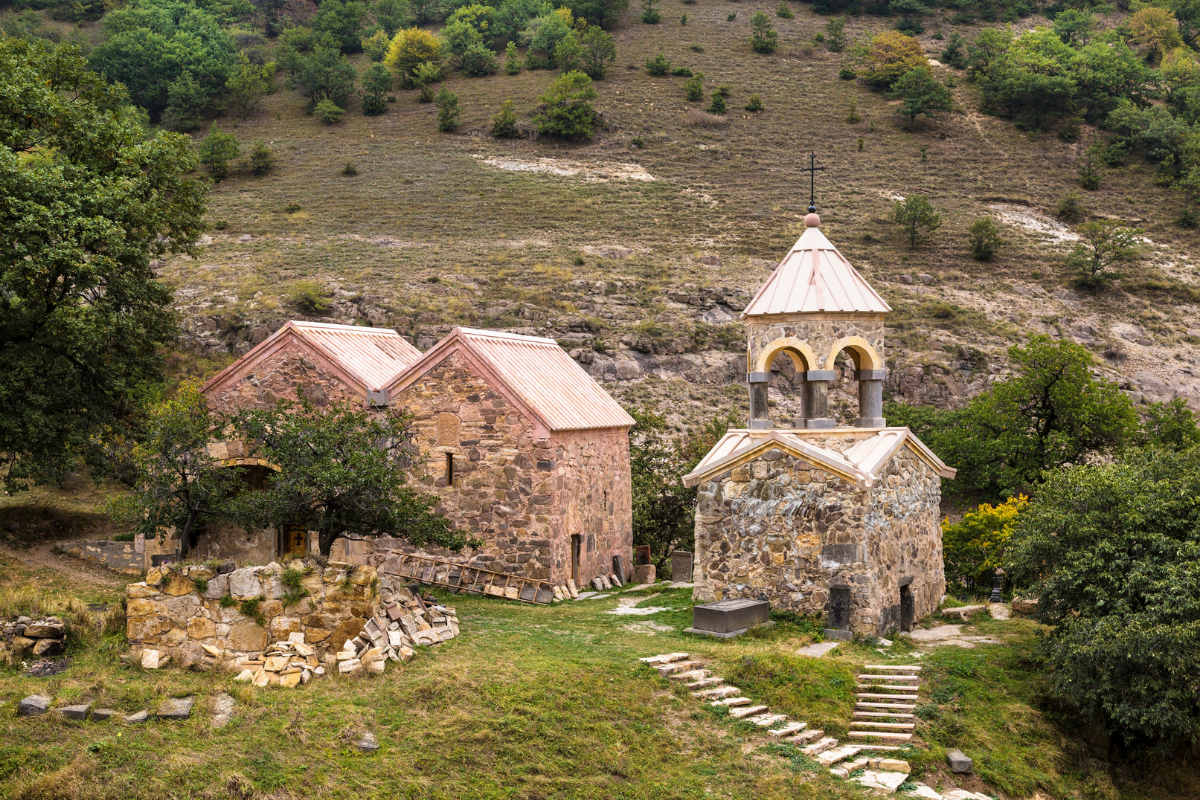
June 4, 2026 - St. John the Baptist and Bishop Athenogenes
Jun
4
12:00 AM00:00

June 4, 2026 - St. John the Baptist and Bishop Athenogenes

  • St. Mary Armenian Apostolic Church (map)
  • Google Calendar ICS

Commemoration Day of

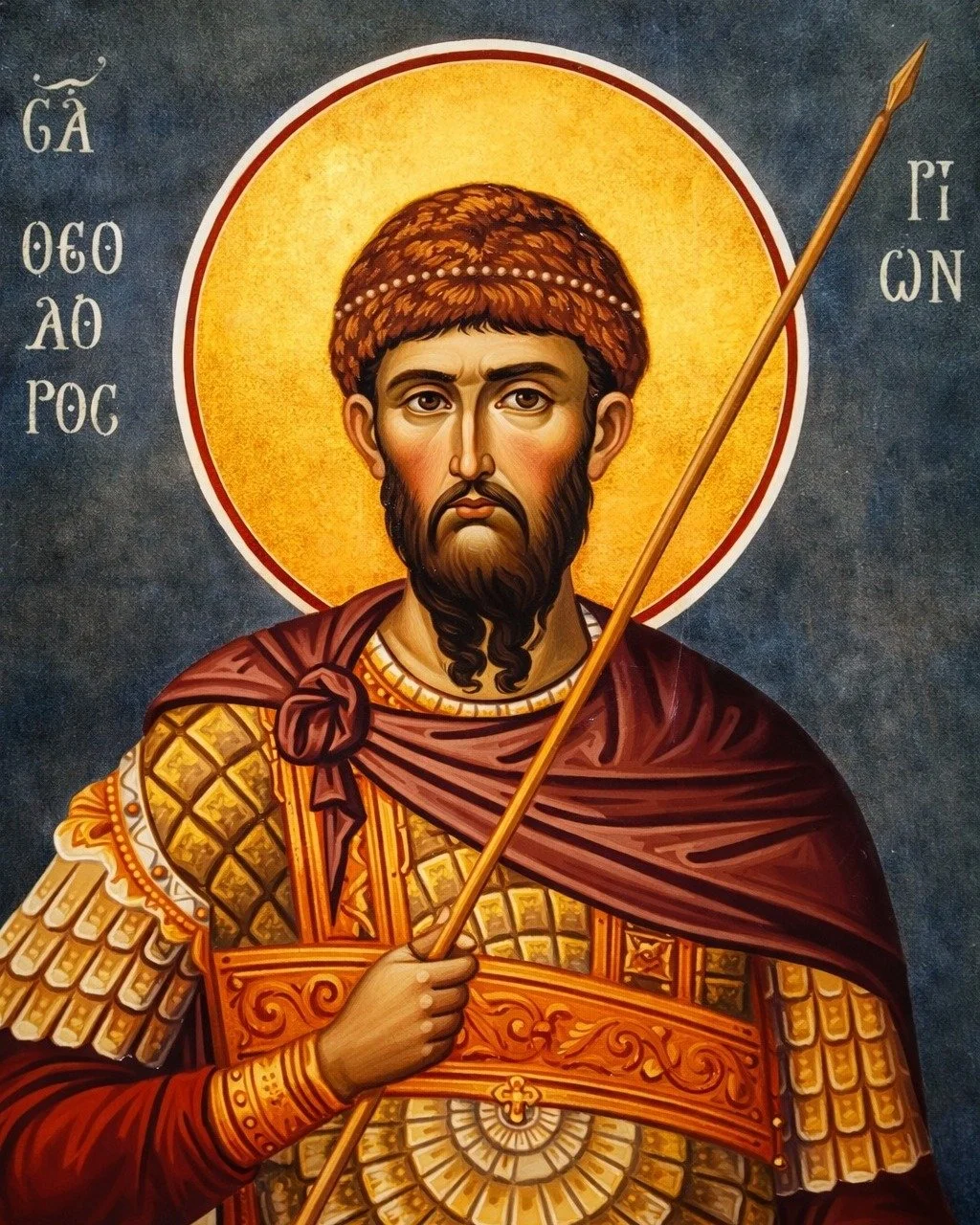
St. John the Baptist

and

Bishop Athenogenes

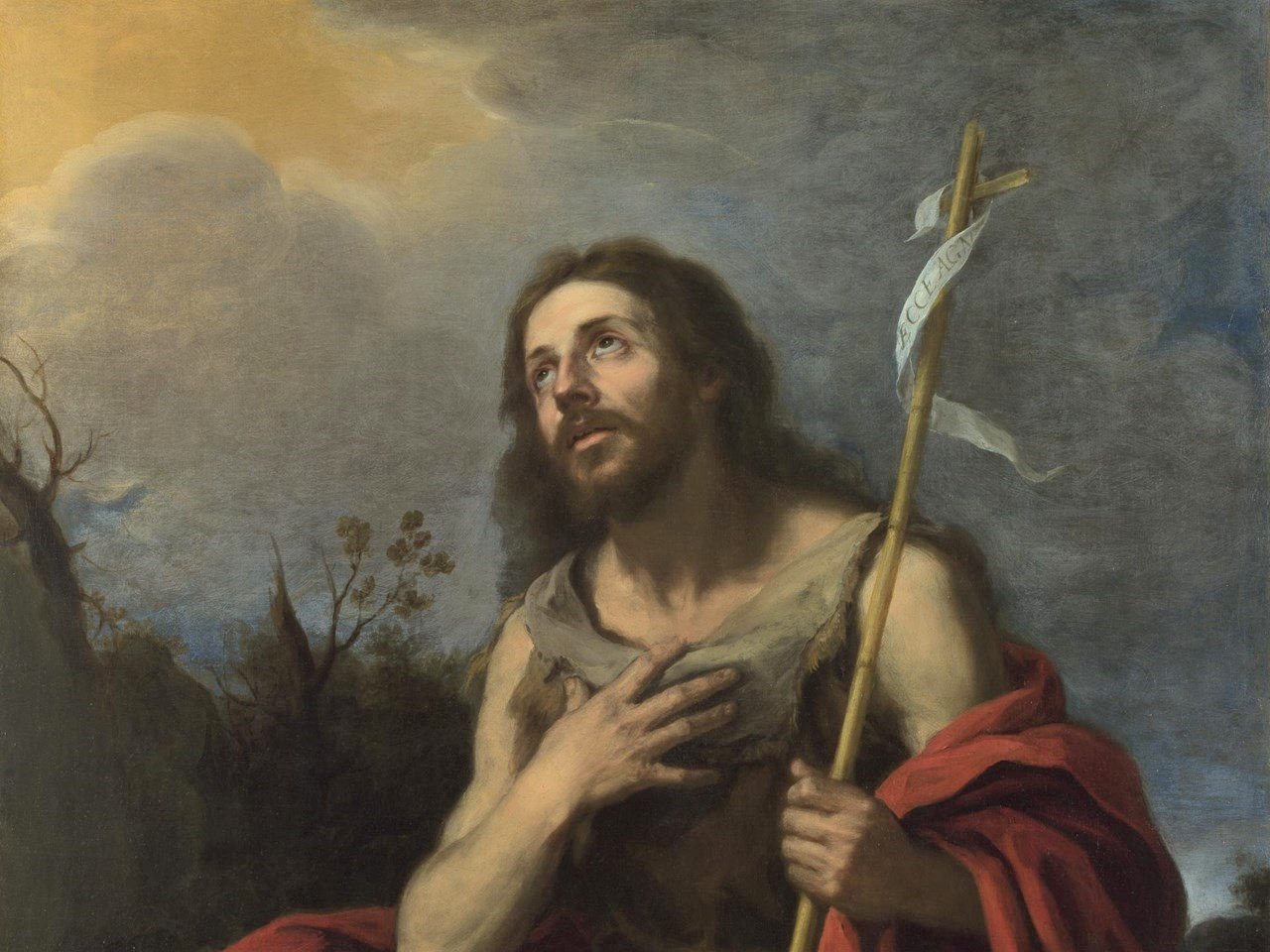
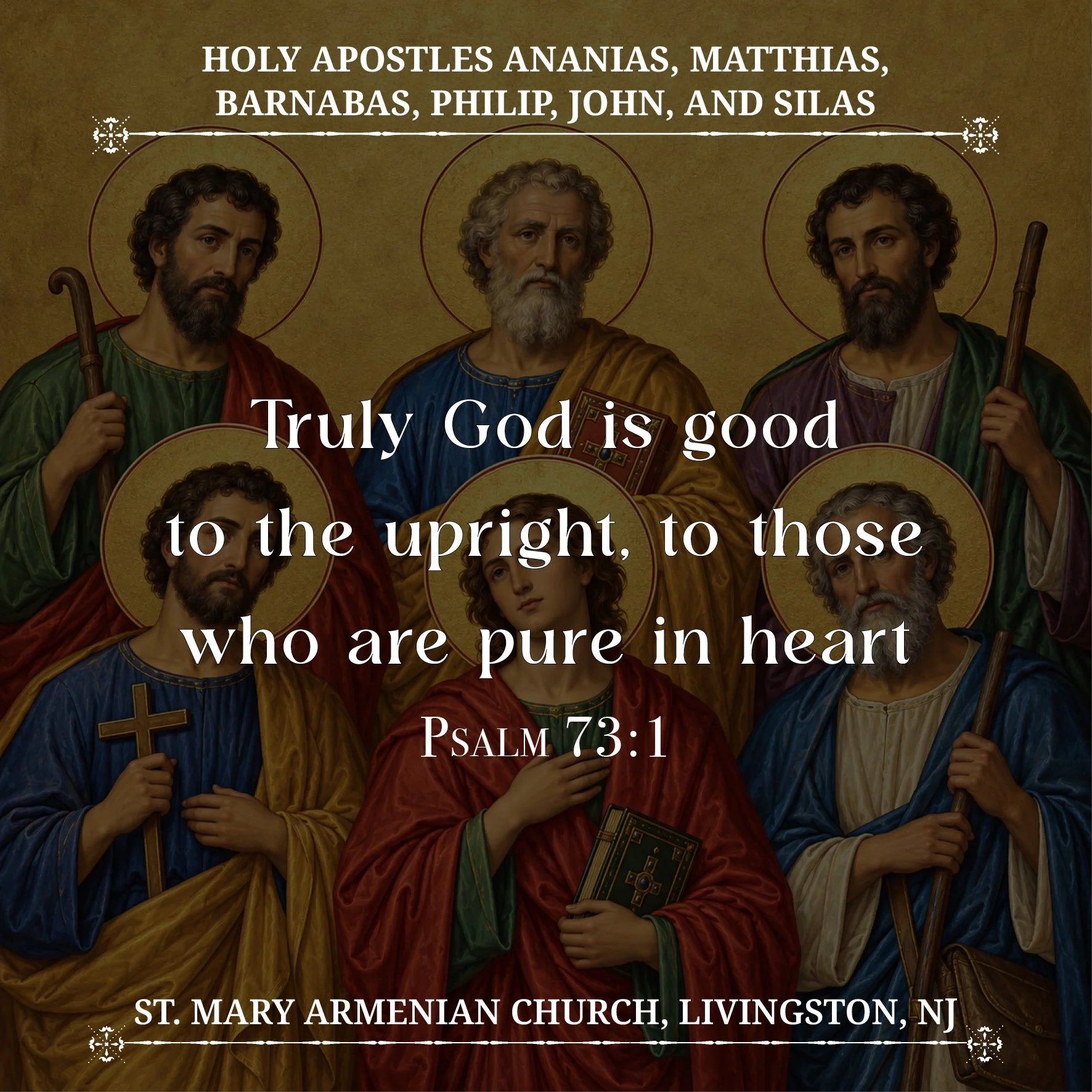
St. John the Baptist

In the Gospels, after Jesus Christ, John the Baptist is the greatest figure and the central character of the opening chapters of the New Testament. He became the official herald of the “Kingdom of God,” that is, the beginning of the Christian era.

As is well known, John was a child of promise, and his birth took place under miraculous circumstances. His future mission was carefully described by the angel who announced his birth to his father: “For he will be great in the sight of the Lord. He shall drink neither wine nor strong drink, and he will be filled with the Holy Spirit even from his mother’s womb. He will turn many of the children of Israel to the Lord their God. He will go before Him in the spirit and power of Elijah, to turn the hearts of the fathers to the children and the disobedient to the wisdom of the righteous, to make ready a people prepared for the Lord.” (Luke 1:15–17)

John spent his childhood and youth away from people, in solitude, under the presence and grace of God.

He began his public ministry at the age of thirty, “in the fifteenth year of the reign of Tiberius Caesar” (Luke 3:1). His place of preaching was the Jordan Valley. In the Gospels, John is identified with the prophecy of Isaiah as “the voice of one crying in the wilderness,” saying: “Prepare the way of the Lord; make His paths straight. Every valley shall be filled, every mountain and hill shall be brought low; the crooked places shall be made straight, and the rough ways smooth.” (Luke 3:4–5)

John’s preaching was as simple and austere as his clothing, food, spirit, and way of life. It can be summarized in two words: repentance and righteousness.

“Repent, for the kingdom of heaven is at hand… Bear fruits worthy of repentance… Even now the axe is laid to the root of the trees; every tree that does not bear good fruit is cut down and thrown into the fire.” (Matthew 3:2; Luke 3:8–9)

He also taught: “Whoever has two tunics should share with the one who has none, and whoever has food should do likewise.” (Luke 3:11)

Seeing John’s bold preaching and great influence, some wondered whether he might be the Messiah. John answered: “I baptize you with water for repentance, but He who comes after me is mightier than I, whose sandals I am not worthy to carry. He will baptize you with the Holy Spirit and fire.” (Matthew 3:11)

The climax of John’s ministry was the baptism of Jesus and his proclamation that Jesus was the promised Messiah. When he saw Jesus approaching for baptism among the crowds, he recognized Him through his prophetic spirit and tried to prevent Him, saying: “I need to be baptized by You, and do You come to me?” (Matthew 3:14)

After Jesus insisted, John baptized Him and proclaimed: “Behold, the Lamb of God, who takes away the sin of the world!” (John 1:29)

He further testified: “I saw the Spirit descend from heaven like a dove and remain upon Him… And I have seen and borne witness that this is the Son of God.” (John 1:30–34)

After baptizing Jesus and proclaiming Him as the Messiah, John’s mission was essentially complete. Soon afterward, King Herod imprisoned him because John had rebuked him for taking his brother’s wife. Later, under tragic circumstances, Herod ordered John’s beheading.

Christ Himself held John in the highest regard. On one occasion He described him as: “More than a prophet.”

He identified him with the messenger foretold by the prophet Malachi and declared: “Among those born of women there has not risen anyone greater than John the Baptist. Yet the least in the kingdom of heaven is greater than he… For all the prophets and the Law prophesied until John. And if you are willing to accept it, he is Elijah who was to come.” (Matthew 11:11–14)

Like the great rabbis and teachers of his time, John had disciples.

The Jewish historian Josephus, who lived during John’s lifetime, also mentions him and confirms that he was executed by Herod.

In the Armenian Church, after the Holy Mother of God, John the Baptist is regarded as the greatest saint. He is closely connected with the history of Armenia and the Armenian Church. When Saint Gregory the Illuminator returned from Caesarea after his consecration during the conversion of Armenia, he brought relics of John the Baptist and placed them near the city of Mush, at one of the earliest known Armenian shrines. Later, the famous Monastery of Saint Karapet was built there, becoming one of the most renowned pilgrimage centers of the Armenian Church.

The Armenian Church has established four annual feasts in his honor:

  1. The Feast of his Nativity, eight days after Christmas.

  2. The Feast of his Beheading, on the Saturday following Easter.

  3. The Feast commemorating the transfer of his relics together with those of Bishop Athenogenes, on the Thursday of the Feast of Holy Etchmiadzin.

  4. A feast celebrated together with Job, on the Thursday of the third week after the Feast of the Assumption.

Many hymns and spiritual songs have been composed in his honor, especially the hymns of the Blessing of Water service, in which John the Baptist occupies a central role.

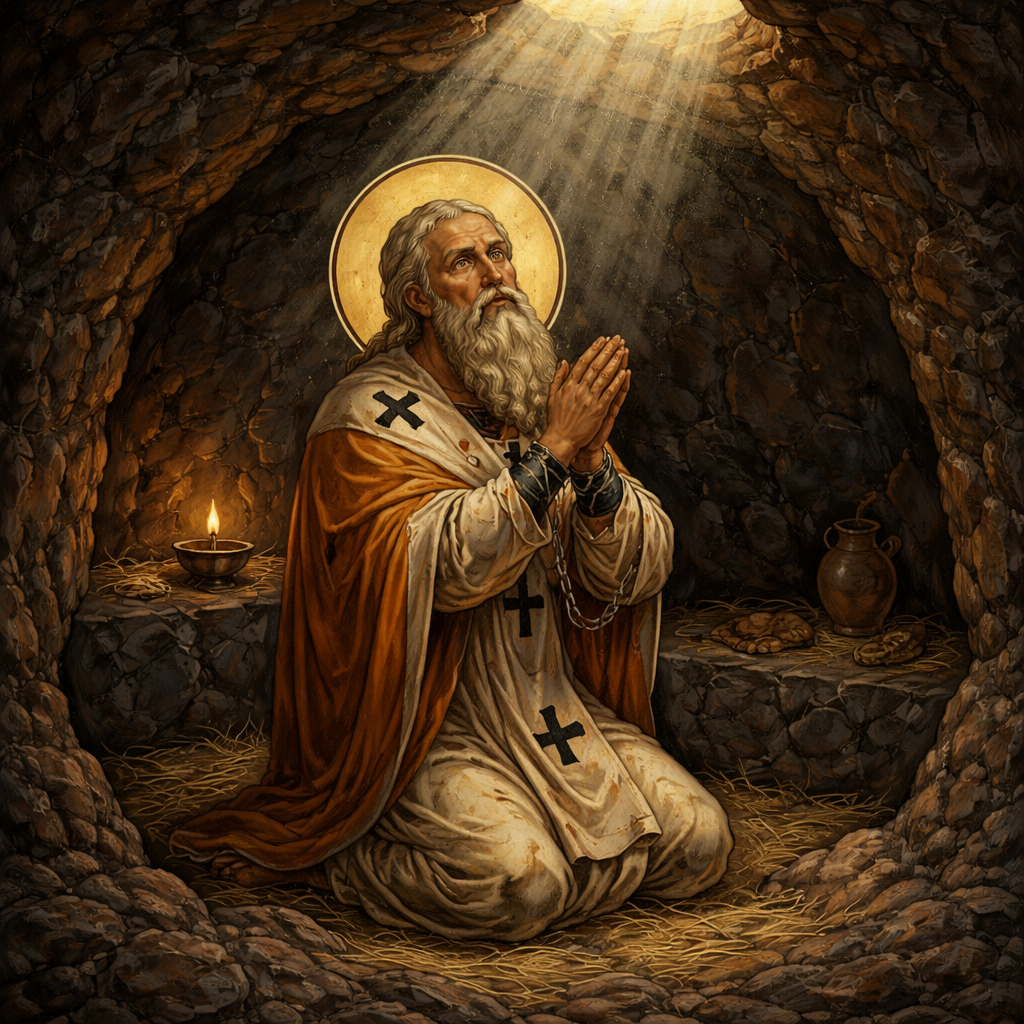
Bishop Athenogenes

The Greek form of his name is Athenogenes. He was born to Christian parents in Sebastia during the reign of Emperor Diocletian.

He was married and had children. Later he was ordained a priest and became the chorepiscopus (rural bishop) of his native city. Saint Gregory the Illuminator, before entering the service of King Tiridates, had married Athenogenes’ sister Mary during his youth.

According to tradition, Athenogenes killed a terrifying dragon through his prayers and pastoral staff. In gratitude, the Metropolitan of Sebastia consecrated him Bishop of the city of Pitakos.

Later, the governor of the region summoned him and his ten disciples before a tribunal. When they refused to offer sacrifices to idols, all were beheaded and received the crown of martyrdom.

Saint Gregory the Illuminator later brought Athenogenes’ relics to Armenia together with those of Saint John the Baptist and placed them in the Monastery of Glak in the district of Taron.

The Armenian Church celebrates his feast twice each year:

  1. On the Thursday following the First Sunday after Easter, together with Saint John the Baptist, commemorating the transfer of their relics to Armenia.

  2. On the Tuesday following the second Sunday after the Feast of the Transfiguration (Vardavar), together with his ten disciples, corresponding to July 16.

This feast honors both his episcopal ministry and his martyrdom for the Christian faith.


SCRIPTURE READINGS

~ Proverbs 15:21-26 ~

Folly is a joy to one who has no sense, but a person of understanding walks straight ahead. Without counsel, plans go wrong, but with many advisers they succeed. To make an apt answer is a joy to anyone, and a word in season, how good it is! For the wise the path of life leads upward, in order to avoid Sheol below. The Lord tears down the house of the proud, but maintains the widow's boundaries. Evil plans are an abomination to the Lord, but gracious words are pure.

~ Isaiah 22:20-24 ~

On that day I will call my servant Eliakim son of Hilkiah, and will clothe him with your robe and bind your sash on him. I will commit your authority to his hand, and he shall be a father to the inhabitants of Jerusalem and to the house of Judah. I will place on his shoulder the key of the house of David; he shall open, and no one shall shut; he shall shut, and no one shall open. I will fasten him like a peg in a secure place, and he will become a throne of honor to his ancestral house. And they will hang on him the whole weight of his ancestral house, the offspring and issue, every small vessel, from the cups to all the flagons.

~ 1 Peter 5:1-7~

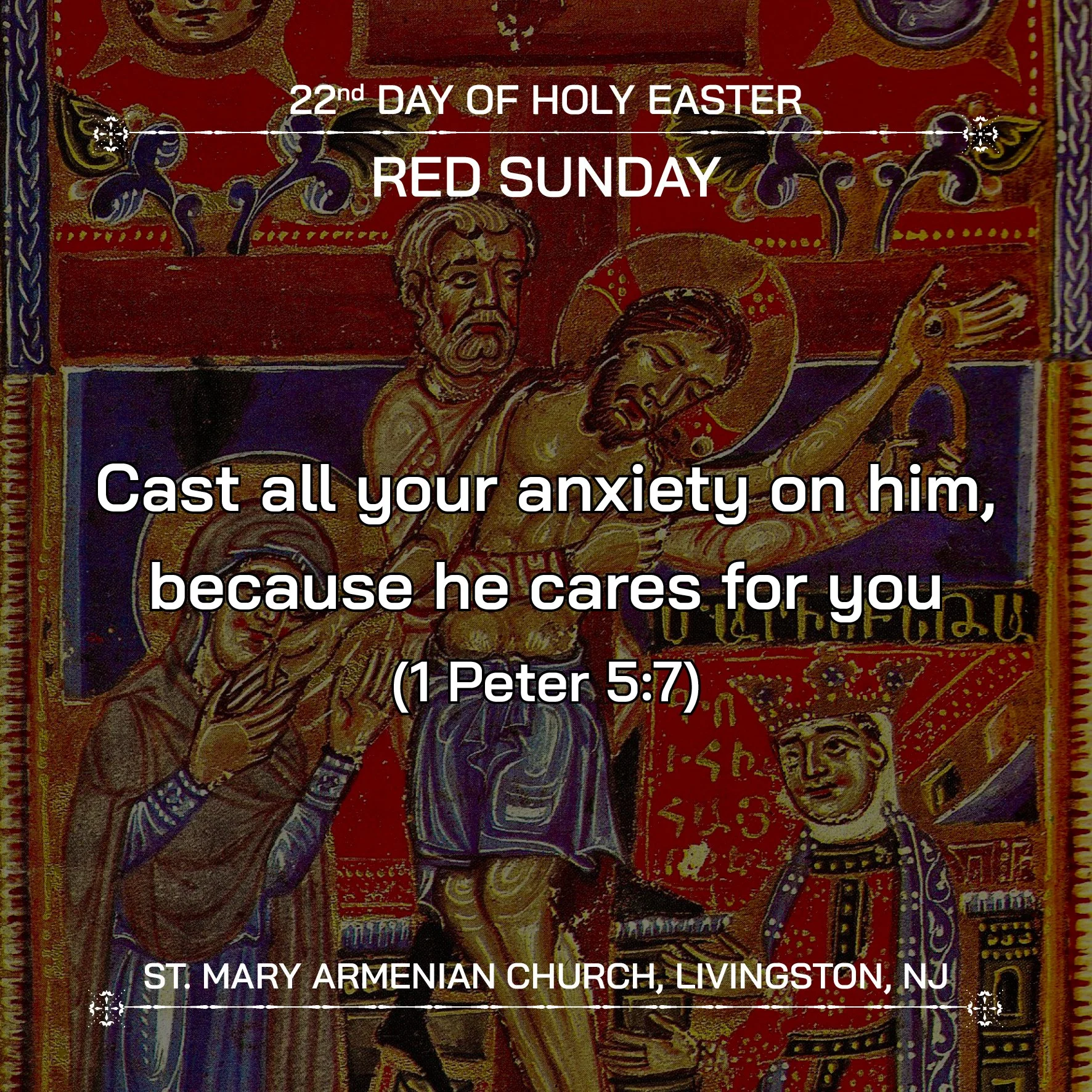
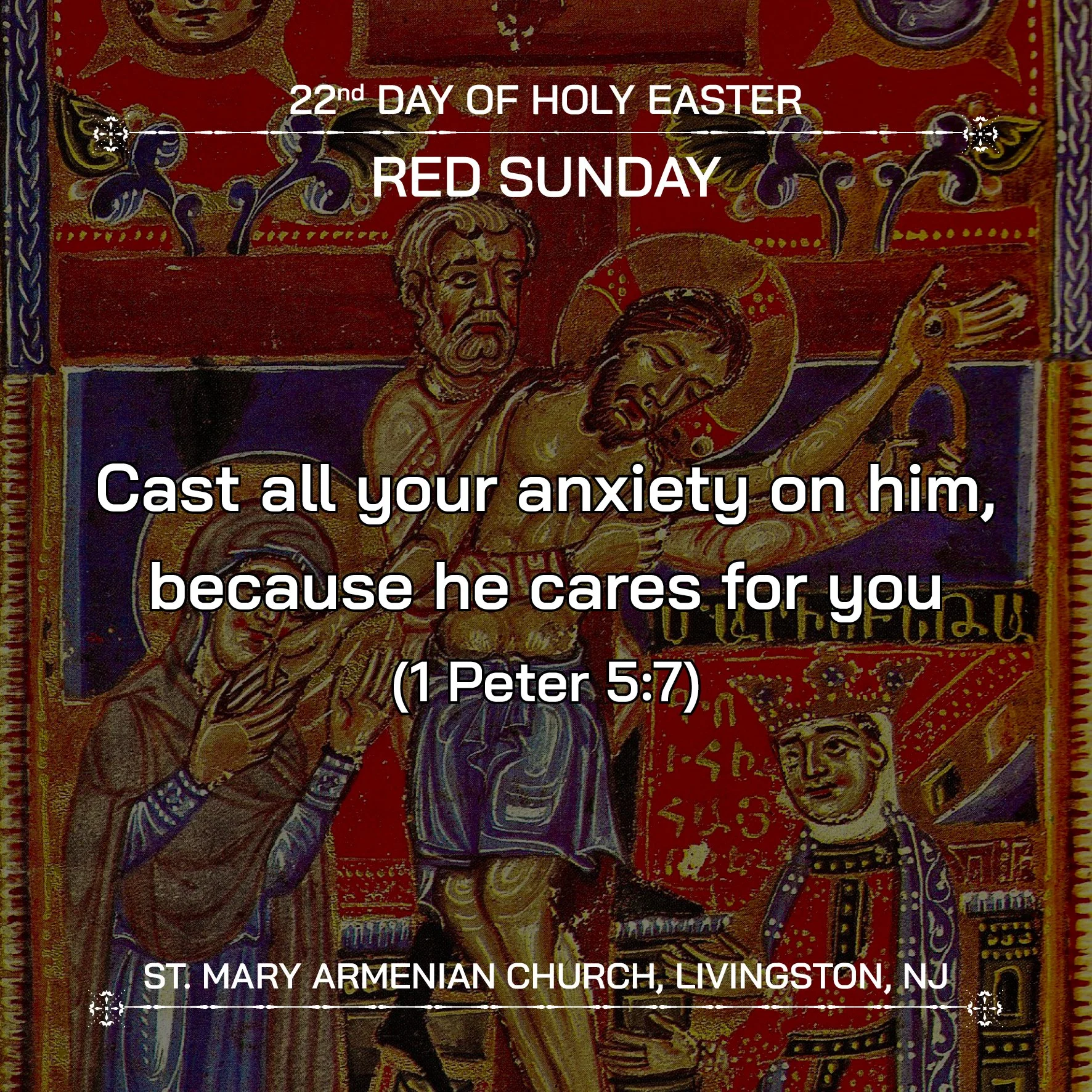
Now as an elder myself and a witness of the sufferings of Christ, as well as one who shares in the glory to be revealed, I exhort the elders among you to tend the flock of God that is in your charge, exercising the oversight, not under compulsion but willingly, as God would have you do it —not for sordid gain but eagerly. Do not lord it over those in your charge, but be examples to the flock. And when the chief shepherd appears, you will win the crown of glory that never fades away. In the same way, you who are younger must accept the authority of the elders. And all of you must clothe yourselves with humility in your dealings with one another, for "God opposes the proud, but gives grace to the humble." Humble yourselves therefore under the mighty hand of God, so that he may exalt you in due time. Cast all your anxiety on him, because he cares for you.

~ Holy Gospel of St. Matthew 11:2-14 ~

When John heard in prison what the Messiah was doing, he sent word by his disciples and said to him, "Are you the one who is to come, or are we to wait for another?" Jesus answered them, "Go and tell John what you hear and see: the blind receive their sight, the lame walk, the lepers are cleansed, the deaf hear, the dead are raised, and the poor have good news brought to them. And blessed is anyone who takes no offense at me." As they went away, Jesus began to speak to the crowds about John: "What did you go out into the wilderness to look at? A reed shaken by the wind? What then did you go out to see? Someone dressed in soft robes? Look, those who wear soft robes are in royal palaces. What then did you go out to see? A prophet? Yes, I tell you, and more than a prophet. This is the one about whom it is written, "See, I am sending my messenger ahead of you, who will prepare your way before you.' Truly I tell you, among those born of women no one has arisen greater than John the Baptist; yet the least in the kingdom of heaven is greater than he. From the days of John the Baptist until now the kingdom of heaven has suffered violence, and the violent take it by force. For all the prophets and the law prophesied until John came; and if you are willing to accept it, he is Elijah who is to come.

View Event →
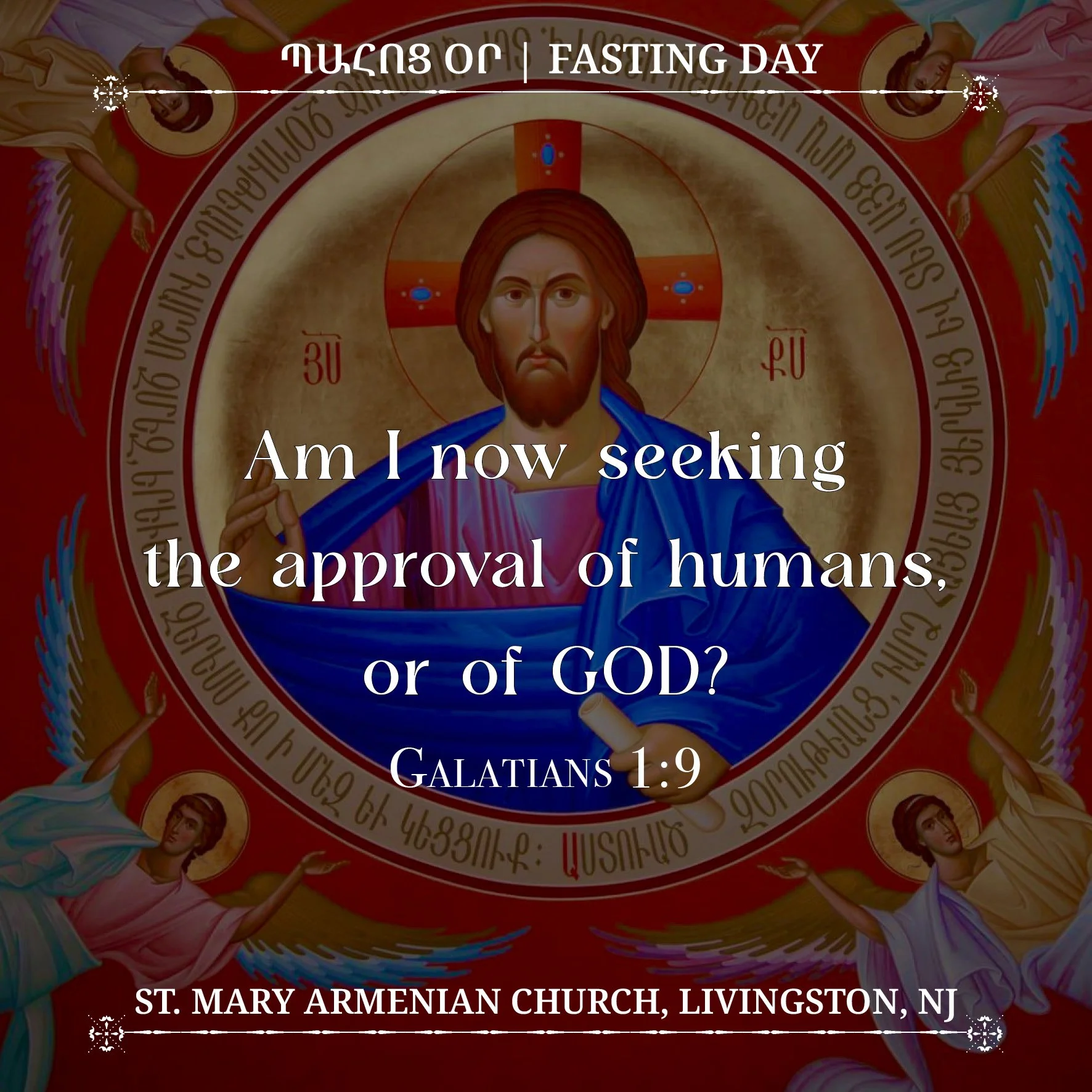
June 5, 2026 - Պահոց Օր | Fasting Day
Jun
5
12:00 AM00:00

June 5, 2026 - Պահոց Օր | Fasting Day

  • St. Mary Armenian Apostolic Church (map)
  • Google Calendar ICS

SCRIPTURE READINGS

~ Romans 4:1-12 ~

What then are we to say was gained by Abraham, our ancestor according to the flesh? For if Abraham was justified by works, he has something to boast about, but not before God. For what does the scripture say? "Abraham believed God, and it was reckoned to him as righteousness." Now to one who works, wages are not reckoned as a gift but as something due. But to one who without works trusts him who justifies the ungodly, such faith is reckoned as righteousness. So also David speaks of the blessedness of those to whom God reckons righteousness apart from works: "Blessed are those whose iniquities are forgiven, and whose sins are covered; blessed is the one against whom the Lord will not reckon sin." Is this blessedness, then, pronounced only on the circumcised, or also on the uncircumcised? We say, "Faith was reckoned to Abraham as righteousness." How then was it reckoned to him? Was it before or after he had been circumcised? It was not after, but before he was circumcised. He received the sign of circumcision as a seal of the righteousness that he had by faith while he was still uncircumcised. The purpose was to make him the ancestor of all who believe without being circumcised and who thus have righteousness reckoned to them, and likewise the ancestor of the circumcised who are not only circumcised but who also follow the example of the faith that our ancestor Abraham had before he was circumcised.

~ Holy Gospel of St. Matthew 9:27-34 ~

As Jesus went on from there, two blind men followed him, crying loudly, "Have mercy on us, Son of David!" When he entered the house, the blind men came to him; and Jesus said to them, "Do you believe that I am able to do this?" They said to him, "Yes, Lord." Then he touched their eyes and said, "According to your faith let it be done to you." And their eyes were opened. Then Jesus sternly ordered them, "See that no one knows of this." But they went away and spread the news about him throughout that district. After they had gone away, a demoniac who was mute was brought to him. And when the demon had been cast out, the one who had been mute spoke; and the crowds were amazed and said, "Never has anything like this been seen in Israel." But the Pharisees said, "By the ruler of the demons he casts out the demons."

View Event →
June 6, 2026 - The Deliverance of St. Gregory the Illuminator from the Pit
Jun
6
12:00 AM00:00

June 6, 2026 - The Deliverance of St. Gregory the Illuminator from the Pit

  • St. Mary Armenian Apostolic Church (map)
  • Google Calendar ICS

The Deliverance of

St. Gregory the Illuminator

from the Pit

The Armenian Apostolic Holy Church commemorates the memory of the Illuminator of the Armenian nation, Saint Gregory the Illuminator, three times during the year: his imprisonment in Khor Virap, his release from Khor Virap, and the discovery of his relics.

In 301 AD, the Armenian people became the first nation to adopt Christianity as their state religion. The principal figures in this sacred event were Saint Gregory the Illuminator and King Tiridates III.

Armenian historians, particularly Agathangelos and other chroniclers, provide detailed accounts of this remarkable journey—a path marked by suffering, miracles, visions, and triumphs.

The Martyrdom of the Holy Virgins

According to tradition, the establishment of Christianity as Armenia’s state religion is closely connected with the martyrdom of the 37 holy virgins led by Saint Hripsime.

Fleeing the persecutions of Emperor Diocletian in Rome, they found refuge near the capital city of Vagharshapat, in the winepresses outside the city.

The Madness of King Tiridates

King Tiridates became captivated by the beauty of Hripsime and wished to marry her. When she refused, he ordered the torture and execution of all the virgins.

The martyrdom of the “pure and holy Hripsime and her companions” did not pass without consequence. The powerful king fell into “deep sorrow and unbearable anguish.” Hripsime’s radiant beauty haunted his soul, and his troubled conscience overwhelmed his entire being.

One day, while hunting, he began to lose his reason:

“He went mad and, departing from human nature, assumed the appearance of a wild boar and went to dwell among them as one of their kind.” (Agathangelos)

Thus, the king was afflicted with a strange illness traditionally described as boar-like madness.

He abandoned the palace and wandered through the marshes. His condition worsened day by day.

Many of his relatives and servants were also struck by the same affliction, with the exception of his sister, Princess Khosrovidukht.

From Darkness to Light

Some time later, Khosrovidukht received a vision in which God revealed that only Gregory, who had been imprisoned in the deep dungeon of Khor Virap, could heal her brother.

When she told the royal court about the vision, they dismissed it as absurd. They reasoned that after thirteen years in an underground death pit, Gregory could not possibly still be alive.

“The bones of a man who has remained in the pit for thirteen years must surely have turned to dust.”

Yet the same vision appeared to Khosrovidukht five times. Finally, at her insistence, the nobleman Ota was sent to Artashat to bring Gregory out of the pit.

When they lowered long, thick ropes into the dungeon, something astonishing happened. To the amazement of all present, someone grasped the ropes.

They pulled Gregory up and discovered that:

“His body was darkened, black as charcoal.”

They immediately clothed him and joyfully brought him from Artashat to Vagharshapat.

The mockery and laughter of the courtiers turned first into astonishment and then into fear.

Repentance and Forgiveness

When Gregory saw the suffering King Tiridates, he was deeply moved. Falling to his knees, he began to pray fervently.

This scene profoundly affected the king. Tiridates and his nobles also knelt before Gregory with tears in their eyes and pleaded:

“We beg you, forgive us the wrongs we have done against you.”

Gregory replied:

“I am a man just like you. Know your Creator, the Maker of heaven and earth. He alone can heal you.”

In Vagharshapat, Gregory first gathered and buried the remains of the martyred virgins and built three memorial shrines in their honor.

He then established a five-day fast of repentance, which is still observed in the Armenian Church today as the Fast of the Catechumens (Aratchavorats).

For approximately sixty-six days he preached the Christian faith and prayed for the healing of the king.

According to Agathangelos:

“The king stood among the people in the form of a boar. Suddenly he began to tremble, and the boar’s hide, with its hideous tusks and snout, fell away. His face regained its true appearance, and his body became soft and youthful like that of a newborn child. Thus he was completely healed.”

Armenia Becomes Christian

Following this miracle, King Tiridates, the royal court, and the Armenian nation embraced Christianity.

In 301 AD, Christianity was officially proclaimed the state religion of Armenia.

The Newly Consecrated Patriarch

After being consecrated Catholicos of Armenia in Caesarea of Cappadocia, Gregory began the great work of transforming the nation.

Pagan temples and idols were destroyed. Churches were built, schools were established, and hundreds of bishops and priests were ordained.

Gregory’s sole desire was to enlighten a people living in spiritual darkness with the light of the true Gospel and lead them toward spiritual rebirth.

At the River Aratsani, Gregory solemnly baptized King Tiridates, Queen Ashkhen, Princess Khosrovidukht, and countless members of the Armenian people.

Immediately after the baptisms, he celebrated the Divine Liturgy in the open air and administered Holy Communion to all.

For seven days the newly baptized people experienced profound spiritual joy and consolation.

Agathangelos records that as many as four million people were baptized through the ministry of Gregory the Illuminator.

The Vision of Holy Etchmiadzin

Two months after the healing of King Tiridates, Gregory received a heavenly vision.

The Only-Begotten Son of God appeared to him, descending from heaven surrounded by radiant light.

In this divine vision, Gregory was shown the site where the Mother Cathedral of Holy Etchmiadzin was to be built.

The Lord also instructed him to construct memorial shrines at the places where Saint Hripsime and her companions had been martyred.

Feast of the Deliverance from the Pit

The Armenian Church celebrates the Feast of the Deliverance of Saint Gregory the Illuminator from Khor Virap on the Saturday following the feasts of Saint Hripsime and Saint Gayane and preceding the Feast of Holy Etchmiadzin.

On this day, the Divine Liturgy is celebrated in all Armenian churches, commemorating Gregory’s miraculous deliverance from imprisonment and the beginning of Armenia’s conversion to Christianity.

His emergence from the pit symbolizes the triumph of faith over darkness, forgiveness over vengeance, and the light of Christ over the spiritual blindness of an entire nation.


SCRIPTURE READINGS

~ Wisdom of Solomon 5:1-8 ~

Then the righteous man will stand with great confidence before those who afflicted him and those who made light of his labors. When they see him, they will be shaken with terrible fear and will be amazed at the unexpectedness of his salvation. They will speak to one another in repentance, and in anguish of spirit they will groan and say: “This is the man whom we once held in derision and made a byword of reproach. We fools considered his life madness and his end without honor. How has he come to be numbered among the children of God, and how is his lot among the saints? Therefore we have wandered from the way of truth, and the light of righteousness did not shine upon us, nor did the sun of righteousness rise upon us. We took our fill of the paths of lawlessness and destruction; we traveled through trackless deserts, but the way of the Lord we did not know. What profit did our pride bring us? What advantage came from our wealth and boasting?”

~ Isaiah 60:20-61:7 ~

And your days of mourning shall be ended. Your people shall all be righteous; they shall possess the land forever. They are the shoot that I planted, the work of my hands, so that I might be glorified. The least of them shall become a clan, and the smallest one a mighty nation; I am the Lord; in its time I will accomplish it quickly. 

The spirit of the Lord God is upon me, because the Lord has anointed me; he has sent me to bring good news to the oppressed, to bind up the brokenhearted, to proclaim liberty to the captives, and release to the prisoners; to proclaim the year of the Lord's favor, and the day of vengeance of our God; to comfort all who mourn; to provide for those who mourn in Zion— to give them a garland instead of ashes, the oil of gladness instead of mourning, the mantle of praise instead of a faint spirit. They will be called oaks of righteousness, the planting of the Lord, to display his glory. They shall build up the ancient ruins, they shall raise up the former devastations; they shall repair the ruined cities, the devastations of many generations. Strangers shall stand and feed your flocks, foreigners shall till your land and dress your vines; but you shall be called priests of the Lord, you shall be named ministers of our God; you shall enjoy the wealth of the nations, and in their riches you shall glory. Because their shame was double, and dishonor was proclaimed as their lot, therefore they shall possess a double portion; everlasting joy shall be theirs.

~ Hebrews 13:17-21~

Obey your leaders and submit to them, for they are keeping watch over your souls and will give an account. Let them do this with joy and not with sighing—for that would be harmful to you. Pray for us; we are sure that we have a clear conscience, desiring to act honorably in all things. I urge you all the more to do this, so that I may be restored to you very soon. Now may the God of peace, who brought back from the dead our Lord Jesus, the great shepherd of the sheep, by the blood of the eternal covenant, make you complete in everything good so that you may do his will, working among us that which is pleasing in his sight, through Jesus Christ, to whom be the glory forever and ever. Amen.

~ Holy Gospel of St. Matthew 19:27-29 ~

Then Peter said in reply, "Look, we have left everything and followed you. What then will we have?" Jesus said to them, "Truly I tell you, at the renewal of all things, when the Son of Man is seated on the throne of his glory, you who have followed me will also sit on twelve thrones, judging the twelve tribes of Israel. And everyone who has left houses or brothers or sisters or father or mother or children or fields, for my name's sake, will receive a hundredfold, and will inherit eternal life.

View Event →
A Prayer to Honor America's 250th Anniversary
Jun
14
11:45 AM11:45

A Prayer to Honor America's 250th Anniversary

  • St. Mary Armenian Apostolic Church (map)
  • Google Calendar ICS

Dear Parishioners and Friends,

By the blessing and directive of the Primate of the Eastern Diocese of the Armenian Church of America, His Grace Bishop Mesrop Parsamyan, St. Mary Armenian Church will join parishes throughout the Diocese in offering a special Order of Prayer for the 250th Anniversary of the Independence of the United States of America.

The prayer service will take place at the end of Sunday Badarak on June 14, coinciding with the national observance of Flag Day.

As our country approaches the historic 250th anniversary of the signing of the Declaration of Independence, we gather in gratitude to God for the blessings America has bestowed upon generations of Armenians, providing refuge, opportunity, and freedom. Through this special service of thanksgiving, we will pray for our country, its leaders, and all its citizens, asking God to continue guiding America in the pursuit of justice, peace, and prosperity.

All faithful are warmly invited to participate in this meaningful observance and join us in offering prayers for our beloved country.

Fr. Voskan Hovhannisyan and the Parish Council of St. Mary Armenian Church

View Event →
Women's Guild Day Celebration & Initiation Ceremony
Jun
28
11:30 AM11:30

Women's Guild Day Celebration & Initiation Ceremony

  • St. Mary Armenian Apostolic Church (map)
  • Google Calendar ICS

Dear Parishioners and Friends,

The Women’s Guild of St. Mary Armenian Church in Livingston, New Jersey, will celebrate the Annual Women’s Guild Day on Sunday, June 28, 2026.

This year’s celebration will include a special Initiation Ceremony for all current Guild members.

Since this service has not been held in several years, many members were never formally initiated upon joining the Guild. In recognition of their dedication and service, all current members will now have the opportunity to participate in this meaningful ceremony.

At the end of Soorp Badarak, Der Voskan will lead a brief service in the church during which the women will pledge themselves to continue the mission and ministry of the Guild.

A fellowship gathering will follow the service, and all parishioners and guests are warmly invited to attend and congratulate the women for their generous service and support to the church.

The Women's Guild of St. Mary Armenian Church

View Event →

June 3, 2026 - Պահոց Օր | Fasting Day
Jun
3
12:00 AM00:00

June 3, 2026 - Պահոց Օր | Fasting Day

  • St. Mary Armenian Apostolic Church (map)
  • Google Calendar ICS

SCRIPTURE READINGS

~ Romans 3:19-31 ~

Now we know that whatever the law says, it speaks to those who are under the law, so that every mouth may be silenced, and the whole world may be held accountable to God. For "no human being will be justified in his sight" by deeds prescribed by the law, for through the law comes the knowledge of sin. But now, apart from law, the righteousness of God has been disclosed, and is attested by the law and the prophets, the righteousness of God through faith in Jesus Christ for all who believe. For there is no distinction, since all have sinned and fall short of the glory of God; they are now justified by his grace as a gift, through the redemption that is in Christ Jesus, whom God put forward as a sacrifice of atonement by his blood, effective through faith. He did this to show his righteousness, because in his divine forbearance he had passed over the sins previously committed; it was to prove at the present time that he himself is righteous and that he justifies the one who has faith in Jesus. Then what becomes of boasting? It is excluded. By what law? By that of works? No, but by the law of faith. For we hold that a person is justified by faith apart from works prescribed by the law. Or is God the God of Jews only? Is he not the God of Gentiles also? Yes, of Gentiles also, since God is one; and he will justify the circumcised on the ground of faith and the uncircumcised through that same faith. Do we then overthrow the law by this faith? By no means! On the contrary, we uphold the law.

~ Holy Gospel of St. Matthew 9:9-15 ~

As Jesus was walking along, he saw a man called Matthew sitting at the tax booth; and he said to him, "Follow me." And he got up and followed him. And as he sat at dinner in the house, many tax collectors and sinners came and were sitting with him and his disciples. When the Pharisees saw this, they said to his disciples, "Why does your teacher eat with tax collectors and sinners?" But when he heard this, he said, "Those who are well have no need of a physician, but those who are sick. Go and learn what this means, "I desire mercy, not sacrifice.' For I have come to call not the righteous but sinners." Then the disciples of John came to him, saying, "Why do we and the Pharisees fast often, but your disciples do not fast?" And Jesus said to them, "The wedding guests cannot mourn as long as the bridegroom is with them, can they? The days will come when the bridegroom is taken away from them, and then they will fast.

View Event →
June 2, 2026 - St. Gayane the Virgin and Her Companions
Jun
2
12:00 AM00:00

June 2, 2026 - St. Gayane the Virgin and Her Companions

  • St. Mary Armenian Apostolic Church (map)
  • Google Calendar ICS

Commemoration Day of

St. GAYANE the Virgin

and Her Companions

These are a group of 37 martyrs who are commemorated under two separate names in Armenian calendars and synaxaria because they were martyred over the course of two days and in separate groups.

Historical tradition considers them Roman, but because they were martyred in Armenia and shed their pure blood in our land before the adoption of Christianity, Armenians came to regard them as their own and especially beloved by the Armenian Church.

According to the historian Agathangelos, the primary source of their story, the Roman Emperor Diocletian (284–305) wished to marry the most beautiful virgin in his empire. Scouts sent throughout the land discovered, in the noble virgin named Hripsime, the most beautiful bride. She was one of the Christian virgins living in a convent in Rome under the leadership of the abbess Gayane.

When the virgins learned of the emperor’s command, they secretly fled Rome by night. Traveling by ship, they first went to Alexandria in Egypt, then to Jerusalem, and afterward through Edessa to Van, where they settled for a time on the slopes of Mount Varag. Feeling unsafe there as well, they traveled north and finally settled near Vagharshapat, the capital of Armenia at that time, in a place called Hndzan.

The reason they were found in Armenia was again connected to Diocletian, who instructed King Trdat of Armenia to locate the virgins who had taken refuge in his kingdom and send them back to the emperor. Indeed, Trdat’s men quickly found Hripsime and brought her before the king. Trdat, captivated by her beauty, decided to possess her himself. Hripsime rejected and resisted him.

The king summoned Gayane and ordered her to persuade her disciple to accept his proposal. Instead, Gayane encouraged her spiritual daughter to remain steadfast in her refusal and not exchange the joy of heaven for earthly glory and pleasures. Because she disobeyed the king’s command, Gayane was subjected to severe torture and thrown into the royal prison along with two companions.

Hripsime eventually escaped and fled to join her companions. But Trdat, who was described as a giant and powerful man, was ashamed, according to the hymn, that “he had been defeated by a maiden like a child.” Enraged, he sent executioners and ordered Hripsime’s death. They stretched her upon stakes fixed into the ground by her hands and feet and burned her body with torches. Seeing that she was still alive, they gouged out her eyes and dismembered her limb by limb, thus martyring the glorious witness of Christ.

When the other virgins approached to gather and bury her body honorably, 32 of them were slaughtered by the sword.

The executioners then invaded their dwelling and found the only surviving virgin, who had remained behind because of illness, and killed her as well.

The following day, Trdat ordered the execution of the leader and abbess of the group, Gayane, together with her two companions. First, Gayane’s tongue was cut out because she had dared encourage Hripsime to resist the king. Then, like Hripsime, they were stretched upon the ground by their hands and feet, flayed alive, and finally killed by the sword. The martyrdom of Gayane and her companions took place outside the city on the southern side.

At the time of these martyrdoms, Saint Gregory the Illuminator was still imprisoned in Khor Virap. For nine days the relics of the saints remained unburied, yet no wild beast or bird of prey approached them.

As punishment for the murder of the innocent virgins, King Trdat went mad. In order to heal him, Gregory was released from the pit, and his first act was to gather the unburied relics of the holy virgins separately into tombs and bury them at the places of their martyrdom.

He built three shrines:

  • one at the place where Hripsime and her 32 companions were martyred,

  • another at their dwelling place, where the sick virgin was killed,

  • and the third at the site where Saint Gayane and her two companions were martyred.

The tombs containing the bodies of the virgins were sealed with Gregory’s seal.

A century later, the shrines had fallen into ruin and were nearly forgotten. Therefore, Catholicos St. Sahak the Great (387–438) searched for and rediscovered them. He added his own seal beside that of Gregory the Illuminator and rebuilt the shrines with honor.

Two centuries later, during the reign of Catholicos Komitas of Aghdzk (615–628), the chapels again had become neglected. After demolishing the old shrine of Hripsime, he discovered the tombs of the holy virgins, added his seal to them, reburied them, and in 618 built above them a magnificent church described as: “Marvelous, graceful, lovely, and radiant.”

Beneath the altar of this cathedral he built an underground chapel where the saint’s tomb remains to this day. The church itself has also survived almost entirely unchanged except for the bell tower, which was added in later centuries.

Likewise, Catholicos Ezr I of Parajnakert (630–641) replaced the modest chapel of Gayane with a magnificent new church: “Spacious and luminous, built with carved stone and lime.”

This church too has survived almost intact.

The third chapel was later rebuilt by Catholicos Nahabed I (1691–1705) under the name Shoghakat.

The historian Ormanian testifies that beneath the cathedrals of Hripsime and Gayane there are underground chambers built of large stones in which the saints’ bones are preserved. Their existence was reconfirmed in later centuries: the Hripsime chamber during an attempted theft by Latin monks, and the Gayane chamber through investigations prompted by the curiosity of Father Hovhannes, as recorded by the historian Arakel of Tabriz.

In 1978, during restoration work near the northeastern wall of the Church of Saint Hripsime, archaeologists discovered an early Christian basilica-type chapel. Excavations in 1979 uncovered several graves containing decapitated skeletons, believed to be the remains of Hripsime’s 32 companions.

Regarding this discovery, Catholicos Vazgen I and the Mother See of Holy Etchmiadzin issued an official statement declaring: “This latest discovery is a new material testimony to the historical authenticity of the Christian faith of the Armenian people.”

According to Agathangelos, the virgins were martyred in the year 301, the same year Gregory emerged from the pit. Their martyrdom occurred on the 26th and 27th days of the Armenian month of Hori, corresponding according to Ormanian to November 6 and 7, though Armenian synaxaria later listed them on October 5 and 6.

Today, the Armenian Church commemorates:

  • the feast of the Hripsimian Virgins on the first Monday following the Sunday marking the beginning of the Resurrection Sundays,

  • and the Gayanian Virgins on the following Tuesday.

The Hripsimian Virgins occupy a central place in Armenian hagiography and are extensively described by Agathangelos and Movses Khorenatsi.

Armenian synaxaria likewise devote nearly ten pages to their story. Each concludes with a hymn of praise dedicated to the saints. One such hymn says: “Bride of Christ, who today through your martyr’s blood were translated into heaven, adorned like a queen seated at the right hand of the Heavenly King, receive us also—your children born from your virginal labor, the faithful of the Armenian Church who celebrate you—into the choir of your heavenly bridal chamber, so that together with you we may glorify the Father, the Son, and the Holy Spirit forever. Amen.”

Another hymn praises Hripsime and Gayane: “Hripsime, who like the sun rose from the West into the Eastern world, together with the radiant stars who were with you… Hripsime, beauty of virgins, glory of martyrs, joy of angels, terror of demons…” and continues: “Gayane, purest wisdom, conqueror of adversaries… Hripsime, brightest ray, fruitful olive tree, sweet-fruited palm…”

The narrative concludes with these words: “It is fitting that we marvel at the boundless love of mankind shown by our Savior and the inscrutable providence of His supreme wisdom, who through the shedding of the blood of the holy virgins and through their intercession granted wondrous enlightenment to the land of Armenia…”

The Armenian people’s devotion to the Holy Hripsimian Virgins became so profound that it produced two enduring masterpieces.

The first is the Saint Hripsime Church, one of the masterpieces of Armenian architecture, distinguished by its restrained grandeur and extraordinary beauty.

The second is the beautiful hymn “Persons Dedicated to the Love of Christ” (“Anzik Nviryal”), composed in honor of the Hripsimian Virgins. Both works are associated with Catholicos Komitas, who before becoming catholicos served as custodian of the sanctuary of Saint Hripsime.

The hymn “Anzik Nviryal” is arranged according to the letters of the Armenian alphabet and therefore consists of 36 stanzas. It became the first and finest example of alphabetically structured Armenian hymns, inspiring many later compositions.

Ormanian described the hymn as: “A masterpiece of Armenian poetic meter, rich in language and style, remarkable in its poetic artistry… an incomparable sacred poem.”

The melody, though simple and monophonic, is deeply moving, graceful, lively, and sweet-flowing, making it one of the most important hymns in Armenian sacred music.

Three verses are traditionally highlighted:

“Souls dedicated to the love of Christ,
Heavenly martyrs and wise virgins,
Through you Mother Zion celebrates with her children in pride.

Gayane, bearer of the desirable great mystery,
Chosen from the earth and numbered among the angels;
You became an example of holiness for virgins,
A teacher for righteous men.

Having reached the summit of glory,
The thirty-seven companions are praised with honor and splendor,
For this is the number of the blessed virgins
Who were crowned with unfading crowns
In everlasting eternity.”


SCRIPTURE READINGS

~ Proverbs 1:20-22 ~

Wisdom cries out in the street; in the squares she raises her voice. At the busiest corner she cries out; at the entrance of the city gates she speaks: "How long, O simple ones, will you love being simple? How long will scoffers delight in their scoffing and fools hate knowledge?

~ Baruch 4:36-5:4 ~

“Look toward the east, O Jerusalem, and see the joy that comes to you from God. Behold, your children are coming, whom you sent away; they are coming, gathered together from east to west by the word of the Holy One, rejoicing in the glory of God.

O Jerusalem, take off your robe of mourning and affliction, and put on forever the beauty of the glory from God. Put on the robe of the righteousness of God, and place on your head the crown of the glory of the Eternal One. For God will show your splendor everywhere under heaven. For your name will forever be called by God: ‘Peace of Righteousness’ and ‘Glory of Godliness.’”

~ 2 Corinthians 6:16-7:1 ~

What agreement has the temple of God with idols? For we are the temple of the living God; as God said, "I will live in them and walk among them, and I will be their God, and they shall be my people. Therefore come out from them, and be separate from them, says the Lord, and touch nothing unclean; then I will welcome you, and I will be your father, and you shall be my sons and daughters, says the Lord Almighty." 

Since we have these promises, beloved, let us cleanse ourselves from every defilement of body and of spirit, making holiness perfect in the fear of God.

~ Holy Gospel of St. John 16:1-14 ~

"I have said these things to you to keep you from stumbling. They will put you out of the synagogues. Indeed, an hour is coming when those who kill you will think that by doing so they are offering worship to God. And they will do this because they have not known the Father or me. But I have said these things to you so that when their hour comes you may remember that I told you about them. "I did not say these things to you from the beginning, because I was with you.

View Event →
June 1, 2026 - St. Hripsime the Virgin and Her Companions
Jun
1
12:00 AM00:00

June 1, 2026 - St. Hripsime the Virgin and Her Companions

  • St. Mary Armenian Apostolic Church (map)
  • Google Calendar ICS

Commemoration Day of

St. Hripsime the Virgin

and Her Companions

These are a group of 37 martyrs who are commemorated under two separate names in Armenian calendars and synaxaria because they were martyred over the course of two days and in separate groups.

Historical tradition considers them Roman, but because they were martyred in Armenia and shed their pure blood in our land before the adoption of Christianity, Armenians came to regard them as their own and especially beloved by the Armenian Church.

According to the historian Agathangelos, the primary source of their story, the Roman Emperor Diocletian (284–305) wished to marry the most beautiful virgin in his empire. Scouts sent throughout the land discovered, in the noble virgin named Hripsime, the most beautiful bride. She was one of the Christian virgins living in a convent in Rome under the leadership of the abbess Gayane.

When the virgins learned of the emperor’s command, they secretly fled Rome by night. Traveling by ship, they first went to Alexandria in Egypt, then to Jerusalem, and afterward through Edessa to Van, where they settled for a time on the slopes of Mount Varag. Feeling unsafe there as well, they traveled north and finally settled near Vagharshapat, the capital of Armenia at that time, in a place called Hndzan.

The reason they were found in Armenia was again connected to Diocletian, who instructed King Trdat of Armenia to locate the virgins who had taken refuge in his kingdom and send them back to the emperor. Indeed, Trdat’s men quickly found Hripsime and brought her before the king. Trdat, captivated by her beauty, decided to possess her himself. Hripsime rejected and resisted him.

The king summoned Gayane and ordered her to persuade her disciple to accept his proposal. Instead, Gayane encouraged her spiritual daughter to remain steadfast in her refusal and not exchange the joy of heaven for earthly glory and pleasures. Because she disobeyed the king’s command, Gayane was subjected to severe torture and thrown into the royal prison along with two companions.

Hripsime eventually escaped and fled to join her companions. But Trdat, who was described as a giant and powerful man, was ashamed, according to the hymn, that “he had been defeated by a maiden like a child.” Enraged, he sent executioners and ordered Hripsime’s death. They stretched her upon stakes fixed into the ground by her hands and feet and burned her body with torches. Seeing that she was still alive, they gouged out her eyes and dismembered her limb by limb, thus martyring the glorious witness of Christ.

When the other virgins approached to gather and bury her body honorably, 32 of them were slaughtered by the sword.

The executioners then invaded their dwelling and found the only surviving virgin, who had remained behind because of illness, and killed her as well.

The following day, Trdat ordered the execution of the leader and abbess of the group, Gayane, together with her two companions. First, Gayane’s tongue was cut out because she had dared encourage Hripsime to resist the king. Then, like Hripsime, they were stretched upon the ground by their hands and feet, flayed alive, and finally killed by the sword. The martyrdom of Gayane and her companions took place outside the city on the southern side.

At the time of these martyrdoms, Saint Gregory the Illuminator was still imprisoned in Khor Virap. For nine days the relics of the saints remained unburied, yet no wild beast or bird of prey approached them.

As punishment for the murder of the innocent virgins, King Trdat went mad. In order to heal him, Gregory was released from the pit, and his first act was to gather the unburied relics of the holy virgins separately into tombs and bury them at the places of their martyrdom.

He built three shrines:

  • one at the place where Hripsime and her 32 companions were martyred,

  • another at their dwelling place, where the sick virgin was killed,

  • and the third at the site where Saint Gayane and her two companions were martyred.

The tombs containing the bodies of the virgins were sealed with Gregory’s seal.

A century later, the shrines had fallen into ruin and were nearly forgotten. Therefore, Catholicos St. Sahak the Great (387–438) searched for and rediscovered them. He added his own seal beside that of Gregory the Illuminator and rebuilt the shrines with honor.

Two centuries later, during the reign of Catholicos Komitas of Aghdzk (615–628), the chapels again had become neglected. After demolishing the old shrine of Hripsime, he discovered the tombs of the holy virgins, added his seal to them, reburied them, and in 618 built above them a magnificent church described as: “Marvelous, graceful, lovely, and radiant.”

Beneath the altar of this cathedral he built an underground chapel where the saint’s tomb remains to this day. The church itself has also survived almost entirely unchanged except for the bell tower, which was added in later centuries.

Likewise, Catholicos Ezr I of Parajnakert (630–641) replaced the modest chapel of Gayane with a magnificent new church: “Spacious and luminous, built with carved stone and lime.”

This church too has survived almost intact.

The third chapel was later rebuilt by Catholicos Nahabed I (1691–1705) under the name Shoghakat.

The historian Ormanian testifies that beneath the cathedrals of Hripsime and Gayane there are underground chambers built of large stones in which the saints’ bones are preserved. Their existence was reconfirmed in later centuries: the Hripsime chamber during an attempted theft by Latin monks, and the Gayane chamber through investigations prompted by the curiosity of Father Hovhannes, as recorded by the historian Arakel of Tabriz.

In 1978, during restoration work near the northeastern wall of the Church of Saint Hripsime, archaeologists discovered an early Christian basilica-type chapel. Excavations in 1979 uncovered several graves containing decapitated skeletons, believed to be the remains of Hripsime’s 32 companions.

Regarding this discovery, Catholicos Vazgen I and the Mother See of Holy Etchmiadzin issued an official statement declaring: “This latest discovery is a new material testimony to the historical authenticity of the Christian faith of the Armenian people.”

According to Agathangelos, the virgins were martyred in the year 301, the same year Gregory emerged from the pit. Their martyrdom occurred on the 26th and 27th days of the Armenian month of Hori, corresponding according to Ormanian to November 6 and 7, though Armenian synaxaria later listed them on October 5 and 6.

Today, the Armenian Church commemorates:

  • the feast of the Hripsimian Virgins on the first Monday following the Sunday marking the beginning of the Resurrection Sundays,

  • and the Gayanian Virgins on the following Tuesday.

The Hripsimian Virgins occupy a central place in Armenian hagiography and are extensively described by Agathangelos and Movses Khorenatsi.

Armenian synaxaria likewise devote nearly ten pages to their story. Each concludes with a hymn of praise dedicated to the saints. One such hymn says: “Bride of Christ, who today through your martyr’s blood were translated into heaven, adorned like a queen seated at the right hand of the Heavenly King, receive us also—your children born from your virginal labor, the faithful of the Armenian Church who celebrate you—into the choir of your heavenly bridal chamber, so that together with you we may glorify the Father, the Son, and the Holy Spirit forever. Amen.”

Another hymn praises Hripsime and Gayane: “Hripsime, who like the sun rose from the West into the Eastern world, together with the radiant stars who were with you… Hripsime, beauty of virgins, glory of martyrs, joy of angels, terror of demons…” and continues: “Gayane, purest wisdom, conqueror of adversaries… Hripsime, brightest ray, fruitful olive tree, sweet-fruited palm…”

The narrative concludes with these words: “It is fitting that we marvel at the boundless love of mankind shown by our Savior and the inscrutable providence of His supreme wisdom, who through the shedding of the blood of the holy virgins and through their intercession granted wondrous enlightenment to the land of Armenia…”

The Armenian people’s devotion to the Holy Hripsimian Virgins became so profound that it produced two enduring masterpieces.

The first is the Saint Hripsime Church, one of the masterpieces of Armenian architecture, distinguished by its restrained grandeur and extraordinary beauty.

The second is the beautiful hymn “Persons Dedicated to the Love of Christ” (“Anzik Nviryal”), composed in honor of the Hripsimian Virgins. Both works are associated with Catholicos Komitas, who before becoming catholicos served as custodian of the sanctuary of Saint Hripsime.

The hymn “Anzik Nviryal” is arranged according to the letters of the Armenian alphabet and therefore consists of 36 stanzas. It became the first and finest example of alphabetically structured Armenian hymns, inspiring many later compositions.

Ormanian described the hymn as: “A masterpiece of Armenian poetic meter, rich in language and style, remarkable in its poetic artistry… an incomparable sacred poem.”

The melody, though simple and monophonic, is deeply moving, graceful, lively, and sweet-flowing, making it one of the most important hymns in Armenian sacred music.

Three verses are traditionally highlighted:

“Souls dedicated to the love of Christ,
Heavenly martyrs and wise virgins,
Through you Mother Zion celebrates with her children in pride.

Hripsime, bearer of the desirable great mystery,
Chosen from the earth and numbered among the angels;
You became an example of holiness for virgins,
A teacher for righteous men.

Having reached the summit of glory,
The thirty-seven companions are praised with honor and splendor,
For this is the number of the blessed virgins
Who were crowned with unfading crowns
In everlasting eternity.”


SCRIPTURE READINGS

~ Proverbs 31:29-31 ~

“Many daughters have done virtuously, and many have achieved excellence, but you surpass them all. Charm is deceitful and beauty is vain, but a woman who fears the Lord shall be praised. Give her of the fruit of her hands, and let her own works praise her in the gates.”

~ Isaiah 61:10-62:3 ~

I will greatly rejoice in the Lord, my whole being shall exult in my God; for he has clothed me with the garments of salvation, he has covered me with the robe of righteousness, as a bridegroom decks himself with a garland, and as a bride adorns herself with her jewels. For as the earth brings forth its shoots, and as a garden causes what is sown in it to spring up, so the Lord God will cause righteousness and praise to spring up before all the nations. 

For Zion's sake I will not keep silent, and for Jerusalem's sake I will not rest, until her vindication shines out like the dawn, and her salvation like a burning torch. The nations shall see your vindication, and all the kings your glory; and you shall be called by a new name that the mouth of the Lord will give. You shall be a crown of beauty in the hand of the Lord, and a royal diadem in the hand of your God.

~ Romans 15:30-16:2 ~

I appeal to you, brothers and sisters, by our Lord Jesus Christ and by the love of the Spirit, to join me in earnest prayer to God on my behalf, that I may be rescued from the unbelievers in Judea, and that my ministry to Jerusalem may be acceptable to the saints, so that by God's will I may come to you with joy and be refreshed in your company. The God of peace be with all of you. Amen. 

I commend to you our sister Phoebe, a deacon of the church at Cenchreae, so that you may welcome her in the Lord as is fitting for the saints, and help her in whatever she may require from you, for she has been a benefactor of many and of myself as well.

~ Holy Gospel of St. Matthew 10:26-33 ~

"So have no fear of them; for nothing is covered up that will not be uncovered, and nothing secret that will not become known. What I say to you in the dark, tell in the light; and what you hear whispered, proclaim from the housetops. Do not fear those who kill the body but cannot kill the soul; rather fear him who can destroy both soul and body in hell. Are not two sparrows sold for a penny? Yet not one of them will fall to the ground apart from your Father. And even the hairs of your head are all counted. So do not be afraid; you are of more value than many sparrows. "Everyone therefore who acknowledges me before others, I also will acknowledge before my Father in heaven; but whoever denies me before others, I also will deny before my Father in heaven.

View Event →
May 31, 2026 - Beginning of the Sundays of the Resurrection
May
31
12:00 AM00:00

May 31, 2026 - Beginning of the Sundays of the Resurrection

  • St. Mary Armenian Apostolic Church (map)
  • Google Calendar ICS

Commemoration Day of

the Prophet Elijah

Among the faithful prophets of God who lived in Israel, Saint Elijah stands out among the biblical prophets for his ascetic life in the wilderness, his many miracles, his fiery zeal, and his extraordinary departure from this world. He is one of only two people in the Bible (the other being Enoch) about whom it is written that they were “taken up” into heaven without dying (Genesis 5:18–24).

His story is recorded in the Third and Fourth Books of Kings in the Bible. Scripture tells us that Elijah was a Tishbite from the settlement of Tishbe in Gilead. He lived in the first half of the 9th century BC during the reign of King Ahab. Elijah became the embodiment of God’s righteous anger on earth. He lived far from the corrupting influences of “civilization,” in the midst of nature.

God sent him to King Ahab, who was one of the most wicked kings descended from Solomon and among all the kings before him. Ahab’s wife, the Phoenician Jezebel, was an idol worshiper and had brought idols and around a thousand pagan priests from her homeland in order to spread idolatry in Israel. Jezebel had also massacred many prophets of God. At that time, the land had sunk into idolatry, and the Israelites had forgotten their true God, whom Elijah faithfully and zealously served.

Fiery Elijah, protector of the persecuted and the poor, appeared before King Ahab and fearlessly rebuked and condemned him, declaring that the land of Israel would have no rain or even dew for several years as punishment.

A king’s faithfulness to God is the source of a nation’s prosperity, whereas idolatry and disobedience to God inevitably lead to disaster. The Prophet Elijah reminded the king of God’s commandments.

He tried to keep his people from following idols by showing them who the one true God really is. He urged Israel not to worship Baal, but instead to place their hope and faith in God.

Ahab and Jezebel persecuted Elijah because he sought to bring repentance into people’s hearts. Since Israel had turned away from the Lord and become idolatrous, a great drought struck the land, and for three and a half years no rain fell in Israel.

By God’s command, Elijah withdrew to the brook Cherith, from which he drank water, while ravens brought him bread and meat twice a day. Because of the drought, the brook eventually dried up, and once again by God’s command Elijah traveled north to the city of Zarephath, where a widow welcomed him and gave him shelter. Elijah blessed the woman’s jars of oil and flour so that they would never become empty, and he also raised her dead son back to life.

In the third year of the drought, Elijah again went before Ahab and instructed him to gather his thousand priests on Mount Carmel and summon the people of Israel:

“How long will you waver between two opinions? If the Lord is God, follow Him; but if Baal is god, then follow Baal.

Bring two bulls—one for you and one for me. Let each of us place the sacrifice on the altar, but do not light the fire. Then you will call upon your god, and I will call upon the Lord my God. The God who answers by fire—He is the true God.”

And so it was done. Through a divine miracle, Elijah demonstrated the power of the true God of Israel and exposed the helplessness and deception of the pagan priests. Seeing this, the people, by Elijah’s command, seized the priests and killed them. Elijah then prayed, and rain finally returned.

Queen Jezebel, enraged by the killing of her priests, threatened to have Elijah killed the very next day.

Despite his courage and miraculous powers, Elijah was still “a man subject to passions like us,” as the Apostle James says (James 5:17). Therefore, fearing Jezebel’s threats, he fled southward to Mount Sinai, where he waited in a cave for a new message from God.

God appeared to him in the form of a gentle breeze and commanded him to return and anoint Hazael as king of Syria, Jehu as king of Israel, and Elisha as the prophet who would succeed him.

After glorifying Elijah on earth through many miracles, God took him up to heaven in a fiery chariot and whirlwind. Elijah ascended into heaven before the eyes of Elisha without experiencing ordinary human death. Before this, Elisha had asked Elijah to receive a double portion of his spirit—that is, twice the power given to Elijah—and indeed this came to pass. As Elijah was taken up in the chariot, he threw down his mantle, which Elisha picked up. Thus, although Elijah’s life was filled with miracles, Elisha surpassed him in this regard because he had received a double portion of Elijah’s spirit.

According to the Prophet Malachi, Elijah will return to earth at the end of the world as the forerunner of Christ’s Second Coming, just as John the Baptist became the forerunner of the Lord’s First Coming. This is why John the Baptist is compared to Elijah in the Gospel, and it is said that he came in the spirit of Elijah.

At the Transfiguration of the Lord Jesus on the mountain, Elijah was one of the two holy men who appeared and spoke with Him.

Perhaps it is because Elijah did not experience death and because of the unique honor of becoming the forerunner of the Lord’s Second Coming that the Armenian Church commemorates him on the Sunday following the Feast of Pentecost, even though saints are generally not commemorated on Sundays in the Armenian Church.


SCRIPTURE READINGS

~ 1 Kings 18:29-46 ~

As midday passed, they raved on until the time of the offering of the oblation, but there was no voice, no answer, and no response. Then Elijah said to all the people, "Come closer to me"; and all the people came closer to him. First he repaired the altar of the Lord that had been thrown down; Elijah took twelve stones, according to the number of the tribes of the sons of Jacob, to whom the word of the Lord came, saying, "Israel shall be your name"; with the stones he built an altar in the name of the Lord. Then he made a trench around the altar, large enough to contain two measures of seed. Next he put the wood in order, cut the bull in pieces, and laid it on the wood. He said, "Fill four jars with water and pour it on the burnt offering and on the wood." Then he said, "Do it a second time"; and they did it a second time. Again he said, "Do it a third time"; and they did it a third time, so that the water ran all around the altar, and filled the trench also with water. At the time of the offering of the oblation, the prophet Elijah came near and said, "O Lord, God of Abraham, Isaac, and Israel, let it be known this day that you are God in Israel, that I am your servant, and that I have done all these things at your bidding. Answer me, O Lord, answer me, so that this people may know that you, O Lord, are God, and that you have turned their hearts back." Then the fire of the Lord fell and consumed the burnt offering, the wood, the stones, and the dust, and even licked up the water that was in the trench. When all the people saw it, they fell on their faces and said, "The Lord indeed is God; the Lord indeed is God." Elijah said to them, "Seize the prophets of Baal; do not let one of them escape." Then they seized them; and Elijah brought them down to the Wadi Kishon, and killed them there. Elijah said to Ahab, "Go up, eat and drink; for there is a sound of rushing rain." So Ahab went up to eat and to drink. Elijah went up to the top of Carmel; there he bowed himself down upon the earth and put his face between his knees. He said to his servant, "Go up now, look toward the sea." He went up and looked, and said, "There is nothing." Then he said, "Go again seven times." At the seventh time he said, "Look, a little cloud no bigger than a person's hand is rising out of the sea." Then he said, "Go say to Ahab, "Harness your chariot and go down before the rain stops you.' " In a little while the heavens grew black with clouds and wind; there was a heavy rain. Ahab rode off and went to Jezreel. But the hand of the Lord was on Elijah; he girded up his loins and ran in front of Ahab to the entrance of Jezreel.

~ 2 Kings 2:1-15 ~

Now when the Lord was about to take Elijah up to heaven by a whirlwind, Elijah and Elisha were on their way from Gilgal. Elijah said to Elisha, "Stay here; for the Lord has sent me as far as Bethel." But Elisha said, "As the Lord lives, and as you yourself live, I will not leave you." So they went down to Bethel. The company of prophets who were in Bethel came out to Elisha, and said to him, "Do you know that today the Lord will take your master away from you?" And he said, "Yes, I know; keep silent." Elijah said to him, "Elisha, stay here; for the Lord has sent me to Jericho." But he said, "As the Lord lives, and as you yourself live, I will not leave you." So they came to Jericho. The company of prophets who were at Jericho drew near to Elisha, and said to him, "Do you know that today the Lord will take your master away from you?" And he answered, "Yes, I know; be silent." Then Elijah said to him, "Stay here; for the Lord has sent me to the Jordan." But he said, "As the Lord lives, and as you yourself live, I will not leave you." So the two of them went on. Fifty men of the company of prophets also went, and stood at some distance from them, as they both were standing by the Jordan. Then Elijah took his mantle and rolled it up, and struck the water; the water was parted to the one side and to the other, until the two of them crossed on dry ground. When they had crossed, Elijah said to Elisha, "Tell me what I may do for you, before I am taken from you." Elisha said, "Please let me inherit a double share of your spirit." He responded, "You have asked a hard thing; yet, if you see me as I am being taken from you, it will be granted you; if not, it will not." As they continued walking and talking, a chariot of fire and horses of fire separated the two of them, and Elijah ascended in a whirlwind into heaven. Elisha kept watching and crying out, "Father, father! The chariots of Israel and its horsemen!" But when he could no longer see him, he grasped his own clothes and tore them in two pieces. He picked up the mantle of Elijah that had fallen from him, and went back and stood on the bank of the Jordan. He took the mantle of Elijah that had fallen from him, and struck the water, saying, "Where is the Lord, the God of Elijah?" When he had struck the water, the water was parted to the one side and to the other, and Elisha went over. When the company of prophets who were at Jericho saw him at a distance, they declared, "The spirit of Elijah rests on Elisha." They came to meet him and bowed to the ground before him.

~ James 5:16-20 ~

Therefore confess your sins to one another, and pray for one another, so that you may be healed. The prayer of the righteous is powerful and effective. Elijah was a human being like us, and he prayed fervently that it might not rain, and for three years and six months it did not rain on the earth. Then he prayed again, and the heaven gave rain and the earth yielded its harvest. My brothers and sisters, if anyone among you wanders from the truth and is brought back by another, you should know that whoever brings back a sinner from wandering will save the sinner's soul from death and will cover a multitude of sins.

~ Holy Gospel of St. Luke 4:25-30 ~

But the truth is, there were many widows in Israel in the time of Elijah, when the heaven was shut up three years and six months, and there was a severe famine over all the land; yet Elijah was sent to none of them except to a widow at Zarephath in Sidon. There were also many lepers in Israel in the time of the prophet Elisha, and none of them was cleansed except Naaman the Syrian." When they heard this, all in the synagogue were filled with rage. They got up, drove him out of the town, and led him to the brow of the hill on which their town was built, so that they might hurl him off the cliff. But he passed through the midst of them and went on his way.

View Event →
May 30, 2026 - 7th Day of Pentecost
May
30
12:00 AM00:00

May 30, 2026 - 7th Day of Pentecost

  • St. Mary Armenian Apostolic Church (map)
  • Google Calendar ICS

SCRIPTURE READINGS

~ 2 Peter 2:9-22 ~

Then the Lord knows how to rescue the godly from trial, and to keep the unrighteous under punishment until the day of judgment —especially those who indulge their flesh in depraved lust, and who despise authority. Bold and willful, they are not afraid to slander the glorious ones, whereas angels, though greater in might and power, do not bring against them a slanderous judgment from the Lord. These people, however, are like irrational animals, mere creatures of instinct, born to be caught and killed. They slander what they do not understand, and when those creatures are destroyed, they also will be destroyed, suffering the penalty for doing wrong. They count it a pleasure to revel in the daytime. They are blots and blemishes, reveling in their dissipation while they feast with you. They have eyes full of adultery, insatiable for sin. They entice unsteady souls. They have hearts trained in greed. Accursed children! They have left the straight road and have gone astray, following the road of Balaam son of Bosor, who loved the wages of doing wrong, but was rebuked for his own transgression; a speechless donkey spoke with a human voice and restrained the prophet's madness. These are waterless springs and mists driven by a storm; for them the deepest darkness has been reserved. For they speak bombastic nonsense, and with licentious desires of the flesh they entice people who have just escaped from those who live in error. They promise them freedom, but they themselves are slaves of corruption; for people are slaves to whatever masters them. For if, after they have escaped the defilements of the world through the knowledge of our Lord and Savior Jesus Christ, they are again entangled in them and overpowered, the last state has become worse for them than the first. For it would have been better for them never to have known the way of righteousness than, after knowing it, to turn back from the holy commandment that was passed on to them. It has happened to them according to the true proverb, "The dog turns back to its own vomit," and, "The sow is washed only to wallow in the mud."

~ Holy Gospel of St. Matthew 2:16-18 ~

When Herod saw that he had been tricked by the wise men, he was infuriated, and he sent and killed all the children in and around Bethlehem who were two years old or under, according to the time that he had learned from the wise men. Then was fulfilled what had been spoken through the prophet Jeremiah: "A voice was heard in Ramah, wailing and loud lamentation, Rachel weeping for her children; she refused to be consoled, because they are no more."

View Event →
May 29, 2026 - 6th Day of Pentecost
May
29
12:00 AM00:00

May 29, 2026 - 6th Day of Pentecost

  • St. Mary Armenian Apostolic Church (map)
  • Google Calendar ICS

SCRIPTURE READINGS

~ Romans 2:25-3:9~

Circumcision indeed is of value if you obey the law; but if you break the law, your circumcision has become uncircumcision. So, if those who are uncircumcised keep the requirements of the law, will not their uncircumcision be regarded as circumcision? Then those who are physically uncircumcised but keep the law will condemn you that have the written code and circumcision but break the law. For a person is not a Jew who is one outwardly, nor is true circumcision something external and physical. Rather, a person is a Jew who is one inwardly, and real circumcision is a matter of the heart—it is spiritual and not literal. Such a person receives praise not from others but from God. 

Then what advantage has the Jew? Or what is the value of circumcision? Much, in every way. For in the first place the Jews were entrusted with the oracles of God. What if some were unfaithful? Will their faithlessness nullify the faithfulness of God? By no means! Although everyone is a liar, let God be proved true, as it is written, "So that you may be justified in your words, and prevail in your judging." But if our injustice serves to confirm the justice of God, what should we say? That God is unjust to inflict wrath on us? (I speak in a human way.) By no means! For then how could God judge the world? But if through my falsehood God's truthfulness abounds to his glory, why am I still being condemned as a sinner? And why not say (as some people slander us by saying that we say), "Let us do evil so that good may come"? Their condemnation is deserved! What then? Are we any better off? No, not at all; for we have already charged that all, both Jews and Greeks, are under the power of sin.

~ Holy Gospel of St. Matthew 9:1-8 ~

And after getting into a boat he crossed the sea and came to his own town. And just then some people were carrying a paralyzed man lying on a bed. When Jesus saw their faith, he said to the paralytic, "Take heart, son; your sins are forgiven." Then some of the scribes said to themselves, "This man is blaspheming." But Jesus, perceiving their thoughts, said, "Why do you think evil in your hearts? For which is easier, to say, "Your sins are forgiven,' or to say, "Stand up and walk'? But so that you may know that the Son of Man has authority on earth to forgive sins"—he then said to the paralytic—"Stand up, take your bed and go to your home." And he stood up and went to his home. When the crowds saw it, they were filled with awe, and they glorified God, who had given such authority to human beings.

View Event →
May 28, 2026 - 5th Day of Pentecost
May
28
12:00 AM00:00

May 28, 2026 - 5th Day of Pentecost

  • St. Mary Armenian Apostolic Church (map)
  • Google Calendar ICS

SCRIPTURE READINGS

~ Romans 2:12-24 ~

All who have sinned apart from the law will also perish apart from the law, and all who have sinned under the law will be judged by the law. For it is not the hearers of the law who are righteous in God's sight, but the doers of the law who will be justified. When Gentiles, who do not possess the law, do instinctively what the law requires, these, though not having the law, are a law to themselves. They show that what the law requires is written on their hearts, to which their own conscience also bears witness; and their conflicting thoughts will accuse or perhaps excuse them on the day when, according to my gospel, God, through Jesus Christ, will judge the secret thoughts of all. But if you call yourself a Jew and rely on the law and boast of your relation to God and know his will and determine what is best because you are instructed in the law, and if you are sure that you are a guide to the blind, a light to those who are in darkness, a corrector of the foolish, a teacher of children, having in the law the embodiment of knowledge and truth, you, then, that teach others, will you not teach yourself? While you preach against stealing, do you steal? You that forbid adultery, do you commit adultery? You that abhor idols, do you rob temples? You that boast in the law, do you dishonor God by breaking the law? For, as it is written, "The name of God is blasphemed among the Gentiles because of you."

~ Holy Gospel of St. Matthew 8:28-34 ~

When he came to the other side, to the country of the Gadarenes, two demoniacs coming out of the tombs met him. They were so fierce that no one could pass that way. Suddenly they shouted, "What have you to do with us, Son of God? Have you come here to torment us before the time?" Now a large herd of swine was feeding at some distance from them. The demons begged him, "If you cast us out, send us into the herd of swine." And he said to them, "Go!" So they came out and entered the swine; and suddenly, the whole herd rushed down the steep bank into the sea and perished in the water. The swineherds ran off, and on going into the town, they told the whole story about what had happened to the demoniacs. Then the whole town came out to meet Jesus; and when they saw him, they begged him to leave their neighborhood.

View Event →
May 27, 2026 - 4th Day of Pentecost
May
27
12:00 AM00:00

May 27, 2026 - 4th Day of Pentecost

  • St. Mary Armenian Apostolic Church (map)
  • Google Calendar ICS

SCRIPTURE READINGS

~ Romans 2:1-11 ~

Therefore you have no excuse, whoever you are, when you judge others; for in passing judgment on another you condemn yourself, because you, the judge, are doing the very same things. You say, "We know that God's judgment on those who do such things is in accordance with truth." Do you imagine, whoever you are, that when you judge those who do such things and yet do them yourself, you will escape the judgment of God? Or do you despise the riches of his kindness and forbearance and patience? Do you not realize that God's kindness is meant to lead you to repentance? But by your hard and impenitent heart you are storing up wrath for yourself on the day of wrath, when God's righteous judgment will be revealed. For he will repay according to each one's deeds: to those who by patiently doing good seek for glory and honor and immortality, he will give eternal life; while for those who are self-seeking and who obey not the truth but wickedness, there will be wrath and fury. There will be anguish and distress for everyone who does evil, the Jew first and also the Greek, but glory and honor and peace for everyone who does good, the Jew first and also the Greek. For God shows no partiality.

~ Holy Gospel of St. Matthew 8:18-27 ~

Now when Jesus saw great crowds around him, he gave orders to go over to the other side. A scribe then approached and said, "Teacher, I will follow you wherever you go." And Jesus said to him, "Foxes have holes, and birds of the air have nests; but the Son of Man has nowhere to lay his head." Another of his disciples said to him, "Lord, first let me go and bury my father." But Jesus said to him, "Follow me, and let the dead bury their own dead." And when he got into the boat, his disciples followed him. A windstorm arose on the sea, so great that the boat was being swamped by the waves; but he was asleep. And they went and woke him up, saying, "Lord, save us! We are perishing!" And he said to them, "Why are you afraid, you of little faith?" Then he got up and rebuked the winds and the sea; and there was a dead calm. They were amazed, saying, "What sort of man is this, that even the winds and the sea obey him?"

View Event →
May 26, 2026 - 3rd Day of Pentecost
May
26
12:00 AM00:00

May 26, 2026 - 3rd Day of Pentecost

  • St. Mary Armenian Apostolic Church (map)
  • Google Calendar ICS

SCRIPTURE READINGS

~ Romans 1:18-25 ~

For the wrath of God is revealed from heaven against all ungodliness and wickedness of those who by their wickedness suppress the truth. For what can be known about God is plain to them, because God has shown it to them. Ever since the creation of the world his eternal power and divine nature, invisible though they are, have been understood and seen through the things he has made. So they are without excuse; for though they knew God, they did not honor him as God or give thanks to him, but they became futile in their thinking, and their senseless minds were darkened. Claiming to be wise, they became fools; and they exchanged the glory of the immortal God for images resembling a mortal human being or birds or four-footed animals or reptiles. Therefore God gave them up in the lusts of their hearts to impurity, to the degrading of their bodies among themselves, because they exchanged the truth about God for a lie and worshiped and served the creature rather than the Creator, who is blessed forever! Amen.

~ Holy Gospel of St. Matthew 8:5-13 ~

When he entered Capernaum, a centurion came to him, appealing to him and saying, "Lord, my servant is lying at home paralyzed, in terrible distress." And he said to him, "I will come and cure him." The centurion answered, "Lord, I am not worthy to have you come under my roof; but only speak the word, and my servant will be healed. For I also am a man under authority, with soldiers under me; and I say to one, "Go,' and he goes, and to another, "Come,' and he comes, and to my slave, "Do this,' and the slave does it." When Jesus heard him, he was amazed and said to those who followed him, "Truly I tell you, in no one in Israel have I found such faith. I tell you, many will come from east and west and will eat with Abraham and Isaac and Jacob in the kingdom of heaven, while the heirs of the kingdom will be thrown into the outer darkness, where there will be weeping and gnashing of teeth." And to the centurion Jesus said, "Go; let it be done for you according to your faith." And the servant was healed in that hour.

View Event →
May 25, 2026 - 2nd Day of Pentecost
May
25
12:00 AM00:00

May 25, 2026 - 2nd Day of Pentecost

  • St. Mary Armenian Apostolic Church (map)
  • Google Calendar ICS

SCRIPTURE READINGS

~ Romans 1:1-17 ~

Paul, a servant of Jesus Christ, called to be an apostle, set apart for the gospel of God, which he promised beforehand through his prophets in the holy scriptures, the gospel concerning his Son, who was descended from David according to the flesh and was declared to be Son of God with power according to the spirit of holiness by resurrection from the dead, Jesus Christ our Lord, through whom we have received grace and apostleship to bring about the obedience of faith among all the Gentiles for the sake of his name, including yourselves who are called to belong to Jesus Christ, To all God's beloved in Rome, who are called to be saints: Grace to you and peace from God our Father and the Lord Jesus Christ. First, I thank my God through Jesus Christ for all of you, because your faith is proclaimed throughout the world. For God, whom I serve with my spirit by announcing the gospel of his Son, is my witness that without ceasing I remember you always in my prayers, asking that by God's will I may somehow at last succeed in coming to you. For I am longing to see you so that I may share with you some spiritual gift to strengthen you— or rather so that we may be mutually encouraged by each other's faith, both yours and mine. I want you to know, brothers and sisters, that I have often intended to come to you (but thus far have been prevented), in order that I may reap some harvest among you as I have among the rest of the Gentiles. I am a debtor both to Greeks and to barbarians, both to the wise and to the foolish —hence my eagerness to proclaim the gospel to you also who are in Rome. For I am not ashamed of the gospel; it is the power of God for salvation to everyone who has faith, to the Jew first and also to the Greek. For in it the righteousness of God is revealed through faith for faith; as it is written, "The one who is righteous will live by faith."

~ Holy Gospel of St. Matthew 7:28-8:4 ~

Now when Jesus had finished saying these things, the crowds were astounded at his teaching, for he taught them as one having authority, and not as their scribes. 

When Jesus had come down from the mountain, great crowds followed him; and there was a leper who came to him and knelt before him, saying, "Lord, if you choose, you can make me clean." He stretched out his hand and touched him, saying, "I do choose. Be made clean!" Immediately his leprosy was cleansed. Then Jesus said to him, "See that you say nothing to anyone; but go, show yourself to the priest, and offer the gift that Moses commanded, as a testimony to them."

View Event →
May 24, 2026 - Հոգեգալուստ | Pentecost
May
24
12:00 AM00:00

May 24, 2026 - Հոգեգալուստ | Pentecost

  • St. Mary Armenian Apostolic Church (map)
  • Google Calendar ICS

PENTECOST

Fifty days after His glorious Resurrection, on the day of the Jewish feast of Pentecost, Jesus Christ sent upon His apostles the promised Gift — the Holy Spirit. Pentecost was one of the three great feasts of the Old Covenant, commemorating the giving of the Ten Commandments to the people of Israel through the Prophet Moses on Mount Sinai. To celebrate the feast, Jews from many nations journeyed to Jerusalem and offered gifts to God in the Temple.

The miraculous descent of the Holy Spirit upon the disciples took place in Jerusalem, in the upper room where they had gathered according to the command of the Lord. As they prayed together in one spirit, suddenly a sound came from heaven like the rushing of a mighty wind, filling the entire house. The Holy Spirit did not come secretly or invisibly, but as a powerful heavenly presence that filled them all. Tongues of fire appeared and rested upon each of them. Then all were filled with the Holy Spirit and began to speak in other languages as the Spirit gave them utterance (Acts 2:1–4).

At that time Jerusalem was filled with devout Jews from every nation who had come to celebrate Pentecost. The heavenly sound was heard not only by the apostles but by much of the city, drawing a great multitude to the apostolic house. Seeing the gathered crowd, the disciples came forth offering prayers of thanksgiving and glorification to God for the heavenly gift they had received.

The people were astonished. The apostles, simple Galileans without formal learning, began speaking in the languages of many nations. Among the crowd were Greeks, Armenians, Parthians, Arabs, Medes, Assyrians, and others, and each heard the wonders and praises of God proclaimed in his own native tongue. Amazed and perplexed, they asked one another, “What does this mean?” Others mocked them, saying, “They are filled with new wine” (Acts 2:12–13).

On that day, strengthened by the power of the Holy Spirit, the Apostle Peter preached before the multitude, and about three thousand people were baptized and joined the newly established Church.

Filled with the Holy Spirit, Peter proclaimed the first Christian sermon: “Men of Judea and all who dwell in Jerusalem, let this be known to you… God testified to you through Jesus of Nazareth by miracles, wonders, and signs… According to God’s determined plan and foreknowledge, He was delivered into your hands, and you crucified and killed Him by the hands of lawless men. But God raised Him up, freeing Him from the agony of death… Exalted at the right hand of God, and having received from the Father the promise of the Holy Spirit, He has poured out what you now see and hear. Therefore repent, and let every one of you be baptized in the name of Jesus Christ for the forgiveness of sins; and you shall receive the gift of the Holy Spirit” (Acts 2:14–39).

In remembrance of this wondrous event, the feast became known as Pentecost, or Hokekalust — “The Coming of the Holy Spirit.”

According to Saint Augustine, the Feast of the Descent of the Holy Spirit is of apostolic origin, established in the days of the apostles themselves and solemnly celebrated by all churches from the earliest times.

On Pentecost, the Holy Spirit enlightened the disciples with tongues of fire while they were united in love and prayer. Speaking in many languages, they became proclaimers of God’s Word among the nations and united divided peoples through the Cross of Christ. Strengthened and emboldened, they began speaking the languages of the lands where they would preach Christianity. According to St. Nerses Lambronatsi, Peter spoke Latin, Philip Arabic, Thomas Ethiopian, Thaddeus Armenian, and so forth. The apostles carried the renewing and life-giving fire of the Holy Spirit throughout the world.

The Apostle Paul writes: “For we are to God the fragrance of Christ among those who are being saved and among those who are perishing” (2 Corinthians 2:15).

The Holy Spirit — The Third Person of the Holy Trinity

The Holy Spirit is eternal, uncreated, timeless, and perfect. He is not begotten, but proceeds from God the Father. He is consubstantial with the Father and glorified together with the Son.

In the Gospel, the Holy Spirit is revealed as a divine power acting in many ways among humanity. At times He is symbolized as breath or wind, at other times as a dove, tongues of fire, or a cloud. These images describe not His essence, but His divine activity. As perfect God, He is equal to the Father and the Son.

The Creator Holy Spirit, who moved over the waters at creation, opened and closed the heavens and divided the languages at the Tower of Babel. He led Israel out of Egypt into the Promised Land, filled Moses, and rested upon the seventy-two elders. He transformed shepherds into prophets, the unlearned into evangelists, fishermen into preachers, and pagans into teachers of the faith.

The Holy Spirit restores unity among divided peoples and grants spiritual rebirth. Through Him the deaf hear, the mute speak, the foolish gain wisdom, and children are strengthened in faith. Through His grace humanity is continually renewed and cleansed from the weakness of sin. Through Him will come the universal resurrection, and through Him eternal places are prepared for both the righteous and the sinful.

Just as God once guarded Paradise with a flaming sword, so today the Holy Spirit protects and preserves the Holy Church with divine fire, so that Satan may not enter and bring destruction, for the evil one greatly fears the fire of the Holy Spirit.

The Holy Spirit descended upon the apostles seven weeks after the Resurrection of Christ, symbolizing the sevenfold gifts granted to them: wisdom, knowledge, strength, understanding, counsel, godliness, and holy fear.

The Feast of Pentecost in the Armenian Church

The Feast of Pentecost is the fulfillment of the Lord’s feasts. It is a feast of liberation and grace, for through it humanity was freed from the bondage of corruption and restored to its heavenly inheritance — Paradise.

The feast is also called Pentecost, from the Greek word meaning “fiftieth,” because it takes place on the fiftieth day after the Resurrection of Jesus Christ.

In the early Church, the celebration lasted three days and was also known as the Feast of the Holy Trinity. In the 12th century, Catholicos St. Nerses Shnorhali established it as a seven-day observance, declaring the entire week a period of fasting. This fast is also known as Elijah’s Fast because on the Sunday following Pentecost the story of the Prophet Elijah is read (4 Kings 1–5). St. Nerses Shnorhali enriched the liturgical celebration with hymns and scriptural readings.

In the Armenian Church, Pentecost is a movable feast observed between May 10 and June 13, depending on the date of Easter.

Through the coming of the Holy Spirit, the Church of Christ was expanded and embraced by nations throughout the world. With this feast, the Easter season in the Armenian Church comes to its completion.


SCRIPTURE READINGS

~ Book of Acts 2:1-21 ~

When the day of Pentecost had come, they were all together in one place. And suddenly from heaven there came a sound like the rush of a violent wind, and it filled the entire house where they were sitting. Divided tongues, as of fire, appeared among them, and a tongue rested on each of them. All of them were filled with the Holy Spirit and began to speak in other languages, as the Spirit gave them ability. Now there were devout Jews from every nation under heaven living in Jerusalem. And at this sound the crowd gathered and was bewildered, because each one heard them speaking in the native language of each. Amazed and astonished, they asked, "Are not all these who are speaking Galileans? And how is it that we hear, each of us, in our own native language? Parthians, Medes, Elamites, and residents of Mesopotamia, Judea and Cappadocia, Pontus and Asia, Phrygia and Pamphylia, Egypt and the parts of Libya belonging to Cyrene, and visitors from Rome, both Jews and proselytes, Cretans and Arabs—in our own languages we hear them speaking about God's deeds of power." All were amazed and perplexed, saying to one another, "What does this mean?" But others sneered and said, "They are filled with new wine." But Peter, standing with the eleven, raised his voice and addressed them, "Men of Judea and all who live in Jerusalem, let this be known to you, and listen to what I say. Indeed, these are not drunk, as you suppose, for it is only nine o'clock in the morning. No, this is what was spoken through the prophet Joel: "In the last days it will be, God declares, that I will pour out my Spirit upon all flesh, and your sons and your daughters shall prophesy, and your young men shall see visions, and your old men shall dream dreams. Even upon my slaves, both men and women, in those days I will pour out my Spirit; and they shall prophesy. And I will show portents in the heaven above and signs on the earth below, blood, and fire, and smoky mist. The sun shall be turned to darkness and the moon to blood, before the coming of the Lord's great and glorious day. Then everyone who calls on the name of the Lord shall be saved.'

~ Holy Gospel of St. John 14:25-31 ~

"I have said these things to you while I am still with you. But the Advocate, the Holy Spirit, whom the Father will send in my name, will teach you everything, and remind you of all that I have said to you. Peace I leave with you; my peace I give to you. I do not give to you as the world gives. Do not let your hearts be troubled, and do not let them be afraid. You heard me say to you, "I am going away, and I am coming to you.' If you loved me, you would rejoice that I am going to the Father, because the Father is greater than I. And now I have told you this before it occurs, so that when it does occur, you may believe. I will no longer talk much with you, for the ruler of this world is coming. He has no power over me; but I do as the Father has commanded me, so that the world may know that I love the Father. Rise, let us be on our way.

View Event →
May 23, 2026 - 49th Day of Holy Easter
May
23
12:00 AM00:00

May 23, 2026 - 49th Day of Holy Easter

  • St. Mary Armenian Apostolic Church (map)
  • Google Calendar ICS

SCRIPTURE READINGS

~ Book of Acts 28:17-32 ~

Three days later he called together the local leaders of the Jews. When they had assembled, he said to them, "Brothers, though I had done nothing against our people or the customs of our ancestors, yet I was arrested in Jerusalem and handed over to the Romans. When they had examined me, the Romans wanted to release me, because there was no reason for the death penalty in my case. But when the Jews objected, I was compelled to appeal to the emperor—even though I had no charge to bring against my nation. For this reason therefore I have asked to see you and speak with you, since it is for the sake of the hope of Israel that I am bound with this chain." They replied, "We have received no letters from Judea about you, and none of the brothers coming here has reported or spoken anything evil about you. But we would like to hear from you what you think, for with regard to this sect we know that everywhere it is spoken against." After they had set a day to meet with him, they came to him at his lodgings in great numbers. From morning until evening he explained the matter to them, testifying to the kingdom of God and trying to convince them about Jesus both from the law of Moses and from the prophets. Some were convinced by what he had said, while others refused to believe. So they disagreed with each other; and as they were leaving, Paul made one further statement: "The Holy Spirit was right in saying to your ancestors through the prophet Isaiah, "Go to this people and say, You will indeed listen, but never understand, and you will indeed look, but never perceive. For this people's heart has grown dull, and their ears are hard of hearing, and they have shut their eyes; so that they might not look with their eyes, and listen with their ears, and understand with their heart and turn— and I would heal them.' Let it be known to you then that this salvation of God has been sent to the Gentiles; they will listen." He lived there two whole years at his own expense and welcomed all who came to him, proclaiming the kingdom of God and teaching about the Lord Jesus Christ with all boldness and without hindrance.

~ Jude 1:17-25 ~

But you, beloved, must remember the predictions of the apostles of our Lord Jesus Christ; for they said to you, "In the last time there will be scoffers, indulging their own ungodly lusts." It is these worldly people, devoid of the Spirit, who are causing divisions. But you, beloved, build yourselves up on your most holy faith; pray in the Holy Spirit; keep yourselves in the love of God; look forward to the mercy of our Lord Jesus Christ that leads to eternal life. And have mercy on some who are wavering; save others by snatching them out of the fire; and have mercy on still others with fear, hating even the tunic defiled by their bodies. Now to him who is able to keep you from falling, and to make you stand without blemish in the presence of his glory with rejoicing, to the only God our Savior, through Jesus Christ our Lord, be glory, majesty, power, and authority, before all time and now and forever. Amen.

~ Holy Gospel of St. John 13:31-14:13 ~

When he had gone out, Jesus said, "Now the Son of Man has been glorified, and God has been glorified in him. If God has been glorified in him, God will also glorify him in himself and will glorify him at once. Little children, I am with you only a little longer. You will look for me; and as I said to the Jews so now I say to you, "Where I am going, you cannot come.' I give you a new commandment, that you love one another. Just as I have loved you, you also should love one another. By this everyone will know that you are my disciples, if you have love for one another." Simon Peter said to him, "Lord, where are you going?" Jesus answered, "Where I am going, you cannot follow me now; but you will follow afterward." Peter said to him, "Lord, why can I not follow you now? I will lay down my life for you." Jesus answered, "Will you lay down your life for me? Very truly, I tell you, before the cock crows, you will have denied me three times.

"Do not let your hearts be troubled. Believe in God, believe also in me. In my Father's house there are many dwelling places. If it were not so, would I have told you that I go to prepare a place for you? And if I go and prepare a place for you, I will come again and will take you to myself, so that where I am, there you may be also. And you know the way to the place where I am going." Thomas said to him, "Lord, we do not know where you are going. How can we know the way?" Jesus said to him, "I am the way, and the truth, and the life. No one comes to the Father except through me. If you know me, you will know my Father also. From now on you do know him and have seen him." Philip said to him, "Lord, show us the Father, and we will be satisfied." Jesus said to him, "Have I been with you all this time, Philip, and you still do not know me? Whoever has seen me has seen the Father. How can you say, "Show us the Father'? Do you not believe that I am in the Father and the Father is in me? The words that I say to you I do not speak on my own; but the Father who dwells in me does his works. Believe me that I am in the Father and the Father is in me; but if you do not, then believe me because of the works themselves. Very truly, I tell you, the one who believes in me will also do the works that I do and, in fact, will do greater works than these, because I am going to the Father. I will do whatever you ask in my name, so that the Father may be glorified in the Son.

View Event →
May 22, 2026 - 48th Day of Holy Easter
May
22
12:00 AM00:00

May 22, 2026 - 48th Day of Holy Easter

  • St. Mary Armenian Apostolic Church (map)
  • Google Calendar ICS

SCRIPTURE READINGS

~ Book of Acts 27:1-28:16 ~

When it was decided that we were to sail for Italy, they transferred Paul and some other prisoners to a centurion of the Augustan Cohort, named Julius. Embarking on a ship of Adramyttium that was about to set sail to the ports along the coast of Asia, we put to sea, accompanied by Aristarchus, a Macedonian from Thessalonica. The next day we put in at Sidon; and Julius treated Paul kindly, and allowed him to go to his friends to be cared for. Putting out to sea from there, we sailed under the lee of Cyprus, because the winds were against us. After we had sailed across the sea that is off Cilicia and Pamphylia, we came to Myra in Lycia. There the centurion found an Alexandrian ship bound for Italy and put us on board. We sailed slowly for a number of days and arrived with difficulty off Cnidus, and as the wind was against us, we sailed under the lee of Crete off Salmone. Sailing past it with difficulty, we came to a place called Fair Havens, near the city of Lasea. Since much time had been lost and sailing was now dangerous, because even the Fast had already gone by, Paul advised them, saying, "Sirs, I can see that the voyage will be with danger and much heavy loss, not only of the cargo and the ship, but also of our lives." But the centurion paid more attention to the pilot and to the owner of the ship than to what Paul said. Since the harbor was not suitable for spending the winter, the majority was in favor of putting to sea from there, on the chance that somehow they could reach Phoenix, where they could spend the winter. It was a harbor of Crete, facing southwest and northwest. When a moderate south wind began to blow, they thought they could achieve their purpose; so they weighed anchor and began to sail past Crete, close to the shore. But soon a violent wind, called the northeaster, rushed down from Crete. Since the ship was caught and could not be turned head-on into the wind, we gave way to it and were driven. By running under the lee of a small island called Cauda we were scarcely able to get the ship's boat under control. After hoisting it up they took measures to undergird the ship; then, fearing that they would run on the Syrtis, they lowered the sea anchor and so were driven. We were being pounded by the storm so violently that on the next day they began to throw the cargo overboard, and on the third day with their own hands they threw the ship's tackle overboard. When neither sun nor stars appeared for many days, and no small tempest raged, all hope of our being saved was at last abandoned. Since they had been without food for a long time, Paul then stood up among them and said, "Men, you should have listened to me and not have set sail from Crete and thereby avoided this damage and loss. I urge you now to keep up your courage, for there will be no loss of life among you, but only of the ship. For last night there stood by me an angel of the God to whom I belong and whom I worship, and he said, "Do not be afraid, Paul; you must stand before the emperor; and indeed, God has granted safety to all those who are sailing with you.' So keep up your courage, men, for I have faith in God that it will be exactly as I have been told. But we will have to run aground on some island." When the fourteenth night had come, as we were drifting across the sea of Adria, about midnight the sailors suspected that they were nearing land. So they took soundings and found twenty fathoms; a little farther on they took soundings again and found fifteen fathoms. Fearing that we might run on the rocks, they let down four anchors from the stern and prayed for day to come. But when the sailors tried to escape from the ship and had lowered the boat into the sea, on the pretext of putting out anchors from the bow, Paul said to the centurion and the soldiers, "Unless these men stay in the ship, you cannot be saved." Then the soldiers cut away the ropes of the boat and set it adrift. Just before daybreak, Paul urged all of them to take some food, saying, "Today is the fourteenth day that you have been in suspense and remaining without food, having eaten nothing. Therefore I urge you to take some food, for it will help you survive; for none of you will lose a hair from your heads." After he had said this, he took bread; and giving thanks to God in the presence of all, he broke it and began to eat. Then all of them were encouraged and took food for themselves. (We were in all two hundred seventy-six persons in the ship.) After they had satisfied their hunger, they lightened the ship by throwing the wheat into the sea. In the morning they did not recognize the land, but they noticed a bay with a beach, on which they planned to run the ship ashore, if they could. So they cast off the anchors and left them in the sea. At the same time they loosened the ropes that tied the steering-oars; then hoisting the foresail to the wind, they made for the beach. But striking a reef, they ran the ship aground; the bow stuck and remained immovable, but the stern was being broken up by the force of the waves. The soldiers' plan was to kill the prisoners, so that none might swim away and escape; but the centurion, wishing to save Paul, kept them from carrying out their plan. He ordered those who could swim to jump overboard first and make for the land, and the rest to follow, some on planks and others on pieces of the ship. And so it was that all were brought safely to land.

After we had reached safety, we then learned that the island was called Malta. The natives showed us unusual kindness. Since it had begun to rain and was cold, they kindled a fire and welcomed all of us around it. Paul had gathered a bundle of brushwood and was putting it on the fire, when a viper, driven out by the heat, fastened itself on his hand. When the natives saw the creature hanging from his hand, they said to one another, "This man must be a murderer; though he has escaped from the sea, justice has not allowed him to live." He, however, shook off the creature into the fire and suffered no harm. They were expecting him to swell up or drop dead, but after they had waited a long time and saw that nothing unusual had happened to him, they changed their minds and began to say that he was a god. Now in the neighborhood of that place were lands belonging to the leading man of the island, named Publius, who received us and entertained us hospitably for three days. It so happened that the father of Publius lay sick in bed with fever and dysentery. Paul visited him and cured him by praying and putting his hands on him. After this happened, the rest of the people on the island who had diseases also came and were cured. They bestowed many honors on us, and when we were about to sail, they put on board all the provisions we needed. Three months later we set sail on a ship that had wintered at the island, an Alexandrian ship with the Twin Brothers as its figurehead. We put in at Syracuse and stayed there for three days; then we weighed anchor and came to Rhegium. After one day there a south wind sprang up, and on the second day we came to Puteoli. There we found believers and were invited to stay with them for seven days. And so we came to Rome. The believers from there, when they heard of us, came as far as the Forum of Appius and Three Taverns to meet us. On seeing them, Paul thanked God and took courage. When we came into Rome, Paul was allowed to live by himself, with the soldier who was guarding him.

~ Jude 1:16 ~

These are grumblers and malcontents; they indulge their own lusts; they are bombastic in speech, flattering people to their own advantage.

~ Holy Gospel of St. John 13:16-30 ~

Very truly, I tell you, servants are not greater than their master, nor are messengers greater than the one who sent them. If you know these things, you are blessed if you do them. I am not speaking of all of you; I know whom I have chosen. But it is to fulfill the scripture, "The one who ate my bread has lifted his heel against me.' I tell you this now, before it occurs, so that when it does occur, you may believe that I am he. Very truly, I tell you, whoever receives one whom I send receives me; and whoever receives me receives him who sent me." After saying this Jesus was troubled in spirit, and declared, "Very truly, I tell you, one of you will betray me." The disciples looked at one another, uncertain of whom he was speaking. One of his disciples—the one whom Jesus loved—was reclining next to him; Simon Peter therefore motioned to him to ask Jesus of whom he was speaking. So while reclining next to Jesus, he asked him, "Lord, who is it?" Jesus answered, "It is the one to whom I give this piece of bread when I have dipped it in the dish." So when he had dipped the piece of bread, he gave it to Judas son of Simon Iscariot. After he received the piece of bread, Satan entered into him. Jesus said to him, "Do quickly what you are going to do." Now no one at the table knew why he said this to him. Some thought that, because Judas had the common purse, Jesus was telling him, "Buy what we need for the festival"; or, that he should give something to the poor. So, after receiving the piece of bread, he immediately went out. And it was night.

View Event →
May 21, 2026 - 47th Day of Holy Easter
May
21
12:00 AM00:00

May 21, 2026 - 47th Day of Holy Easter

  • St. Mary Armenian Apostolic Church (map)
  • Google Calendar ICS

SCRIPTURE READINGS

~ Book of Acts 25:23-26:32 ~

So on the next day Agrippa and Bernice came with great pomp, and they entered the audience hall with the military tribunes and the prominent men of the city. Then Festus gave the order and Paul was brought in. And Festus said, "King Agrippa and all here present with us, you see this man about whom the whole Jewish community petitioned me, both in Jerusalem and here, shouting that he ought not to live any longer. But I found that he had done nothing deserving death; and when he appealed to his Imperial Majesty, I decided to send him. But I have nothing definite to write to our sovereign about him. Therefore I have brought him before all of you, and especially before you, King Agrippa, so that, after we have examined him, I may have something to write— for it seems to me unreasonable to send a prisoner without indicating the charges against him." 

Agrippa said to Paul, "You have permission to speak for yourself." Then Paul stretched out his hand and began to defend himself: "I consider myself fortunate that it is before you, King Agrippa, I am to make my defense today against all the accusations of the Jews, because you are especially familiar with all the customs and controversies of the Jews; therefore I beg of you to listen to me patiently. "All the Jews know my way of life from my youth, a life spent from the beginning among my own people and in Jerusalem. They have known for a long time, if they are willing to testify, that I have belonged to the strictest sect of our religion and lived as a Pharisee. And now I stand here on trial on account of my hope in the promise made by God to our ancestors, a promise that our twelve tribes hope to attain, as they earnestly worship day and night. It is for this hope, your Excellency, that I am accused by Jews! Why is it thought incredible by any of you that God raises the dead? "Indeed, I myself was convinced that I ought to do many things against the name of Jesus of Nazareth. And that is what I did in Jerusalem; with authority received from the chief priests, I not only locked up many of the saints in prison, but I also cast my vote against them when they were being condemned to death. By punishing them often in all the synagogues I tried to force them to blaspheme; and since I was so furiously enraged at them, I pursued them even to foreign cities. "With this in mind, I was traveling to Damascus with the authority and commission of the chief priests, when at midday along the road, your Excellency, I saw a light from heaven, brighter than the sun, shining around me and my companions. When we had all fallen to the ground, I heard a voice saying to me in the Hebrew language, "Saul, Saul, why are you persecuting me? It hurts you to kick against the goads.' I asked, "Who are you, Lord?' The Lord answered, "I am Jesus whom you are persecuting. But get up and stand on your feet; for I have appeared to you for this purpose, to appoint you to serve and testify to the things in which you have seen me and to those in which I will appear to you. I will rescue you from your people and from the Gentiles—to whom I am sending you to open their eyes so that they may turn from darkness to light and from the power of Satan to God, so that they may receive forgiveness of sins and a place among those who are sanctified by faith in me.' "After that, King Agrippa, I was not disobedient to the heavenly vision, but declared first to those in Damascus, then in Jerusalem and throughout the countryside of Judea, and also to the Gentiles, that they should repent and turn to God and do deeds consistent with repentance. For this reason the Jews seized me in the temple and tried to kill me. To this day I have had help from God, and so I stand here, testifying to both small and great, saying nothing but what the prophets and Moses said would take place: that the Messiah must suffer, and that, by being the first to rise from the dead, he would proclaim light both to our people and to the Gentiles." While he was making this defense, Festus exclaimed, "You are out of your mind, Paul! Too much learning is driving you insane!" But Paul said, "I am not out of my mind, most excellent Festus, but I am speaking the sober truth. Indeed the king knows about these things, and to him I speak freely; for I am certain that none of these things has escaped his notice, for this was not done in a corner. King Agrippa, do you believe the prophets? I know that you believe." Agrippa said to Paul, "Are you so quickly persuading me to become a Christian?" Paul replied, "Whether quickly or not, I pray to God that not only you but also all who are listening to me today might become such as I am—except for these chains." Then the king got up, and with him the governor and Bernice and those who had been seated with them; and as they were leaving, they said to one another, "This man is doing nothing to deserve death or imprisonment." Agrippa said to Festus, "This man could have been set free if he had not appealed to the emperor."

~ Jude 1:8-15 ~

Yet in the same way these dreamers also defile the flesh, reject authority, and slander the glorious ones. But when the archangel Michael contended with the devil and disputed about the body of Moses, he did not dare to bring a condemnation of slander against him, but said, "The Lord rebuke you!" But these people slander whatever they do not understand, and they are destroyed by those things that, like irrational animals, they know by instinct. Woe to them! For they go the way of Cain, and abandon themselves to Balaam's error for the sake of gain, and perish in Korah's rebellion. These are blemishes on your love-feasts, while they feast with you without fear, feeding themselves. They are waterless clouds carried along by the winds; autumn trees without fruit, twice dead, uprooted; wild waves of the sea, casting up the foam of their own shame; wandering stars, for whom the deepest darkness has been reserved forever. It was also about these that Enoch, in the seventh generation from Adam, prophesied, saying, "See, the Lord is coming with ten thousands of his holy ones, to execute judgment on all, and to convict everyone of all the deeds of ungodliness that they have committed in such an ungodly way, and of all the harsh things that ungodly sinners have spoken against him."

~ Holy Gospel of St. John 13:1-15 ~

Now before the festival of the Passover, Jesus knew that his hour had come to depart from this world and go to the Father. Having loved his own who were in the world, he loved them to the end. The devil had already put it into the heart of Judas son of Simon Iscariot to betray him. And during supper Jesus, knowing that the Father had given all things into his hands, and that he had come from God and was going to God, got up from the table, took off his outer robe, and tied a towel around himself. Then he poured water into a basin and began to wash the disciples' feet and to wipe them with the towel that was tied around him. He came to Simon Peter, who said to him, "Lord, are you going to wash my feet?" Jesus answered, "You do not know now what I am doing, but later you will understand." Peter said to him, "You will never wash my feet." Jesus answered, "Unless I wash you, you have no share with me." Simon Peter said to him, "Lord, not my feet only but also my hands and my head!" Jesus said to him, "One who has bathed does not need to wash, except for the feet, but is entirely clean. And you are clean, though not all of you." For he knew who was to betray him; for this reason he said, "Not all of you are clean." After he had washed their feet, had put on his robe, and had returned to the table, he said to them, "Do you know what I have done to you? You call me Teacher and Lord—and you are right, for that is what I am. So if I, your Lord and Teacher, have washed your feet, you also ought to wash one another's feet. For I have set you an example, that you also should do as I have done to you.

View Event →
May 20, 2026 - 46th Day of Holy Easter
May
20
12:00 AM00:00

May 20, 2026 - 46th Day of Holy Easter

  • St. Mary Armenian Apostolic Church (map)
  • Google Calendar ICS

SCRIPTURE READINGS

~ Book of Acts 25:13-22 ~

After several days had passed, King Agrippa and Bernice arrived at Caesarea to welcome Festus. Since they were staying there several days, Festus laid Paul's case before the king, saying, "There is a man here who was left in prison by Felix. When I was in Jerusalem, the chief priests and the elders of the Jews informed me about him and asked for a sentence against him. I told them that it was not the custom of the Romans to hand over anyone before the accused had met the accusers face to face and had been given an opportunity to make a defense against the charge. So when they met here, I lost no time, but on the next day took my seat on the tribunal and ordered the man to be brought. When the accusers stood up, they did not charge him with any of the crimes that I was expecting. Instead they had certain points of disagreement with him about their own religion and about a certain Jesus, who had died, but whom Paul asserted to be alive. Since I was at a loss how to investigate these questions, I asked whether he wished to go to Jerusalem and be tried there on these charges. But when Paul had appealed to be kept in custody for the decision of his Imperial Majesty, I ordered him to be held until I could send him to the emperor." Agrippa said to Festus, "I would like to hear the man myself." "Tomorrow," he said, "you will hear him."

~ Jude 1:1-7 ~

Jude, a servant of Jesus Christ and brother of James, To those who are called, who are beloved in God the Father and kept safe for Jesus Christ: May mercy, peace, and love be yours in abundance. Beloved, while eagerly preparing to write to you about the salvation we share, I find it necessary to write and appeal to you to contend for the faith that was once for all entrusted to the saints. For certain intruders have stolen in among you, people who long ago were designated for this condemnation as ungodly, who pervert the grace of our God into licentiousness and deny our only Master and Lord, Jesus Christ. Now I desire to remind you, though you are fully informed, that the Lord, who once for all saved a people out of the land of Egypt, afterward destroyed those who did not believe. And the angels who did not keep their own position, but left their proper dwelling, he has kept in eternal chains in deepest darkness for the judgment of the great day. Likewise, Sodom and Gomorrah and the surrounding cities, which, in the same manner as they, indulged in sexual immorality and pursued unnatural lust, serve as an example by undergoing a punishment of eternal fire.

~ Holy Gospel of St. John 12:44-50 ~

Then Jesus cried aloud: "Whoever believes in me believes not in me but in him who sent me. And whoever sees me sees him who sent me. I have come as light into the world, so that everyone who believes in me should not remain in the darkness. I do not judge anyone who hears my words and does not keep them, for I came not to judge the world, but to save the world. The one who rejects me and does not receive my word has a judge; on the last day the word that I have spoken will serve as judge, for I have not spoken on my own, but the Father who sent me has himself given me a commandment about what to say and what to speak. And I know that his commandment is eternal life. What I speak, therefore, I speak just as the Father has told me."

View Event →
May 19, 2026 - 45th Day of Holy Easter
May
19
12:00 AM00:00

May 19, 2026 - 45th Day of Holy Easter

  • St. Mary Armenian Apostolic Church (map)
  • Google Calendar ICS

SCRIPTURE READINGS

~ Book of Acts 24:27-25:12 ~

After two years had passed, Felix was succeeded by Porcius Festus; and since he wanted to grant the Jews a favor, Felix left Paul in prison. 

Three days after Festus had arrived in the province, he went up from Caesarea to Jerusalem where the chief priests and the leaders of the Jews gave him a report against Paul. They appealed to him and requested, as a favor to them against Paul, to have him transferred to Jerusalem. They were, in fact, planning an ambush to kill him along the way. Festus replied that Paul was being kept at Caesarea, and that he himself intended to go there shortly. "So," he said, "let those of you who have the authority come down with me, and if there is anything wrong about the man, let them accuse him." After he had stayed among them not more than eight or ten days, he went down to Caesarea; the next day he took his seat on the tribunal and ordered Paul to be brought. When he arrived, the Jews who had gone down from Jerusalem surrounded him, bringing many serious charges against him, which they could not prove. Paul said in his defense, "I have in no way committed an offense against the law of the Jews, or against the temple, or against the emperor." But Festus, wishing to do the Jews a favor, asked Paul, "Do you wish to go up to Jerusalem and be tried there before me on these charges?" Paul said, "I am appealing to the emperor's tribunal; this is where I should be tried. I have done no wrong to the Jews, as you very well know. Now if I am in the wrong and have committed something for which I deserve to die, I am not trying to escape death; but if there is nothing to their charges against me, no one can turn me over to them. I appeal to the emperor." Then Festus, after he had conferred with his council, replied, "You have appealed to the emperor; to the emperor you will go."

~ 3 John 1:1-15 ~

The elder to the beloved Gaius, whom I love in truth. Beloved, I pray that all may go well with you and that you may be in good health, just as it is well with your soul. I was overjoyed when some of the friends arrived and testified to your faithfulness to the truth, namely how you walk in the truth. I have no greater joy than this, to hear that my children are walking in the truth. Beloved, you do faithfully whatever you do for the friends, even though they are strangers to you; they have testified to your love before the church. You will do well to send them on in a manner worthy of God; for they began their journey for the sake of Christ, accepting no support from non-believers. Therefore we ought to support such people, so that we may become co-workers with the truth. I have written something to the church; but Diotrephes, who likes to put himself first, does not acknowledge our authority. So if I come, I will call attention to what he is doing in spreading false charges against us. And not content with those charges, he refuses to welcome the friends, and even prevents those who want to do so and expels them from the church. Beloved, do not imitate what is evil but imitate what is good. Whoever does good is from God; whoever does evil has not seen God. Everyone has testified favorably about Demetrius, and so has the truth itself. We also testify for him, and you know that our testimony is true. I have much to write to you, but I would rather not write with pen and ink; instead I hope to see you soon, and we will talk together face to face. Peace to you. The friends send you their greetings. Greet the friends there, each by name.

~ Holy Gospel of St. John 12:27-43 ~

"Now my soul is troubled. And what should I say—"Father, save me from this hour'? No, it is for this reason that I have come to this hour. Father, glorify your name." Then a voice came from heaven, "I have glorified it, and I will glorify it again." The crowd standing there heard it and said that it was thunder. Others said, "An angel has spoken to him." Jesus answered, "This voice has come for your sake, not for mine. Now is the judgment of this world; now the ruler of this world will be driven out. And I, when I am lifted up from the earth, will draw all people to myself." He said this to indicate the kind of death he was to die. The crowd answered him, "We have heard from the law that the Messiah remains forever. How can you say that the Son of Man must be lifted up? Who is this Son of Man?" Jesus said to them, "The light is with you for a little longer. Walk while you have the light, so that the darkness may not overtake you. If you walk in the darkness, you do not know where you are going. While you have the light, believe in the light, so that you may become children of light." After Jesus had said this, he departed and hid from them. Although he had performed so many signs in their presence, they did not believe in him. This was to fulfill the word spoken by the prophet Isaiah: "Lord, who has believed our message, and to whom has the arm of the Lord been revealed?" And so they could not believe, because Isaiah also said, "He has blinded their eyes and hardened their heart, so that they might not look with their eyes, and understand with their heart and turn— and I would heal them." Isaiah said this because he saw his glory and spoke about him. Nevertheless many, even of the authorities, believed in him. But because of the Pharisees they did not confess it, for fear that they would be put out of the synagogue; for they loved human glory more than the glory that comes from God.

View Event →
May 18, 2026 - 44th Day of Holy Easter
May
18
12:00 AM00:00

May 18, 2026 - 44th Day of Holy Easter

  • St. Mary Armenian Apostolic Church (map)
  • Google Calendar ICS

SCRIPTURE READINGS

~ Book of Acts 24:1-26 ~

Five days later the high priest Ananias came down with some elders and an attorney, a certain Tertullus, and they reported their case against Paul to the governor. When Paul had been summoned, Tertullus began to accuse him, saying: "Your Excellency, because of you we have long enjoyed peace, and reforms have been made for this people because of your foresight. We welcome this in every way and everywhere with utmost gratitude. But, to detain you no further, I beg you to hear us briefly with your customary graciousness. We have, in fact, found this man a pestilent fellow, an agitator among all the Jews throughout the world, and a ringleader of the sect of the Nazarenes. He even tried to profane the temple, and so we seized him. By examining him yourself you will be able to learn from him concerning everything of which we accuse him." The Jews also joined in the charge by asserting that all this was true. When the governor motioned to him to speak, Paul replied: "I cheerfully make my defense, knowing that for many years you have been a judge over this nation. As you can find out, it is not more than twelve days since I went up to worship in Jerusalem. They did not find me disputing with anyone in the temple or stirring up a crowd either in the synagogues or throughout the city. Neither can they prove to you the charge that they now bring against me. But this I admit to you, that according to the Way, which they call a sect, I worship the God of our ancestors, believing everything laid down according to the law or written in the prophets. I have a hope in God—a hope that they themselves also accept—that there will be a resurrection of both the righteous and the unrighteous. Therefore I do my best always to have a clear conscience toward God and all people. Now after some years I came to bring alms to my nation and to offer sacrifices. While I was doing this, they found me in the temple, completing the rite of purification, without any crowd or disturbance. But there were some Jews from Asia—they ought to be here before you to make an accusation, if they have anything against me. Or let these men here tell what crime they had found when I stood before the council, unless it was this one sentence that I called out while standing before them, "It is about the resurrection of the dead that I am on trial before you today.' " But Felix, who was rather well informed about the Way, adjourned the hearing with the comment, "When Lysias the tribune comes down, I will decide your case." Then he ordered the centurion to keep him in custody, but to let him have some liberty and not to prevent any of his friends from taking care of his needs. Some days later when Felix came with his wife Drusilla, who was Jewish, he sent for Paul and heard him speak concerning faith in Christ Jesus. And as he discussed justice, self-control, and the coming judgment, Felix became frightened and said, "Go away for the present; when I have an opportunity, I will send for you." At the same time he hoped that money would be given him by Paul, and for that reason he used to send for him very often and converse with him.

~ 2 John 1:1-13 ~

The elder to the elect lady and her children, whom I love in the truth, and not only I but also all who know the truth, because of the truth that abides in us and will be with us forever: Grace, mercy, and peace will be with us from God the Father and from Jesus Christ, the Father's Son, in truth and love. I was overjoyed to find some of your children walking in the truth, just as we have been commanded by the Father. But now, dear lady, I ask you, not as though I were writing you a new commandment, but one we have had from the beginning, let us love one another. And this is love, that we walk according to his commandments; this is the commandment just as you have heard it from the beginning—you must walk in it. Many deceivers have gone out into the world, those who do not confess that Jesus Christ has come in the flesh; any such person is the deceiver and the antichrist! Be on your guard, so that you do not lose what we have worked for, but may receive a full reward. Everyone who does not abide in the teaching of Christ, but goes beyond it, does not have God; whoever abides in the teaching has both the Father and the Son. Do not receive into the house or welcome anyone who comes to you and does not bring this teaching; for to welcome is to participate in the evil deeds of such a person. Although I have much to write to you, I would rather not use paper and ink; instead I hope to come to you and talk with you face to face, so that our joy may be complete. The children of your elect sister send you their greetings.

~ Holy Gospel of St. John 12:24-26 ~

Very truly, I tell you, unless a grain of wheat falls into the earth and dies, it remains just a single grain; but if it dies, it bears much fruit. Those who love their life lose it, and those who hate their life in this world will keep it for eternal life. Whoever serves me must follow me, and where I am, there will my servant be also. Whoever serves me, the Father will honor.

View Event →
Celebrating the 100th Anniversary of our Parish
May
17
10:00 AM10:00

Celebrating the 100th Anniversary of our Parish

  • St. Mary Armenian Apostolic Church (map)
  • Google Calendar ICS

EPISCOPAL DIVINE LITURGY AND ORDINATION

Celebrating 100 Years of Faith, Community, and Tradition

Dear Parishioners and Friends,

With hearts full of gratitude and joy, we invite you to join us in celebrating the 100th Anniversary of St. Mary Armenian Church in Livingston, NJ.

On Sunday, May 17th at 10:00 AM, we will gather for a special Episcopal Divine Liturgy and Ordination, presided over by His Grace Bishop Mesrop Parsamyan, Primate of the Eastern Diocese of the Armenian Church of America. This meaningful day will also include the ordination of our dedicated altar servers—a proud and inspiring moment for our entire community.

Following the service, we warmly invite you to continue the celebration with a luncheon and program in Toufayan Hall, as we come together in fellowship to honor this remarkable milestone.

Registration is required. Please refer to the attached flyer-picture for full details and reservation information.

Let us unite in thanksgiving, reflection, and joy as we celebrate a century of faith—and look forward to many more years to come.

We look forward to celebrating with you!

View Event →
May 17, 2026 - Երկրորդ Ծաղկազարդ | Second Palm Sunday
May
17
12:00 AM00:00

May 17, 2026 - Երկրորդ Ծաղկազարդ | Second Palm Sunday

  • St. Mary Armenian Apostolic Church (map)
  • Google Calendar ICS

SECOND PALM SUNDAY

The Sunday that falls three days after the Ascension of Jesus Christ is known in the Armenian Church as the Second Palm Sunday. This day closely resembles the first Palm Sunday, as the same liturgical service is celebrated and the same Gospel passages are read.

This feast was established by Catholicos Gregory II Vkayaser, the brother of St. Nerses Shnorhali, and it is observed uniquely in the Armenian Church.

The Tradition Behind the Feast

The origin of the Second Palm Sunday is rooted in a sacred tradition connected to St. Gregory the Illuminator. According to this tradition, while St. Gregory was imprisoned in the deep and dark pit of Khor Virap, he was ministered to by an angel of the fourth order of the heavenly hosts.

On the fourth day after the Ascension—this very Sunday of the Second Palm Sunday—the angel did not appear, much to the surprise of St. Gregory. When the angel returned the following day, St. Gregory asked about the reason for his absence. The angel explained that on that day, the heavenly priesthood was celebrating the Ascension of Christ, and it was also the feast day of the fourth order of angels.

According to this tradition, during the nine days following the Ascension, Christ passed through the nine orders of angels, dwelling one day in each. Each angelic order received Him with joy and celebration, honoring Him and receiving from Him the revelation of the mystery of His Incarnation. On the fourth day, Christ rested among the fourth order of angels, which is why that day is commemorated annually as their feast.

This entire tradition is beautifully expressed in the hymn “This Great and Wondrous Mystery,” composed by Catholicos Gregory Vkayaser.

Theological Reflection

Just as Christ remained among His disciples for forty days after His Resurrection to strengthen their faith, so also, according to this tradition, He remained among the angelic hosts for nine days after His Ascension, revealing to them the mystery of humanity’s salvation.

While the original Palm Sunday symbolizes Christ’s triumphant entry into Jerusalem, the Second Palm Sunday symbolizes His glorious entry into the Heavenly Jerusalem, accompanied by the ranks of angels.


SCRIPTURE READINGS

~ Book of Acts 23:12-35 ~

In the morning the Jews joined in a conspiracy and bound themselves by an oath neither to eat nor drink until they had killed Paul. There were more than forty who joined in this conspiracy. They went to the chief priests and elders and said, "We have strictly bound ourselves by an oath to taste no food until we have killed Paul Now then, you and the council must notify the tribune to bring him down to you, on the pretext that you want to make a more thorough examination of his case. And we are ready to do away with him before he arrives." Now the son of Paul's sister heard about the ambush; so he went and gained entrance to the barracks and told Paul. Paul called one of the centurions and said, "Take this young man to the tribune, for he has something to report to him." So he took him, brought him to the tribune, and said, "The prisoner Paul called me and asked me to bring this young man to you; he has something to tell you." The tribune took him by the hand, drew him aside privately, and asked, "What is it that you have to report to me? He answered, "The Jews have agreed to ask you to bring Paul down to the council tomorrow, as though they were going to inquire more thoroughly into his case. But do not be persuaded by them, for more than forty of their men are lying in ambush for him. They have bound themselves by an oath neither to eat nor drink until they kill him. They are ready now and are waiting for your consent. So the tribune dismissed the young man, ordering him, "Tell no one that you have informed me of this." Then he summoned two of the centurions and said, "Get ready to leave by nine o'clock tonight for Caesarea with two hundred soldiers, seventy horsemen, and two hundred spearmen. Also provide mounts for Paul to ride, and take him safely to Felix the governor." He wrote a letter to this effect: "Claudius Lysias to his Excellency the governor Felix, greetings. This man was seized by the Jews and was about to be killed by them, but when I had learned that he was a Roman citizen, I came with the guard and rescued him. Since I wanted to know the charge for which they accused him, I had him brought to their council. I found that he was accused concerning questions of their law, but was charged with nothing deserving death or imprisonment. When I was informed that there would be a plot against the man, I sent him to you at once, ordering his accusers also to state before you what they have against him. " So the soldiers, according to their instructions, took Paul and brought him during the night to Antipatris. The next day they let the horsemen go on with him, while they returned to the barracks. When they came to Caesarea and delivered the letter to the governor, they presented Paul also before him. On reading the letter, he asked what province he belonged to, and when he learned that he was from Cilicia, he said, "I will give you a hearing when your accusers arrive." Then he ordered that he be kept under guard in Herod's headquarters.

~ 1 John 5:13-21 ~

I write these things to you who believe in the name of the Son of God, so that you may know that you have eternal life. And this is the boldness we have in him, that if we ask anything according to his will, he hears us. And if we know that he hears us in whatever we ask, we know that we have obtained the requests made of him. If you see your brother or sister committing what is not a mortal sin, you will ask, and God will give life to such a one—to those whose sin is not mortal. There is sin that is mortal; I do not say that you should pray about that. All wrongdoing is sin, but there is sin that is not mortal. We know that those who are born of God do not sin, but the one who was born of God protects them, and the evil one does not touch them. We know that we are God's children, and that the whole world lies under the power of the evil one. And we know that the Son of God has come and has given us understanding so that we may know him who is true; and we are in him who is true, in his Son Jesus Christ. He is the true God and eternal life. Little children, keep yourselves from idols.

~ Holy Gospel of St. John 12:12-23 ~

The next day the great crowd that had come to the festival heard that Jesus was coming to Jerusalem. So they took branches of palm trees and went out to meet him, shouting, "Hosanna! Blessed is the one who comes in the name of the Lord— the King of Israel!" Jesus found a young donkey and sat on it; as it is written: "Do not be afraid, daughter of Zion. Look, your king is coming, sitting on a donkey's colt!" His disciples did not understand these things at first; but when Jesus was glorified, then they remembered that these things had been written of him and had been done to him. So the crowd that had been with him when he called Lazarus out of the tomb and raised him from the dead continued to testify. It was also because they heard that he had performed this sign that the crowd went to meet him. The Pharisees then said to one another, "You see, you can do nothing. Look, the world has gone after him!" Now among those who went up to worship at the festival were some Greeks. They came to Philip, who was from Bethsaida in Galilee, and said to him, "Sir, we wish to see Jesus." Philip went and told Andrew; then Andrew and Philip went and told Jesus. Jesus answered them, "The hour has come for the Son of Man to be glorified.

View Event →
May 16, 2026 - 42nd Day of Holy Easter
May
16
12:00 AM00:00

May 16, 2026 - 42nd Day of Holy Easter

  • St. Mary Armenian Apostolic Church (map)
  • Google Calendar ICS

SCRIPTURE READINGS

~ Book of Acts 22:30-23:11 ~

Since he wanted to find out what Paul was being accused of by the Jews, the next day he released him and ordered the chief priests and the entire council to meet. He brought Paul down and had him stand before them. While Paul was looking intently at the council he said, "Brothers, up to this day I have lived my life with a clear conscience before God." Then the high priest Ananias ordered those standing near him to strike him on the mouth. At this Paul said to him, "God will strike you, you whitewashed wall! Are you sitting there to judge me according to the law, and yet in violation of the law you order me to be struck?" Those standing nearby said, "Do you dare to insult God's high priest? And Paul said, "I did not realize, brothers, that he was high priest; for it is written, "You shall not speak evil of a leader of your people.' " When Paul noticed that some were Sadducees and others were Pharisees, he called out in the council, "Brothers, I am a Pharisee, a son of Pharisees. I am on trial concerning the hope of the resurrection of the dead." When he said this, a dissension began between the Pharisees and the Sadducees, and the assembly was divided. (The Sadducees say that there is no resurrection, or angel, or spirit; but the Pharisees acknowledge all three.) Then a great clamor arose, and certain scribes of the Pharisees' group stood up and contended, "We find nothing wrong with this man. What if a spirit or an angel has spoken to him?" When the dissension became violent, the tribune, fearing that they would tear Paul to pieces, ordered the soldiers to go down, take him by force, and bring him into the barracks. That night the Lord stood near him and said, "Keep up your courage! For just as you have testified for me in Jerusalem, so you must bear witness also in Rome."

~ 1 John 5:1-12 ~

Everyone who believes that Jesus is the Christ has been born of God, and everyone who loves the parent loves the child. By this we know that we love the children of God, when we love God and obey his commandments. For the love of God is this, that we obey his commandments. And his commandments are not burdensome, for whatever is born of God conquers the world. And this is the victory that conquers the world, our faith. Who is it that conquers the world but the one who believes that Jesus is the Son of God? This is the one who came by water and blood, Jesus Christ, not with the water only but with the water and the blood. And the Spirit is the one that testifies, for the Spirit is the truth. There are three that testify: the Spirit and the water and the blood, and these three agree. If we receive human testimony, the testimony of God is greater; for this is the testimony of God that he has testified to his Son. Those who believe in the Son of God have the testimony in their hearts. Those who do not believe in God have made him a liar by not believing in the testimony that God has given concerning his Son. And this is the testimony: God gave us eternal life, and this life is in his Son. Whoever has the Son has life; whoever does not have the Son of God does not have life.

~ Holy Gospel of St. John 11:55-12:11 ~

Now the Passover of the Jews was near, and many went up from the country to Jerusalem before the Passover to purify themselves. They were looking for Jesus and were asking one another as they stood in the temple, "What do you think? Surely he will not come to the festival, will he?" Now the chief priests and the Pharisees had given orders that anyone who knew where Jesus was should let them know, so that they might arrest him.

Six days before the Passover Jesus came to Bethany, the home of Lazarus, whom he had raised from the dead. There they gave a dinner for him. Martha served, and Lazarus was one of those at the table with him. Mary took a pound of costly perfume made of pure nard, anointed Jesus' feet, and wiped them with her hair. The house was filled with the fragrance of the perfume. But Judas Iscariot, one of his disciples (the one who was about to betray him), said, "Why was this perfume not sold for three hundred denarii and the money given to the poor?" (He said this not because he cared about the poor, but because he was a thief; he kept the common purse and used to steal what was put into it.) Jesus said, "Leave her alone. She bought it so that she might keep it for the day of my burial. You always have the poor with you, but you do not always have me." When the great crowd of the Jews learned that he was there, they came not only because of Jesus but also to see Lazarus, whom he had raised from the dead. So the chief priests planned to put Lazarus to death as well, since it was on account of him that many of the Jews were deserting and were believing in Jesus.

View Event →
May 15, 2026 - 41st Day of Holy Easter
May
15
12:00 AM00:00

May 15, 2026 - 41st Day of Holy Easter

  • St. Mary Armenian Apostolic Church (map)
  • Google Calendar ICS

SCRIPTURE READINGS

~ Book of Acts 21:37-22:29 ~

Just as Paul was about to be brought into the barracks, he said to the tribune, "May I say something to you?" The tribune replied, "Do you know Greek? Then you are not the Egyptian who recently stirred up a revolt and led the four thousand assassins out into the wilderness?" Paul replied, "I am a Jew, from Tarsus in Cilicia, a citizen of an important city; I beg you, let me speak to the people." When he had given him permission, Paul stood on the steps and motioned to the people for silence; and when there was a great hush, he addressed them in the Hebrew language, saying: "Brothers and fathers, listen to the defense that I now make before you." When they heard him addressing them in Hebrew, they became even more quiet. Then he said: "I am a Jew, born in Tarsus in Cilicia, but brought up in this city at the feet of Gamaliel, educated strictly according to our ancestral law, being zealous for God, just as all of you are today. I persecuted this Way up to the point of death by binding both men and women and putting them in prison, as the high priest and the whole council of elders can testify about me. From them I also received letters to the brothers in Damascus, and I went there in order to bind those who were there and to bring them back to Jerusalem for punishment. "While I was on my way and approaching Damascus, about noon a great light from heaven suddenly shone about me. I fell to the ground and heard a voice saying to me, "Saul, Saul, why are you persecuting me?' I answered, "Who are you, Lord?' Then he said to me, "I am Jesus of Nazareth whom you are persecuting.' Now those who were with me saw the light but did not hear the voice of the one who was speaking to me. I asked, "What am I to do, Lord?' The Lord said to me, "Get up and go to Damascus; there you will be told everything that has been assigned to you to do.' Since I could not see because of the brightness of that light, those who were with me took my hand and led me to Damascus. "A certain Ananias, who was a devout man according to the law and well spoken of by all the Jews living there, came to me; and standing beside me, he said, "Brother Saul, regain your sight!' In that very hour I regained my sight and saw him. Then he said, "The God of our ancestors has chosen you to know his will, to see the Righteous One and to hear his own voice; for you will be his witness to all the world of what you have seen and heard. And now why do you delay? Get up, be baptized, and have your sins washed away, calling on his name.' "After I had returned to Jerusalem and while I was praying in the temple, I fell into a trance and saw Jesus saying to me, "Hurry and get out of Jerusalem quickly, because they will not accept your testimony about me.' And I said, "Lord, they themselves know that in every synagogue I imprisoned and beat those who believed in you. And while the blood of your witness Stephen was shed, I myself was standing by, approving and keeping the coats of those who killed him.' Then he said to me, "Go, for I will send you far away to the Gentiles.' " Up to this point they listened to him, but then they shouted, "Away with such a fellow from the earth! For he should not be allowed to live." And while they were shouting, throwing off their cloaks, and tossing dust into the air, the tribune directed that he was to be brought into the barracks, and ordered him to be examined by flogging, to find out the reason for this outcry against him. But when they had tied him up with thongs, Paul said to the centurion who was standing by, "Is it legal for you to flog a Roman citizen who is uncondemned?" When the centurion heard that, he went to the tribune and said to him, "What are you about to do? This man is a Roman citizen." The tribune came and asked Paul, "Tell me, are you a Roman citizen?" And he said, "Yes." The tribune answered, "It cost me a large sum of money to get my citizenship." Paul said, "But I was born a citizen." Immediately those who were about to examine him drew back from him; and the tribune also was afraid, for he realized that Paul was a Roman citizen and that he had bound him.

~ 1 John 4:7-21 ~

Beloved, let us love one another, because love is from God; everyone who loves is born of God and knows God. Whoever does not love does not know God, for God is love. God's love was revealed among us in this way: God sent his only Son into the world so that we might live through him. In this is love, not that we loved God but that he loved us and sent his Son to be the atoning sacrifice for our sins. Beloved, since God loved us so much, we also ought to love one another. No one has ever seen God; if we love one another, God lives in us, and his love is perfected in us. By this we know that we abide in him and he in us, because he has given us of his Spirit. And we have seen and do testify that the Father has sent his Son as the Savior of the world. God abides in those who confess that Jesus is the Son of God, and they abide in God. So we have known and believe the love that God has for us. God is love, and those who abide in love abide in God, and God abides in them. Love has been perfected among us in this: that we may have boldness on the day of judgment, because as he is, so are we in this world. There is no fear in love, but perfect love casts out fear; for fear has to do with punishment, and whoever fears has not reached perfection in love. We love because he first loved us. Those who say, "I love God," and hate their brothers or sisters, are liars; for those who do not love a brother or sister whom they have seen, cannot love God whom they have not seen. The commandment we have from him is this: those who love God must love their brothers and sisters also.

~ Holy Gospel of St. John 11:47-54 ~

So the chief priests and the Pharisees called a meeting of the council, and said, "What are we to do? This man is performing many signs. If we let him go on like this, everyone will believe in him, and the Romans will come and destroy both our holy place and our nation." But one of them, Caiaphas, who was high priest that year, said to them, "You know nothing at all! You do not understand that it is better for you to have one man die for the people than to have the whole nation destroyed." He did not say this on his own, but being high priest that year he prophesied that Jesus was about to die for the nation, and not for the nation only, but to gather into one the dispersed children of God. So from that day on they planned to put him to death. Jesus therefore no longer walked about openly among the Jews, but went from there to a town called Ephraim in the region near the wilderness; and he remained there with the disciples.

View Event →
May 14, 2026 - Համբարձումն Տեառն մերոյ Յիսուսի Քրիստոսի | Ascension of our Lord Jesus Christ
May
14
12:00 AM00:00

May 14, 2026 - Համբարձումն Տեառն մերոյ Յիսուսի Քրիստոսի | Ascension of our Lord Jesus Christ

  • St. Mary Armenian Apostolic Church (map)
  • Google Calendar ICS

ASCENSION OF

THE LORD JESUS CHRIST

The Holy Apostolic Church commemorates the Feast of the Ascension of our Lord Jesus Christ forty days after His Resurrection. The Ascension marks Christ’s glorious bodily ascent into heaven and His enthronement at the right hand of the Father (Mark 16:16–20; Luke 24:50–53; Acts 1:4–11).

This is a movable feast, observed between April 30 and June 3. Because it falls forty days after Easter Sunday, it is always celebrated on a Thursday. The celebration extends for ten days, culminating in the Feast of Pentecost.

The Biblical Event

The Ascension took place on the Mount of Olives (now known as the Mount of Ascension), in the presence of the Apostles. During the forty days following His Resurrection, the risen Lord appeared to His disciples in a mysterious yet physical manner. He instructed them, spoke about the Kingdom of God, and prepared them for their apostolic mission and the establishment of the Church.
As the Acts of the Apostles testifies, “He presented Himself alive to them by many proofs, appearing to them during forty days and speaking about the kingdom of God” (Acts 1:3–4). On the final day, Christ commanded His disciples not to depart from Jerusalem, but to wait for the Holy Spirit, saying: “You will receive power when the Holy Spirit has come upon you; and you shall be My witnesses in Jerusalem, and in all Judea and Samaria, and to the ends of the earth” (Acts 1:8).

The Final Commission and Ascension

After these teachings, Christ led His disciples to Bethany, on the Mount of Olives. There He gave them His final command:

“All authority in heaven and on earth has been given to Me. As the Father has sent Me, so I send you. Go therefore and make disciples of all nations, baptizing them in the name of the Father, and of the Son, and of the Holy Spirit, teaching them to observe all that I have commanded you. And behold, I am with you always, even to the end of the age” (Matthew 28:18–20).

Then, lifting His hands, He blessed them. As He blessed them, He was taken up into heaven, and a radiant cloud received Him out of their sight (Luke 24:50).

As the Apostles stood in amazement, two men in white garments appeared and said: “Men of Galilee, why do you stand looking into heaven? This Jesus, who was taken up from you into heaven, will come in the same way as you saw Him go into heaven” (Acts 1:11). In these words, the angels proclaimed both Christ’s Ascension and His promised return.

The Joy of the Apostles

Hearing this comforting message, the Apostles worshiped the Lord with great joy and returned to Jerusalem. Their hearts were filled with hope, remembering Christ’s promise:

“In My Father’s house are many dwelling places… I go to prepare a place for you. And if I go and prepare a place for you, I will come again and receive you to Myself; that where I am, there you may be also” (John 14:2–3).

Upon returning, they gathered in the upper room and, trusting in God’s guidance, chose Matthias by lot to replace Judas Iscariot among the Twelve.

Theological Meaning of the Ascension

The Feast of the Ascension completes the cycle of Christ’s saving acts. It reveals the exaltation of human nature, for the Lord raised our fallen nature with Himself and seated it in heavenly glory, above all powers and authorities (Ephesians 1:20).

Through His coming, Christ sanctified all creation, which had fallen under the curse. By walking upon the earth, being baptized in water, and laid in the tomb, He sanctified the earth and the waters. By His Resurrection and His presence among us for forty days, He sanctified the air and all creation.

Although Christ ascended bodily into heaven, He remains with us spiritually. As He Himself said, “If I do not go away, the Comforter will not come to you” (John 16:7). Thus, the Ascension prepares us for the gift of the Holy Spirit at Pentecost.

Historical Commemoration

Each year on the Feast of the Ascension, the Armenian Church also commemorates the historic transfer of the Armenian Catholicosate from Sis to Holy Etchmiadzin in 1441.

Throughout history, the Patriarchal See moved across various locations—Dvin, Aruch, Aghtamar, Argina, Ani, Tavblour, Tzamndav, Dzovk, Hromkla, and Sis. Yet its divinely established seat remained Holy Etchmiadzin, the sacred place where Christ Himself descended. From this holy center, the light of Christ has continued to shine upon the Armenian people and the Armenian Church through the centuries.


SCRIPTURE READINGS

~ Book of Acts 1:1-14 ~

In the first book, Theophilus, I wrote about all that Jesus did and taught from the beginning until the day when he was taken up to heaven, after giving instructions through the Holy Spirit to the apostles whom he had chosen. After his suffering he presented himself alive to them by many convincing proofs, appearing to them during forty days and speaking about the kingdom of God. While staying with them, he ordered them not to leave Jerusalem, but to wait there for the promise of the Father. "This," he said, "is what you have heard from me; for John baptized with water, but you will be baptized with the Holy Spirit not many days from now." So when they had come together, they asked him, "Lord, is this the time when you will restore the kingdom to Israel?" He replied, "It is not for you to know the times or periods that the Father has set by his own authority. But you will receive power when the Holy Spirit has come upon you; and you will be my witnesses in Jerusalem, in all Judea and Samaria, and to the ends of the earth." When he had said this, as they were watching, he was lifted up, and a cloud took him out of their sight. While he was going and they were gazing up toward heaven, suddenly two men in white robes stood by them. They said, "Men of Galilee, why do you stand looking up toward heaven? This Jesus, who has been taken up from you into heaven, will come in the same way as you saw him go into heaven." Then they returned to Jerusalem from the mount called Olivet, which is near Jerusalem, a sabbath day's journey away. When they had entered the city, they went to the room upstairs where they were staying, Peter, and John, and James, and Andrew, Philip and Thomas, Bartholomew and Matthew, James son of Alphaeus, and Simon the Zealot, and Judas son of James. All these were constantly devoting themselves to prayer, together with certain women, including Mary the mother of Jesus, as well as his brothers.

~ Holy Gospel of St. Matthew 28:16-20 ~

Now the eleven disciples went to Galilee, to the mountain to which Jesus had directed them. When they saw him, they worshiped him; but some doubted. And Jesus came and said to them, "All authority in heaven and on earth has been given to me. Go therefore and make disciples of all nations, baptizing them in the name of the Father and of the Son and of the Holy Spirit, and teaching them to obey everything that I have commanded you. And remember, I am with you always, to the end of the age."

View Event →
May 13, 2026 - 39th Day of Holy Easter
May
13
12:00 AM00:00

May 13, 2026 - 39th Day of Holy Easter

  • St. Mary Armenian Apostolic Church (map)
  • Google Calendar ICS

SCRIPTURE READINGS

~ Book of Acts 21:27-36 ~

When the seven days were almost completed, the Jews from Asia, who had seen him in the temple, stirred up the whole crowd. They seized him, shouting, "Fellow Israelites, help! This is the man who is teaching everyone everywhere against our people, our law, and this place; more than that, he has actually brought Greeks into the temple and has defiled this holy place." For they had previously seen Trophimus the Ephesian with him in the city, and they supposed that Paul had brought him into the temple. Then all the city was aroused, and the people rushed together. They seized Paul and dragged him out of the temple, and immediately the doors were shut. While they were trying to kill him, word came to the tribune of the cohort that all Jerusalem was in an uproar. Immediately he took soldiers and centurions and ran down to them. When they saw the tribune and the soldiers, they stopped beating Paul. Then the tribune came, arrested him, and ordered him to be bound with two chains; he inquired who he was and what he had done. Some in the crowd shouted one thing, some another; and as he could not learn the facts because of the uproar, he ordered him to be brought into the barracks. When Paul came to the steps, the violence of the mob was so great that he had to be carried by the soldiers. The crowd that followed kept shouting, "Away with him!"

~ 1 John 3:21-4:6 ~

Beloved, if our hearts do not condemn us, we have boldness before God; and we receive from him whatever we ask, because we obey his commandments and do what pleases him. And this is his commandment, that we should believe in the name of his Son Jesus Christ and love one another, just as he has commanded us. All who obey his commandments abide in him, and he abides in them. And by this we know that he abides in us, by the Spirit that he has given us.

Beloved, do not believe every spirit, but test the spirits to see whether they are from God; for many false prophets have gone out into the world. By this you know the Spirit of God: every spirit that confesses that Jesus Christ has come in the flesh is from God, and every spirit that does not confess Jesus is not from God. And this is the spirit of the antichrist, of which you have heard that it is coming; and now it is already in the world. Little children, you are from God, and have conquered them; for the one who is in you is greater than the one who is in the world. They are from the world; therefore what they say is from the world, and the world listens to them. We are from God. Whoever knows God listens to us, and whoever is not from God does not listen to us. From this we know the spirit of truth and the spirit of error.

~ Holy Gospel of St. John 11:1-46 ~

Now a certain man was ill, Lazarus of Bethany, the village of Mary and her sister Martha. Mary was the one who anointed the Lord with perfume and wiped his feet with her hair; her brother Lazarus was ill. So the sisters sent a message to Jesus, "Lord, he whom you love is ill." But when Jesus heard it, he said, "This illness does not lead to death; rather it is for God's glory, so that the Son of God may be glorified through it." Accordingly, though Jesus loved Martha and her sister and Lazarus, after having heard that Lazarus was ill, he stayed two days longer in the place where he was. Then after this he said to the disciples, "Let us go to Judea again." The disciples said to him, "Rabbi, the Jews were just now trying to stone you, and are you going there again?" Jesus answered, "Are there not twelve hours of daylight? Those who walk during the day do not stumble, because they see the light of this world. But those who walk at night stumble, because the light is not in them." After saying this, he told them, "Our friend Lazarus has fallen asleep, but I am going there to awaken him." The disciples said to him, "Lord, if he has fallen asleep, he will be all right." Jesus, however, had been speaking about his death, but they thought that he was referring merely to sleep. Then Jesus told them plainly, "Lazarus is dead. For your sake I am glad I was not there, so that you may believe. But let us go to him." Thomas, who was called the Twin, said to his fellow disciples, "Let us also go, that we may die with him." When Jesus arrived, he found that Lazarus had already been in the tomb four days. Now Bethany was near Jerusalem, some two miles away, and many of the Jews had come to Martha and Mary to console them about their brother. When Martha heard that Jesus was coming, she went and met him, while Mary stayed at home. Martha said to Jesus, "Lord, if you had been here, my brother would not have died. But even now I know that God will give you whatever you ask of him." Jesus said to her, "Your brother will rise again." Martha said to him, "I know that he will rise again in the resurrection on the last day." Jesus said to her, "I am the resurrection and the life. Those who believe in me, even though they die, will live, and everyone who lives and believes in me will never die. Do you believe this?" She said to him, "Yes, Lord, I believe that you are the Messiah, the Son of God, the one coming into the world." When she had said this, she went back and called her sister Mary, and told her privately, "The Teacher is here and is calling for you." And when she heard it, she got up quickly and went to him. Now Jesus had not yet come to the village, but was still at the place where Martha had met him. The Jews who were with her in the house, consoling her, saw Mary get up quickly and go out. They followed her because they thought that she was going to the tomb to weep there. When Mary came where Jesus was and saw him, she knelt at his feet and said to him, "Lord, if you had been here, my brother would not have died." When Jesus saw her weeping, and the Jews who came with her also weeping, he was greatly disturbed in spirit and deeply moved. He said, "Where have you laid him?" They said to him, "Lord, come and see." Jesus began to weep. So the Jews said, "See how he loved him!" But some of them said, "Could not he who opened the eyes of the blind man have kept this man from dying?" Then Jesus, again greatly disturbed, came to the tomb. It was a cave, and a stone was lying against it. Jesus said, "Take away the stone." Martha, the sister of the dead man, said to him, "Lord, already there is a stench because he has been dead four days." Jesus said to her, "Did I not tell you that if you believed, you would see the glory of God?" So they took away the stone. And Jesus looked upward and said, "Father, I thank you for having heard me. I knew that you always hear me, but I have said this for the sake of the crowd standing here, so that they may believe that you sent me." When he had said this, he cried with a loud voice, "Lazarus, come out!" The dead man came out, his hands and feet bound with strips of cloth, and his face wrapped in a cloth. Jesus said to them, "Unbind him, and let him go." Many of the Jews therefore, who had come with Mary and had seen what Jesus did, believed in him. But some of them went to the Pharisees and told them what he had done.
View Event →
May 12, 2026 - 38th Day of Holy Easter
May
12
12:00 AM00:00

May 12, 2026 - 38th Day of Holy Easter

  • St. Mary Armenian Apostolic Church (map)
  • Google Calendar ICS

SCRIPTURE READINGS

~ Book of Acts 21:15-26 ~

After these days we got ready and started to go up to Jerusalem. Some of the disciples from Caesarea also came along and brought us to the house of Mnason of Cyprus, an early disciple, with whom we were to stay. When we arrived in Jerusalem, the brothers welcomed us warmly. The next day Paul went with us to visit James; and all the elders were present. After greeting them, he related one by one the things that God had done among the Gentiles through his ministry. When they heard it, they praised God. Then they said to him, "You see, brother, how many thousands of believers there are among the Jews, and they are all zealous for the law. They have been told about you that you teach all the Jews living among the Gentiles to forsake Moses, and that you tell them not to circumcise their children or observe the customs. What then is to be done? They will certainly hear that you have come. So do what we tell you. We have four men who are under a vow. Join these men, go through the rite of purification with them, and pay for the shaving of their heads. Thus all will know that there is nothing in what they have been told about you, but that you yourself observe and guard the law. But as for the Gentiles who have become believers, we have sent a letter with our judgment that they should abstain from what has been sacrificed to idols and from blood and from what is strangled and from fornication." Then Paul took the men, and the next day, having purified himself, he entered the temple with them, making public the completion of the days of purification when the sacrifice would be made for each of them.

~ 1 John 3:10-20 ~

All who do not do what is right are not from God, nor are those who do not love their brothers and sisters. For this is the message you have heard from the beginning, that we should love one another. We must not be like Cain who was from the evil one and murdered his brother. And why did he murder him? Because his own deeds were evil and his brother's righteous. Do not be astonished, brothers and sisters, that the world hates you. We know that we have passed from death to life because we love one another. Whoever does not love abides in death. All who hate a brother or sister are murderers, and you know that murderers do not have eternal life abiding in them. We know love by this, that he laid down his life for us—and we ought to lay down our lives for one another. How does God's love abide in anyone who has the world's goods and sees a brother or sister in need and yet refuses help? Little children, let us love, not in word or speech, but in truth and action. And by this we will know that we are from the truth and will reassure our hearts before him whenever our hearts condemn us; for God is greater than our hearts, and he knows everything.
~ Holy Gospel of St. John 10:22-42 ~

At that time the festival of the Dedication took place in Jerusalem. It was winter, and Jesus was walking in the temple, in the portico of Solomon. So the Jews gathered around him and said to him, "How long will you keep us in suspense? If you are the Messiah, tell us plainly." Jesus answered, "I have told you, and you do not believe. The works that I do in my Father's name testify to me; but you do not believe, because you do not belong to my sheep. My sheep hear my voice. I know them, and they follow me. I give them eternal life, and they will never perish. No one will snatch them out of my hand. What my Father has given me is greater than all else, and no one can snatch it out of the Father's hand. The Father and I are one." The Jews took up stones again to stone him. Jesus replied, "I have shown you many good works from the Father. For which of these are you going to stone me?" The Jews answered, "It is not for a good work that we are going to stone you, but for blasphemy, because you, though only a human being, are making yourself God." Jesus answered, "Is it not written in your law, "I said, you are gods'? If those to whom the word of God came were called "gods'—and the scripture cannot be annulled— can you say that the one whom the Father has sanctified and sent into the world is blaspheming because I said, "I am God's Son'? If I am not doing the works of my Father, then do not believe me. But if I do them, even though you do not believe me, believe the works, so that you may know and understand that the Father is in me and I am in the Father." Then they tried to arrest him again, but he escaped from their hands. He went away again across the Jordan to the place where John had been baptizing earlier, and he remained there. Many came to him, and they were saying, "John performed no sign, but everything that John said about this man was true." And many believed in him there.

View Event →
May 11, 2026 - 37th Day of Holy Easter
May
11
12:00 AM00:00

May 11, 2026 - 37th Day of Holy Easter

  • St. Mary Armenian Apostolic Church (map)
  • Google Calendar ICS

SCRIPTURE READINGS

~ Book of Acts 21:1-14 ~

When we had parted from them and set sail, we came by a straight course to Cos, and the next day to Rhodes, and from there to Patara. When we found a ship bound for Phoenicia, we went on board and set sail. We came in sight of Cyprus; and leaving it on our left, we sailed to Syria and landed at Tyre, because the ship was to unload its cargo there. We looked up the disciples and stayed there for seven days. Through the Spirit they told Paul not to go on to Jerusalem. When our days there were ended, we left and proceeded on our journey; and all of them, with wives and children, escorted us outside the city. There we knelt down on the beach and prayed and said farewell to one another. Then we went on board the ship, and they returned home. When we had finished the voyage from Tyre, we arrived at Ptolemais; and we greeted the believers and stayed with them for one day. The next day we left and came to Caesarea; and we went into the house of Philip the evangelist, one of the seven, and stayed with him. He had four unmarried daughters who had the gift of prophecy. While we were staying there for several days, a prophet named Agabus came down from Judea. He came to us and took Paul's belt, bound his own feet and hands with it, and said, "Thus says the Holy Spirit, "This is the way the Jews in Jerusalem will bind the man who owns this belt and will hand him over to the Gentiles.' " When we heard this, we and the people there urged him not to go up to Jerusalem. Then Paul answered, "What are you doing, weeping and breaking my heart? For I am ready not only to be bound but even to die in Jerusalem for the name of the Lord Jesus." Since he would not be persuaded, we remained silent except to say, "The Lord's will be done."

~ 1 John 3:7-10 ~

Little children, let no one deceive you. Everyone who does what is right is righteous, just as he is righteous. Everyone who commits sin is a child of the devil; for the devil has been sinning from the beginning. The Son of God was revealed for this purpose, to destroy the works of the devil. Those who have been born of God do not sin, because God's seed abides in them; they cannot sin, because they have been born of God. The children of God and the children of the devil are revealed in this way.

~ Holy Gospel of St. John 10:11-21 ~

"I am the good shepherd. The good shepherd lays down his life for the sheep. The hired hand, who is not the shepherd and does not own the sheep, sees the wolf coming and leaves the sheep and runs away—and the wolf snatches them and scatters them. The hired hand runs away because a hired hand does not care for the sheep. I am the good shepherd. I know my own and my own know me, just as the Father knows me and I know the Father. And I lay down my life for the sheep. I have other sheep that do not belong to this fold. I must bring them also, and they will listen to my voice. So there will be one flock, one shepherd. For this reason the Father loves me, because I lay down my life in order to take it up again. No one takes it from me, but I lay it down of my own accord. I have power to lay it down, and I have power to take it up again. I have received this command from my Father." Again the Jews were divided because of these words. Many of them were saying, "He has a demon and is out of his mind. Why listen to him?" Others were saying, "These are not the words of one who has a demon. Can a demon open the eyes of the blind?"

View Event →
May 10, 2026 - Զ. Կիրակի Յինանց | Sixth Sunday of Eastertide
May
10
12:00 AM00:00

May 10, 2026 - Զ. Կիրակի Յինանց | Sixth Sunday of Eastertide

  • St. Mary Armenian Apostolic Church (map)
  • Google Calendar ICS

SCRIPTURE READINGS

~ Book of Acts 20:17-38 ~

From Miletus he sent a message to Ephesus, asking the elders of the church to meet him. When they came to him, he said to them: "You yourselves know how I lived among you the entire time from the first day that I set foot in Asia, serving the Lord with all humility and with tears, enduring the trials that came to me through the plots of the Jews. I did not shrink from doing anything helpful, proclaiming the message to you and teaching you publicly and from house to house, as I testified to both Jews and Greeks about repentance toward God and faith toward our Lord Jesus. And now, as a captive to the Spirit, I am on my way to Jerusalem, not knowing what will happen to me there, except that the Holy Spirit testifies to me in every city that imprisonment and persecutions are waiting for me. But I do not count my life of any value to myself, if only I may finish my course and the ministry that I received from the Lord Jesus, to testify to the good news of God's grace. "And now I know that none of you, among whom I have gone about proclaiming the kingdom, will ever see my face again. Therefore I declare to you this day that I am not responsible for the blood of any of you, for I did not shrink from declaring to you the whole purpose of God. Keep watch over yourselves and over all the flock, of which the Holy Spirit has made you overseers, to shepherd the church of God that he obtained with the blood of his own Son. I know that after I have gone, savage wolves will come in among you, not sparing the flock. Some even from your own group will come distorting the truth in order to entice the disciples to follow them. Therefore be alert, remembering that for three years I did not cease night or day to warn everyone with tears. And now I commend you to God and to the message of his grace, a message that is able to build you up and to give you the inheritance among all who are sanctified. I coveted no one's silver or gold or clothing. You know for yourselves that I worked with my own hands to support myself and my companions. In all this I have given you an example that by such work we must support the weak, remembering the words of the Lord Jesus, for he himself said, "It is more blessed to give than to receive.' " When he had finished speaking, he knelt down with them all and prayed. There was much weeping among them all; they embraced Paul and kissed him, grieving especially because of what he had said, that they would not see him again. Then they brought him to the ship.

~ 1 John 3:2-6 ~

Beloved, we are God's children now; what we will be has not yet been revealed. What we do know is this: when he is revealed, we will be like him, for we will see him as he is. And all who have this hope in him purify themselves, just as he is pure. Everyone who commits sin is guilty of lawlessness; sin is lawlessness. You know that he was revealed to take away sins, and in him there is no sin. No one who abides in him sins; no one who sins has either seen him or known him.

~ Holy Gospel of St. John 9:39-10:10 ~

Jesus said, "I came into this world for judgment so that those who do not see may see, and those who do see may become blind." Some of the Pharisees near him heard this and said to him, "Surely we are not blind, are we?" Jesus said to them, "If you were blind, you would not have sin. But now that you say, "We see,' your sin remains.

"Very truly, I tell you, anyone who does not enter the sheepfold by the gate but climbs in by another way is a thief and a bandit. The one who enters by the gate is the shepherd of the sheep. The gatekeeper opens the gate for him, and the sheep hear his voice. He calls his own sheep by name and leads them out. When he has brought out all his own, he goes ahead of them, and the sheep follow him because they know his voice. They will not follow a stranger, but they will run from him because they do not know the voice of strangers." Jesus used this figure of speech with them, but they did not understand what he was saying to them. So again Jesus said to them, "Very truly, I tell you, I am the gate for the sheep. All who came before me are thieves and bandits; but the sheep did not listen to them. I am the gate. Whoever enters by me will be saved, and will come in and go out and find pasture. The thief comes only to steal and kill and destroy. I came that they may have life, and have it abundantly.

View Event →
May 9, 2026 - 35th Day of Holy Easter
May
9
12:00 AM00:00

May 9, 2026 - 35th Day of Holy Easter

  • St. Mary Armenian Apostolic Church (map)
  • Google Calendar ICS

SCRIPTURE READINGS

~ Book of Acts 20:1-16 ~

After the uproar had ceased, Paul sent for the disciples; and after encouraging them and saying farewell, he left for Macedonia. When he had gone through those regions and had given the believers much encouragement, he came to Greece, where he stayed for three months. He was about to set sail for Syria when a plot was made against him by the Jews, and so he decided to return through Macedonia. He was accompanied by Sopater son of Pyrrhus from Beroea, by Aristarchus and Secundus from Thessalonica, by Gaius from Derbe, and by Timothy, as well as by Tychicus and Trophimus from Asia. They went ahead and were waiting for us in Troas; but we sailed from Philippi after the days of Unleavened Bread, and in five days we joined them in Troas, where we stayed for seven days. On the first day of the week, when we met to break bread, Paul was holding a discussion with them; since he intended to leave the next day, he continued speaking until midnight. There were many lamps in the room upstairs where we were meeting. A young man named Eutychus, who was sitting in the window, began to sink off into a deep sleep while Paul talked still longer. Overcome by sleep, he fell to the ground three floors below and was picked up dead. But Paul went down, and bending over him took him in his arms, and said, "Do not be alarmed, for his life is in him." Then Paul went upstairs, and after he had broken bread and eaten, he continued to converse with them until dawn; then he left. Meanwhile they had taken the boy away alive and were not a little comforted. We went ahead to the ship and set sail for Assos, intending to take Paul on board there; for he had made this arrangement, intending to go by land himself. When he met us in Assos, we took him on board and went to Mitylene. We sailed from there, and on the following day we arrived opposite Chios. The next day we touched at Samos, and the day after that we came to Miletus. For Paul had decided to sail past Ephesus, so that he might not have to spend time in Asia; he was eager to be in Jerusalem, if possible, on the day of Pentecost.

~ 1 John 2:28:3:1 ~

So that when he is revealed we may have confidence and not be put to shame before him at his coming. If you know that he is righteous, you may be sure that everyone who does right has been born of him. See what love the Father has given us, that we should be called children of God; and that is what we are. The reason the world does not know us is that it did not know him.

~ Holy Gospel of St. John 9:1-38 ~

As he walked along, he saw a man blind from birth. His disciples asked him, "Rabbi, who sinned, this man or his parents, that he was born blind?" Jesus answered, "Neither this man nor his parents sinned; he was born blind so that God's works might be revealed in him. We must work the works of him who sent me while it is day; night is coming when no one can work. As long as I am in the world, I am the light of the world." When he had said this, he spat on the ground and made mud with the saliva and spread the mud on the man's eyes, saying to him, "Go, wash in the pool of Siloam" (which means Sent). Then he went and washed and came back able to see. The neighbors and those who had seen him before as a beggar began to ask, "Is this not the man who used to sit and beg?" Some were saying, "It is he." Others were saying, "No, but it is someone like him." He kept saying, "I am the man." But they kept asking him, "Then how were your eyes opened?" He answered, "The man called Jesus made mud, spread it on my eyes, and said to me, "Go to Siloam and wash.' Then I went and washed and received my sight." They said to him, "Where is he?" He said, "I do not know." They brought to the Pharisees the man who had formerly been blind. Now it was a sabbath day when Jesus made the mud and opened his eyes. Then the Pharisees also began to ask him how he had received his sight. He said to them, "He put mud on my eyes. Then I washed, and now I see." Some of the Pharisees said, "This man is not from God, for he does not observe the sabbath." But others said, "How can a man who is a sinner perform such signs?" And they were divided. So they said again to the blind man, "What do you say about him? It was your eyes he opened." He said, "He is a prophet." The Jews did not believe that he had been blind and had received his sight until they called the parents of the man who had received his sight and asked them, "Is this your son, who you say was born blind? How then does he now see?" His parents answered, "We know that this is our son, and that he was born blind; but we do not know how it is that now he sees, nor do we know who opened his eyes. Ask him; he is of age. He will speak for himself." His parents said this because they were afraid of the Jews; for the Jews had already agreed that anyone who confessed Jesus to be the Messiah would be put out of the synagogue. Therefore his parents said, "He is of age; ask him." So for the second time they called the man who had been blind, and they said to him, "Give glory to God! We know that this man is a sinner." He answered, "I do not know whether he is a sinner. One thing I do know, that though I was blind, now I see." They said to him, "What did he do to you? How did he open your eyes?" He answered them, "I have told you already, and you would not listen. Why do you want to hear it again? Do you also want to become his disciples?" Then they reviled him, saying, "You are his disciple, but we are disciples of Moses. We know that God has spoken to Moses, but as for this man, we do not know where he comes from." The man answered, "Here is an astonishing thing! You do not know where he comes from, and yet he opened my eyes. We know that God does not listen to sinners, but he does listen to one who worships him and obeys his will. Never since the world began has it been heard that anyone opened the eyes of a person born blind. If this man were not from God, he could do nothing." They answered him, "You were born entirely in sins, and are you trying to teach us?" And they drove him out. Jesus heard that they had driven him out, and when he found him, he said, "Do you believe in the Son of Man?" He answered, "And who is he, sir? Tell me, so that I may believe in him." Jesus said to him, "You have seen him, and the one speaking with you is he." He said, "Lord, I believe." And he worshiped him.

View Event →
May 8, 2026 - 34th Day of Holy Easter
May
8
12:00 AM00:00

May 8, 2026 - 34th Day of Holy Easter

  • St. Mary Armenian Apostolic Church (map)
  • Google Calendar ICS

SCRIPTURE READINGS

~ Book of Acts 19:21-41 ~

Now after these things had been accomplished, Paul resolved in the Spirit to go through Macedonia and Achaia, and then to go on to Jerusalem. He said, "After I have gone there, I must also see Rome." So he sent two of his helpers, Timothy and Erastus, to Macedonia, while he himself stayed for some time longer in Asia. About that time no little disturbance broke out concerning the Way. A man named Demetrius, a silversmith who made silver shrines of Artemis, brought no little business to the artisans. These he gathered together, with the workers of the same trade, and said, "Men, you know that we get our wealth from this business. You also see and hear that not only in Ephesus but in almost the whole of Asia this Paul has persuaded and drawn away a considerable number of people by saying that gods made with hands are not gods. And there is danger not only that this trade of ours may come into disrepute but also that the temple of the great goddess Artemis will be scorned, and she will be deprived of her majesty that brought all Asia and the world to worship her." When they heard this, they were enraged and shouted, "Great is Artemis of the Ephesians!" The city was filled with the confusion; and people rushed together to the theater, dragging with them Gaius and Aristarchus, Macedonians who were Paul's travel companions. Paul wished to go into the crowd, but the disciples would not let him; even some officials of the province of Asia, who were friendly to him, sent him a message urging him not to venture into the theater. Meanwhile, some were shouting one thing, some another; for the assembly was in confusion, and most of them did not know why they had come together. Some of the crowd gave instructions to Alexander, whom the Jews had pushed forward. And Alexander motioned for silence and tried to make a defense before the people. But when they recognized that he was a Jew, for about two hours all of them shouted in unison, "Great is Artemis of the Ephesians!" But when the town clerk had quieted the crowd, he said, "Citizens of Ephesus, who is there that does not know that the city of the Ephesians is the temple keeper of the great Artemis and of the statue that fell from heaven? Since these things cannot be denied, you ought to be quiet and do nothing rash. You have brought these men here who are neither temple robbers nor blasphemers of our goddess. If therefore Demetrius and the artisans with him have a complaint against anyone, the courts are open, and there are proconsuls; let them bring charges there against one another. If there is anything further you want to know, it must be settled in the regular assembly. For we are in danger of being charged with rioting today, since there is no cause that we can give to justify this commotion." When he had said this, he dismissed the assembly.

~ 1 John 2:26-28 ~

I write these things to you concerning those who would deceive you. As for you, the anointing that you received from him abides in you, and so you do not need anyone to teach you. But as his anointing teaches you about all things, and is true and is not a lie, and just as it has taught you, abide in him. And now, little children, abide in him.

~ Holy Gospel of St. John 8:31-59 ~

Then Jesus said to the Jews who had believed in him, "If you continue in my word, you are truly my disciples; and you will know the truth, and the truth will make you free." They answered him, "We are descendants of Abraham and have never been slaves to anyone. What do you mean by saying, "You will be made free'?" Jesus answered them, "Very truly, I tell you, everyone who commits sin is a slave to sin. The slave does not have a permanent place in the household; the son has a place there forever. So if the Son makes you free, you will be free indeed. I know that you are descendants of Abraham; yet you look for an opportunity to kill me, because there is no place in you for my word. I declare what I have seen in the Father's presence; as for you, you should do what you have heard from the Father." They answered him, "Abraham is our father." Jesus said to them, "If you were Abraham's children, you would be doing what Abraham did, but now you are trying to kill me, a man who has told you the truth that I heard from God. This is not what Abraham did. You are indeed doing what your father does." They said to him, "We are not illegitimate children; we have one father, God himself." Jesus said to them, "If God were your Father, you would love me, for I came from God and now I am here. I did not come on my own, but he sent me. Why do you not understand what I say? It is because you cannot accept my word. You are from your father the devil, and you choose to do your father's desires. He was a murderer from the beginning and does not stand in the truth, because there is no truth in him. When he lies, he speaks according to his own nature, for he is a liar and the father of lies. But because I tell the truth, you do not believe me. Which of you convicts me of sin? If I tell the truth, why do you not believe me? Whoever is from God hears the words of God. The reason you do not hear them is that you are not from God." The Jews answered him, "Are we not right in saying that you are a Samaritan and have a demon?" Jesus answered, "I do not have a demon; but I honor my Father, and you dishonor me. Yet I do not seek my own glory; there is one who seeks it and he is the judge. Very truly, I tell you, whoever keeps my word will never see death." The Jews said to him, "Now we know that you have a demon. Abraham died, and so did the prophets; yet you say, "Whoever keeps my word will never taste death.' Are you greater than our father Abraham, who died? The prophets also died. Who do you claim to be?" Jesus answered, "If I glorify myself, my glory is nothing. It is my Father who glorifies me, he of whom you say, "He is our God,' though you do not know him. But I know him; if I would say that I do not know him, I would be a liar like you. But I do know him and I keep his word. Your ancestor Abraham rejoiced that he would see my day; he saw it and was glad." Then the Jews said to him, "You are not yet fifty years old, and have you seen Abraham?" Jesus said to them, "Very truly, I tell you, before Abraham was, I am." So they picked up stones to throw at him, but Jesus hid himself and went out of the temple.

View Event →
May 7, 2026 - 33rd Day of Holy Easter
May
7
12:00 AM00:00

May 7, 2026 - 33rd Day of Holy Easter

  • St. Mary Armenian Apostolic Church (map)
  • Google Calendar ICS

SCRIPTURE READINGS

~ Book of Acts 19:1-20 ~

While Apollos was in Corinth, Paul passed through the interior regions and came to Ephesus, where he found some disciples. He said to them, "Did you receive the Holy Spirit when you became believers?" They replied, "No, we have not even heard that there is a Holy Spirit." Then he said, "Into what then were you baptized?" They answered, "Into John's baptism." Paul said, "John baptized with the baptism of repentance, telling the people to believe in the one who was to come after him, that is, in Jesus." On hearing this, they were baptized in the name of the Lord Jesus. When Paul had laid his hands on them, the Holy Spirit came upon them, and they spoke in tongues and prophesied— altogether there were about twelve of them. He entered the synagogue and for three months spoke out boldly, and argued persuasively about the kingdom of God. When some stubbornly refused to believe and spoke evil of the Way before the congregation, he left them, taking the disciples with him, and argued daily in the lecture hall of Tyrannus. This continued for two years, so that all the residents of Asia, both Jews and Greeks, heard the word of the Lord. God did extraordinary miracles through Paul, so that when the handkerchiefs or aprons that had touched his skin were brought to the sick, their diseases left them, and the evil spirits came out of them. Then some itinerant Jewish exorcists tried to use the name of the Lord Jesus over those who had evil spirits, saying, "I adjure you by the Jesus whom Paul proclaims." Seven sons of a Jewish high priest named Sceva were doing this. But the evil spirit said to them in reply, "Jesus I know, and Paul I know; but who are you?" Then the man with the evil spirit leaped on them, mastered them all, and so overpowered them that they fled out of the house naked and wounded. When this became known to all residents of Ephesus, both Jews and Greeks, everyone was awestruck; and the name of the Lord Jesus was praised. Also many of those who became believers confessed and disclosed their practices. A number of those who practiced magic collected their books and burned them publicly; when the value of these books was calculated, it was found to come to fifty thousand silver coins. So the word of the Lord grew mightily and prevailed.

~ 1 John 2:24-25 ~

Let what you heard from the beginning abide in you. If what you heard from the beginning abides in you, then you will abide in the Son and in the Father. And this is what he has promised us, eternal life.

~ Holy Gospel of St. John 8:21-30 ~

Again he said to them, "I am going away, and you will search for me, but you will die in your sin. Where I am going, you cannot come." Then the Jews said, "Is he going to kill himself? Is that what he means by saying, "Where I am going, you cannot come'?" He said to them, "You are from below, I am from above; you are of this world, I am not of this world. I told you that you would die in your sins, for you will die in your sins unless you believe that I am he." They said to him, "Who are you?" Jesus said to them, "Why do I speak to you at all? I have much to say about you and much to condemn; but the one who sent me is true, and I declare to the world what I have heard from him." They did not understand that he was speaking to them about the Father. So Jesus said, "When you have lifted up the Son of Man, then you will realize that I am he, and that I do nothing on my own, but I speak these things as the Father instructed me. And the one who sent me is with me; he has not left me alone, for I always do what is pleasing to him." As he was saying these things, many believed in him.

View Event →