Nativity and Theophany of Our Lord
“Now when Jesus was born in Bethlehem of Judea in the days of Herod the king, behold, wise men from the East came to Jerusalem, saying, ‘Where is he who has been born king of the Jews? For we have seen his star in the East, and have come to worship him.’ … And lo, the star which they had seen in the East went before them, till it came to rest over the place where the child was. When they saw the star, they rejoiced exceedingly with great joy; and going into the house they saw the child with Mary his mother, and they fell down and worshiped him. Then, opening their treasures, they offered him gifts—gold and frankincense and myrrh.” (Matthew 2:1–11, RSV)
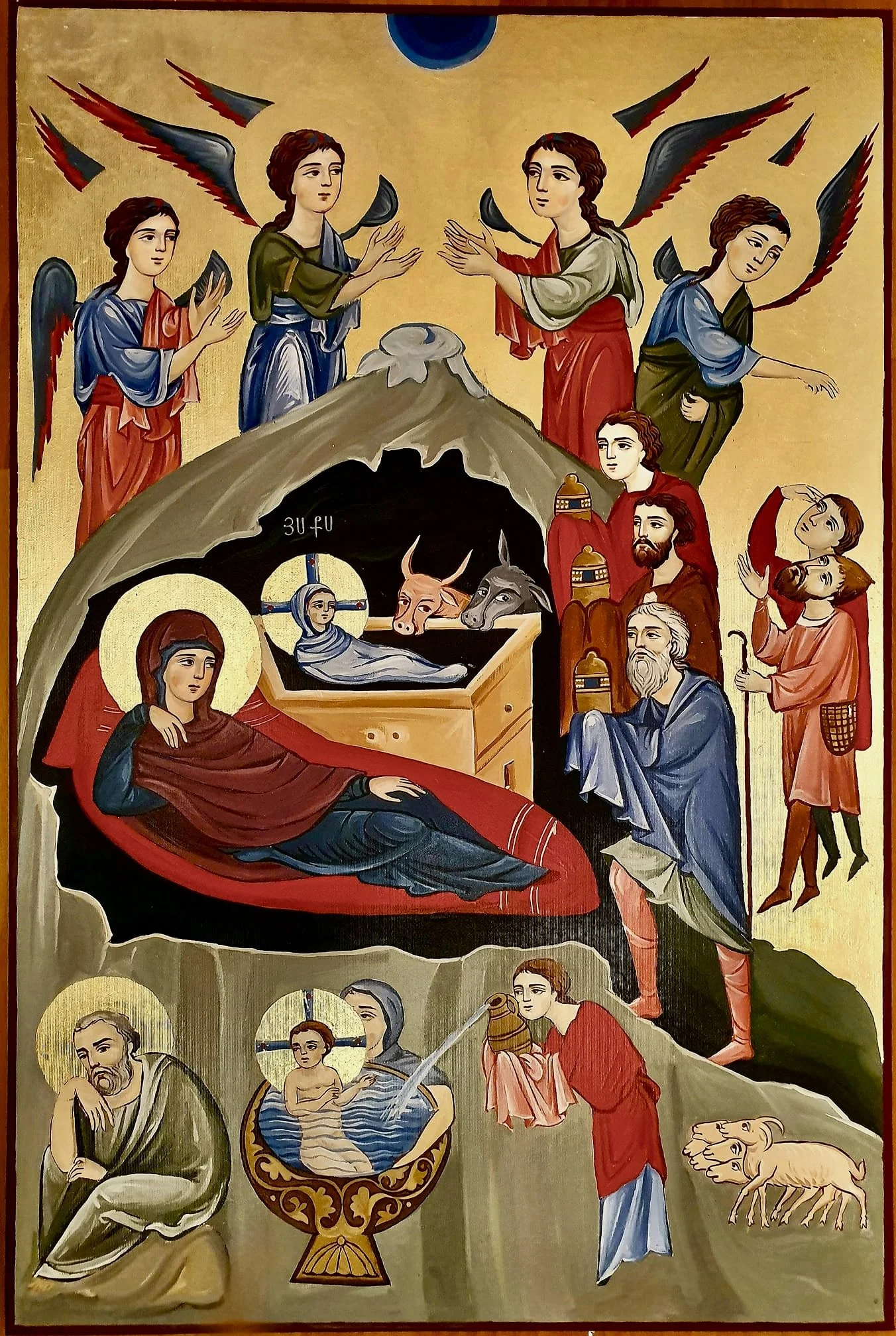
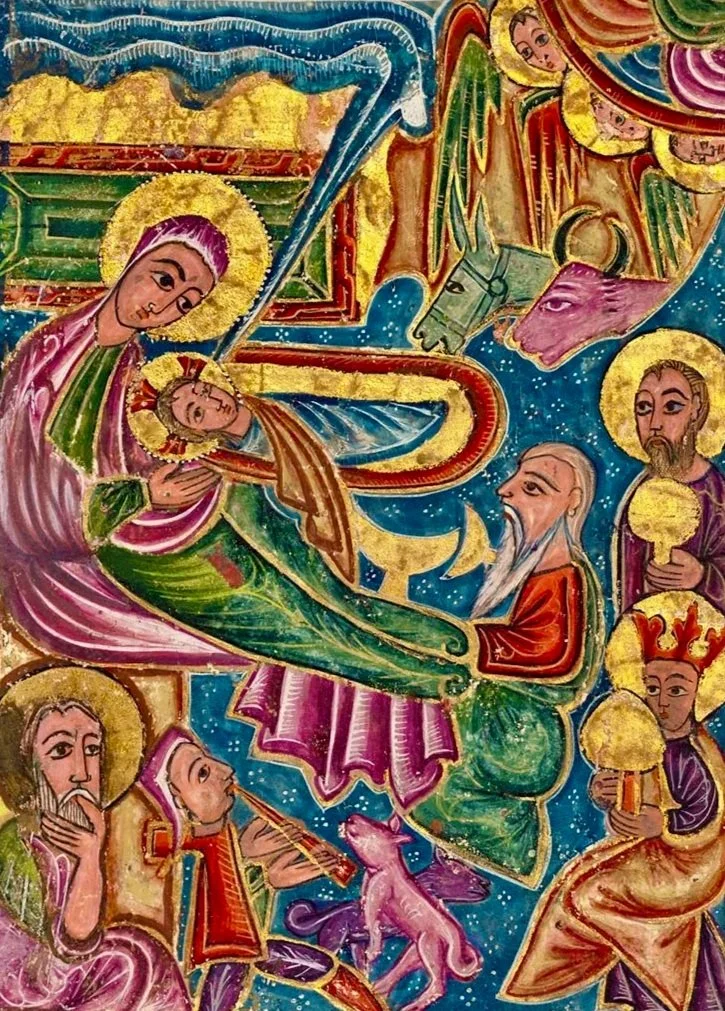
The Armenian Church celebrates the holy birth (Sourp Dznount) of Jesus Christ on January 6. In Armenian tradition, this feast commemorates not only the Nativity of Christ, but also His baptism by John the Baptist. The latter is remembered through the Blessing of Water ceremony, which follows the Divine Liturgy on the same day.
The Blessing of the Water (Ջրօրհնէք) will take place on Sunday, January 11, following the Badarak at St. Mary Armenian Church.
Why January 6?
Even in the time of the Holy Apostles, Christian traditions varied across different regions. In fact, Christmas was likely not observed at all during the earliest centuries of the Church. Over time, the mysteries of Christ’s birth and baptism came to be celebrated together on January 6.
By the end of the 3rd century, the Church in Rome began celebrating Christmas on December 25, coinciding with a major pagan festival. Many Eastern churches, however, continued to observe the feast on January 6. The Armenian Church has faithfully preserved this ancient tradition, while the Greek-speaking Christian world adopted the Latin practice in the late 4th century.
Armenian-American families may still exchange Christmas gifts on December 25 in keeping with American custom. In some Armenian churches in the United States, it has also become traditional to observe the feast of St. Stephen the Proto-Martyr on Christmas Eve (December 24), though this feast is movable and does not always fall on that date.
Preparing for the Feast
If possible, the faithful are encouraged to fast during the seven days preceding January 6 and explain its spiritual purpose to their children. On the evening of January 5, families should attend church to take part in the Christmas Eve Divine Liturgy, and return on the morning of January 6 to celebrate the Feast of the Nativity and Theophany of Our Lord.