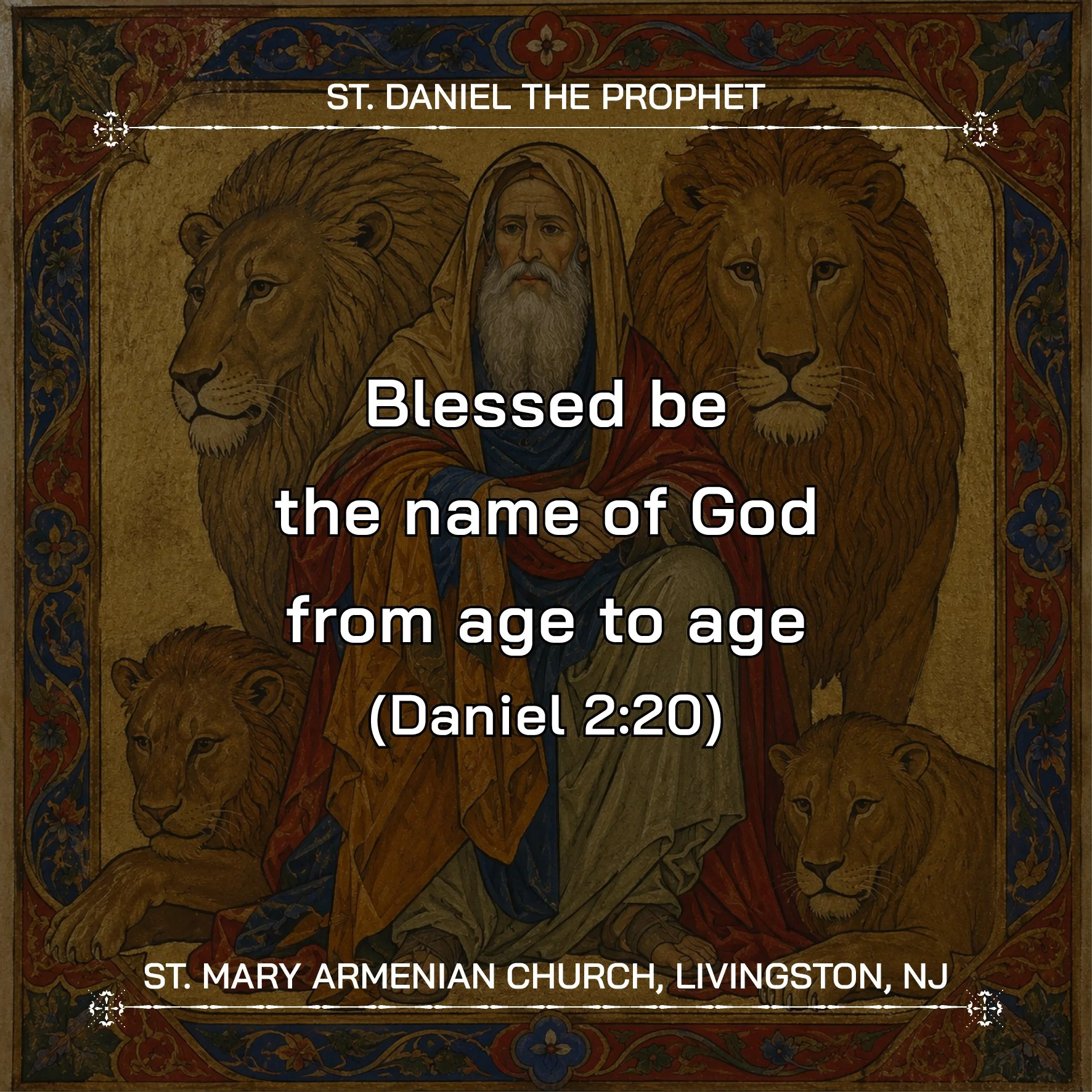
Commemoration Day of
the Prophet Daniel
and the Three Youths:
Shadrach, Meshach, and Abednego
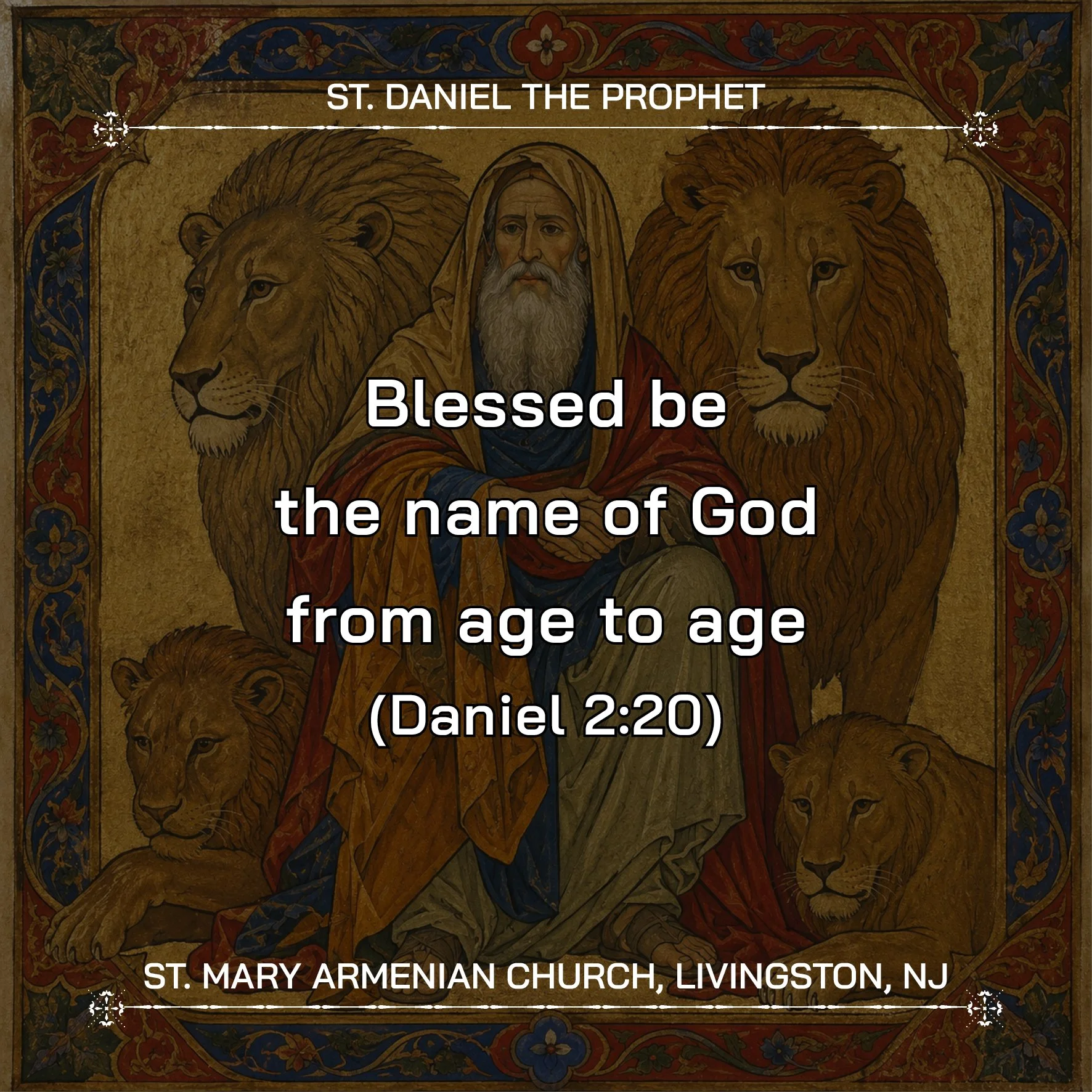
Prophet Daniel
Like Ezekiel, Daniel was among the captives who were taken to Babylon in 597 BC along with the king and the royal court. Daniel was still young when he was deported, and therefore he was selected, together with other young Israelites, to receive an education and eventually serve in government positions.
According to the royal decree, these youths were chosen from among the royal family and nobility, being: “Without blemish, handsome in appearance, skilled in all wisdom, knowledgeable, intelligent, and capable of serving in the king’s palace” (Daniel 1:3–7).
They were to be trained in the language and customs of the Chaldeans, dine from the king’s table, and undergo three years of preparation before entering royal service.
Daniel’s companions were Hananiah, Azariah, and Mishael. Their Babylonian overseer changed their names: Daniel was called Belteshazzar, Hananiah became Shadrach, Azariah became Abednego, and Mishael became Meshach.
However, Daniel and his three companions resolved not to abandon the faith and laws of their fathers. Knowing that the king’s food would likely violate Jewish dietary laws, they requested permission to eat only vegetables and drink water instead of wine. After a ten-day trial, their overseer observed that they appeared healthier than those who ate the royal food and granted their request.
The Book of Daniel contains many moving and remarkable episodes that reveal both Daniel’s God-given wisdom and the special protection of Divine Providence.
One such story concerns a righteous woman named Susanna. Two corrupt elders desired her and threatened to accuse her falsely if she refused them. Susanna chose to face slander and death rather than sin before God. The elders publicly accused her, and she was sentenced to be stoned.
But God stirred the spirit of the young Daniel, who intervened and demanded that the elders be questioned separately. Their testimonies contradicted one another, exposing their lies. As a result, the false accusers were condemned instead of the innocent woman. “And Daniel became great in the sight of the people from that day onward” (Daniel 13).
Daniel’s rise to prominence, however, became especially notable when he interpreted one of King Nebuchadnezzar’s dreams—something none of the king’s “wise men, magicians, enchanters, or astrologers” could do (Daniel 2).
Daniel’s advancement in government circles aroused jealousy. Since no fault could be found in his conduct—he was incorruptible, capable, and wise—his enemies targeted his religion. They persuaded the king to issue a decree that anyone worshipping a god other than those approved by the kingdom would be thrown into a den of lions.
Daniel had an upper room in his house with windows facing Jerusalem. Three times each day he prayed there, turning toward the Holy City. This became the basis of the accusation against him.
After confirming the facts, the king reluctantly ordered Daniel to be thrown into the lions’ den. The next morning, deeply distressed because he loved and respected Daniel, the king personally came to the den and cried out: “Daniel, servant of the living God, has your God, whom you continually serve, been able to deliver you from the lions?”
Daniel answered: “O king, live forever! My God sent His angel and shut the lions’ mouths, and they have not harmed me, because I was found innocent before Him; nor have I done any wrong before you, O king.”
The king rejoiced greatly and ordered Daniel to be lifted out of the den. No injury was found on him because he had trusted firmly in his God. His accusers were then thrown into the den, where the lions immediately devoured them (Daniel 6).
There are striking parallels between Daniel and the Patriarch Joseph:
Both were taken captive to foreign lands in their youth.
Both were exemplary young men who rose to high positions.
Both suffered injustice and emerged stronger through their trials.
Both began their rise through the interpretation of dreams.
Both lived pure lives in morally corrupt pagan societies.
Both died far from their homeland in foreign countries.
Like the Prophet Isaiah, Daniel was not only a statesman but, even more importantly, a man of God. The second half of his book consists of symbolic and prophetic visions that lift the veil from the future and reveal aspects of God’s plan. His visions possess a strongly apocalyptic character.
Daniel is mentioned in the New Testament, notably in Christ’s prophetic discourse (Mark 13:14). Moreover, the mysterious “Son of Man” whom Daniel saw—one to whom “authority, glory, and a kingdom were given, that all peoples, nations, and languages should serve Him; His dominion is an everlasting dominion”—closely corresponds to the New Testament revelation of Christ, the Son of Man.
In the Armenian Church, Daniel is commemorated together with his three companions.
The Three Youths:
Shadrach, Meshach, and Abednego
These three are inseparable from the story and commemoration of the Prophet Daniel.
As noted above, Hananiah, Azariah, and Mishael were selected by order of King Nebuchadnezzar of Babylon to receive a superior education and prepare for positions of authority. Upon completing their training, they were appointed as administrators over the affairs of Babylon.
Despite their elevated status, they never forgot God and remained faithful to His commandments. Their faithfulness became especially evident during a public ceremony.
King Nebuchadnezzar had erected a great golden image and invited all the leading officials of the empire—including these three young administrators—to its dedication. The ceremony centered on worshiping the image, which represented the supreme embodiment of Babylonian idolatry.
The three companions refused to bow before it, declaring: “We have our God in heaven, whom we already worship. Let it be known to you, O king, that we will not serve your gods, nor will we worship the golden image you have set up.”
The king was enraged and ordered them to be thrown into a blazing furnace.
Then occurred the miracle they had trusted God could perform if He so willed.
Not only were they unharmed by the flames, but they sang hymns of praise to God from within the furnace. Hearing their voices, Nebuchadnezzar was astonished. His amazement turned to awe when he saw a fourth figure walking among them, “whose appearance was like a Son of God.”
The king called out to them: “Servants of the Most High God, come out!”
When they emerged, all could see that the fire had not harmed their bodies. Their hair was not singed, their garments were untouched, and there was not even the smell of fire upon them (Daniel 3).
Then King Nebuchadnezzar proclaimed: “Blessed be the God of Shadrach, Meshach, and Abednego, who sent His angel and delivered His servants, because they trusted in Him and disobeyed the king’s command, yielding up their bodies rather than serve or worship any god except their own God. Therefore I decree that anyone of any nation or language who speaks against the God of Shadrach, Meshach, and Abednego shall be punished, for there is no other god who can save in this way.”
The king then promoted and honored these faithful and courageous young men even more.
After this event, having fulfilled their most sacred mission, the three youths quietly pass from the stage of history and are not mentioned again in Scripture.
SCRIPTURE READINGS
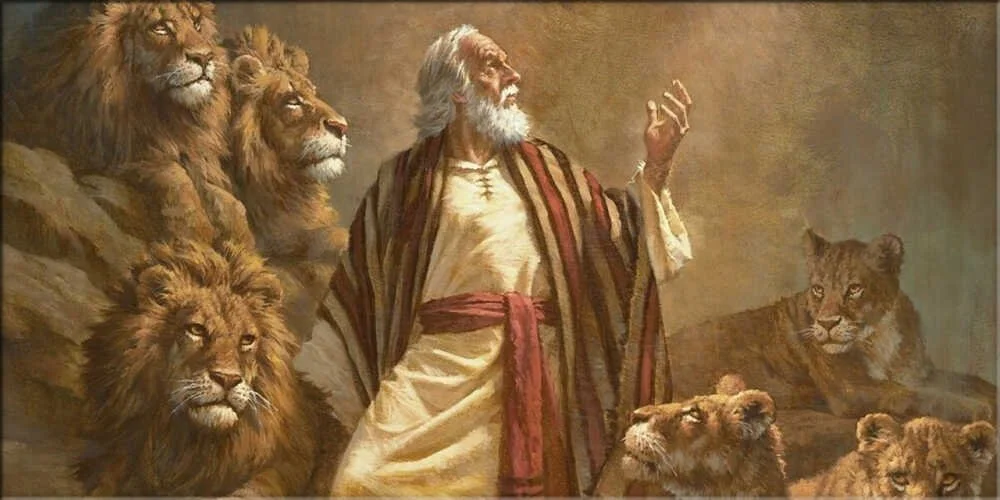
~ Daniel 2:1-49 ~
In the second year of Nebuchadnezzar's reign, Nebuchadnezzar dreamed such dreams that his spirit was troubled and his sleep left him. So the king commanded that the magicians, the enchanters, the sorcerers, and the Chaldeans be summoned to tell the king his dreams. When they came in and stood before the king, he said to them, "I have had such a dream that my spirit is troubled by the desire to understand it." The Chaldeans said to the king (in Aramaic), "O king, live forever! Tell your servants the dream, and we will reveal the interpretation." The king answered the Chaldeans, "This is a public decree: if you do not tell me both the dream and its interpretation, you shall be torn limb from limb, and your houses shall be laid in ruins. But if you do tell me the dream and its interpretation, you shall receive from me gifts and rewards and great honor. Therefore tell me the dream and its interpretation." They answered a second time, "Let the king first tell his servants the dream, then we can give its interpretation." The king answered, "I know with certainty that you are trying to gain time, because you see I have firmly decreed: if you do not tell me the dream, there is but one verdict for you. You have agreed to speak lying and misleading words to me until things take a turn. Therefore, tell me the dream, and I shall know that you can give me its interpretation." The Chaldeans answered the king, "There is no one on earth who can reveal what the king demands! In fact no king, however great and powerful, has ever asked such a thing of any magician or enchanter or Chaldean. The thing that the king is asking is too difficult, and no one can reveal it to the king except the gods, whose dwelling is not with mortals." Because of this the king flew into a violent rage and commanded that all the wise men of Babylon be destroyed. The decree was issued, and the wise men were about to be executed; and they looked for Daniel and his companions, to execute them. Then Daniel responded with prudence and discretion to Arioch, the king's chief executioner, who had gone out to execute the wise men of Babylon; he asked Arioch, the royal official, "Why is the decree of the king so urgent?" Arioch then explained the matter to Daniel. So Daniel went in and requested that the king give him time and he would tell the king the interpretation. Then Daniel went to his home and informed his companions, Hananiah, Mishael, and Azariah, and told them to seek mercy from the God of heaven concerning this mystery, so that Daniel and his companions with the rest of the wise men of Babylon might not perish. Then the mystery was revealed to Daniel in a vision of the night, and Daniel blessed the God of heaven. Daniel said: "Blessed be the name of God from age to age, for wisdom and power are his. He changes times and seasons, deposes kings and sets up kings; he gives wisdom to the wise and knowledge to those who have understanding. He reveals deep and hidden things; he knows what is in the darkness, and light dwells with him. To you, O God of my ancestors, I give thanks and praise, for you have given me wisdom and power, and have now revealed to me what we asked of you, for you have revealed to us what the king ordered." Therefore Daniel went to Arioch, whom the king had appointed to destroy the wise men of Babylon, and said to him, "Do not destroy the wise men of Babylon; bring me in before the king, and I will give the king the interpretation." Then Arioch quickly brought Daniel before the king and said to him: "I have found among the exiles from Judah a man who can tell the king the interpretation." The king said to Daniel, whose name was Belteshazzar, "Are you able to tell me the dream that I have seen and its interpretation?" Daniel answered the king, "No wise men, enchanters, magicians, or diviners can show to the king the mystery that the king is asking, but there is a God in heaven who reveals mysteries, and he has disclosed to King Nebuchadnezzar what will happen at the end of days. Your dream and the visions of your head as you lay in bed were these: To you, O king, as you lay in bed, came thoughts of what would be hereafter, and the revealer of mysteries disclosed to you what is to be. But as for me, this mystery has not been revealed to me because of any wisdom that I have more than any other living being, but in order that the interpretation may be known to the king and that you may understand the thoughts of your mind. "You were looking, O king, and lo! there was a great statue. This statue was huge, its brilliance extraordinary; it was standing before you, and its appearance was frightening. The head of that statue was of fine gold, its chest and arms of silver, its middle and thighs of bronze, its legs of iron, its feet partly of iron and partly of clay. As you looked on, a stone was cut out, not by human hands, and it struck the statue on its feet of iron and clay and broke them in pieces. Then the iron, the clay, the bronze, the silver, and the gold, were all broken in pieces and became like the chaff of the summer threshing floors; and the wind carried them away, so that not a trace of them could be found. But the stone that struck the statue became a great mountain and filled the whole earth. "This was the dream; now we will tell the king its interpretation. You, O king, the king of kings—to whom the God of heaven has given the kingdom, the power, the might, and the glory, into whose hand he has given human beings, wherever they live, the wild animals of the field, and the birds of the air, and whom he has established as ruler over them all—you are the head of gold. After you shall arise another kingdom inferior to yours, and yet a third kingdom of bronze, which shall rule over the whole earth. And there shall be a fourth kingdom, strong as iron; just as iron crushes and smashes everything, it shall crush and shatter all these. As you saw the feet and toes partly of potter's clay and partly of iron, it shall be a divided kingdom; but some of the strength of iron shall be in it, as you saw the iron mixed with the clay. As the toes of the feet were part iron and part clay, so the kingdom shall be partly strong and partly brittle. As you saw the iron mixed with clay, so will they mix with one another in marriage, but they will not hold together, just as iron does not mix with clay. And in the days of those kings the God of heaven will set up a kingdom that shall never be destroyed, nor shall this kingdom be left to another people. It shall crush all these kingdoms and bring them to an end, and it shall stand forever; just as you saw that a stone was cut from the mountain not by hands, and that it crushed the iron, the bronze, the clay, the silver, and the gold. The great God has informed the king what shall be hereafter. The dream is certain, and its interpretation trustworthy." Then King Nebuchadnezzar fell on his face, worshiped Daniel, and commanded that a grain offering and incense be offered to him. The king said to Daniel, "Truly, your God is God of gods and Lord of kings and a revealer of mysteries, for you have been able to reveal this mystery!" Then the king promoted Daniel, gave him many great gifts, and made him ruler over the whole province of Babylon and chief prefect over all the wise men of Babylon. Daniel made a request of the king, and he appointed Shadrach, Meshach, and Abednego over the affairs of the province of Babylon. But Daniel remained at the king's court.
~ Hebrews 11:32-40 ~
And what more should I say? For time would fail me to tell of Gideon, Barak, Samson, Jephthah, of David and Samuel and the prophets— who through faith conquered kingdoms, administered justice, obtained promises, shut the mouths of lions, quenched raging fire, escaped the edge of the sword, won strength out of weakness, became mighty in war, put foreign armies to flight. Women received their dead by resurrection. Others were tortured, refusing to accept release, in order to obtain a better resurrection. Others suffered mocking and flogging, and even chains and imprisonment. They were stoned to death, they were sawn in two, they were killed by the sword; they went about in skins of sheep and goats, destitute, persecuted, tormented— of whom the world was not worthy. They wandered in deserts and mountains, and in caves and holes in the ground. Yet all these, though they were commended for their faith, did not receive what was promised, since God had provided something better so that they would not, apart from us, be made perfect.
~ Holy Gospel of St. Matthew 24:9-15 ~
"Then they will hand you over to be tortured and will put you to death, and you will be hated by all nations because of my name. Then many will fall away, and they will betray one another and hate one another. And many false prophets will arise and lead many astray. And because of the increase of lawlessness, the love of many will grow cold. But the one who endures to the end will be saved. And this good news of the kingdom will be proclaimed throughout the world, as a testimony to all the nations; and then the end will come. "So when you see the desolating sacrilege standing in the holy place, as was spoken of by the prophet Daniel