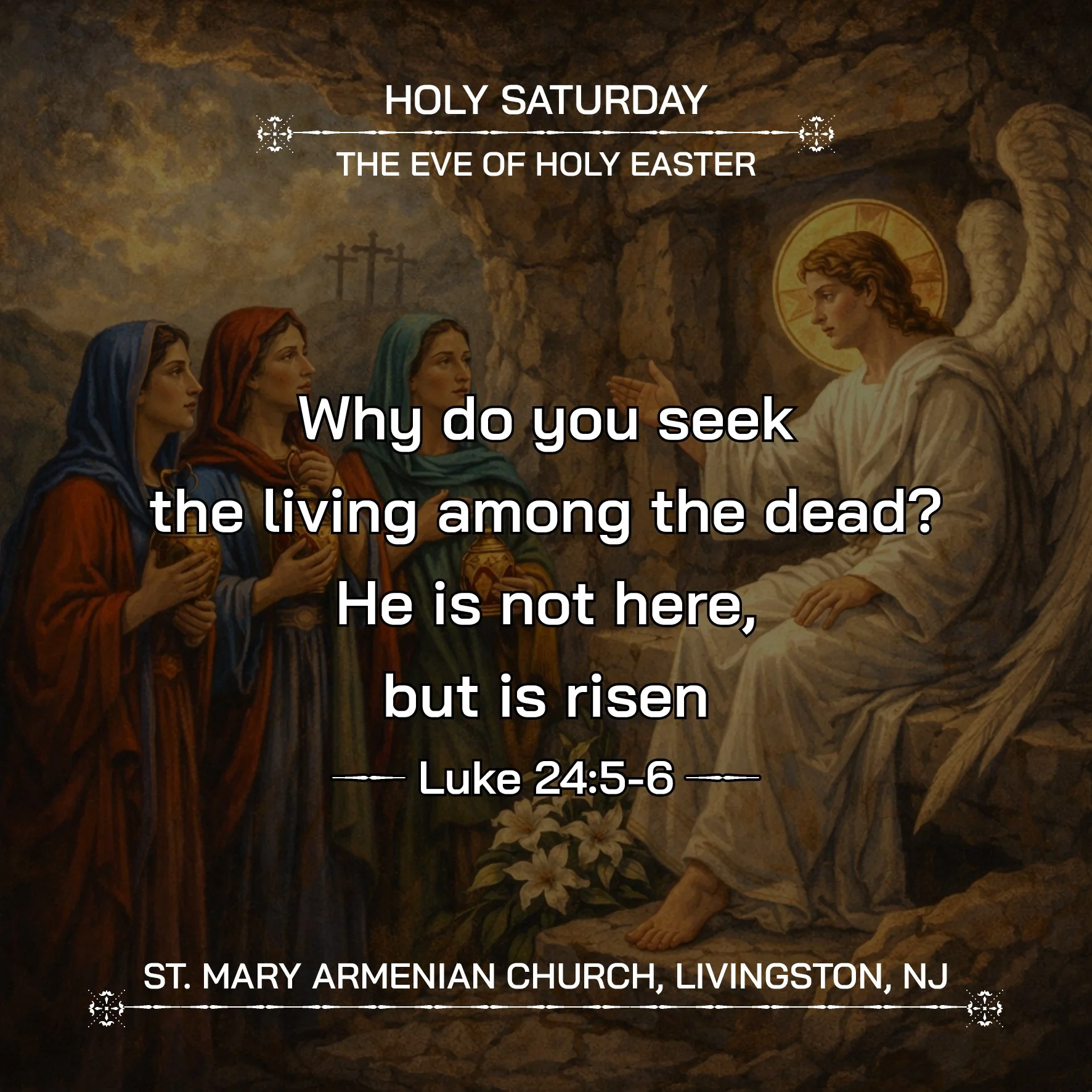
HOLY SATURDAY
THE EVE OF HOLY EASTER
CANDLELIGHT DAY
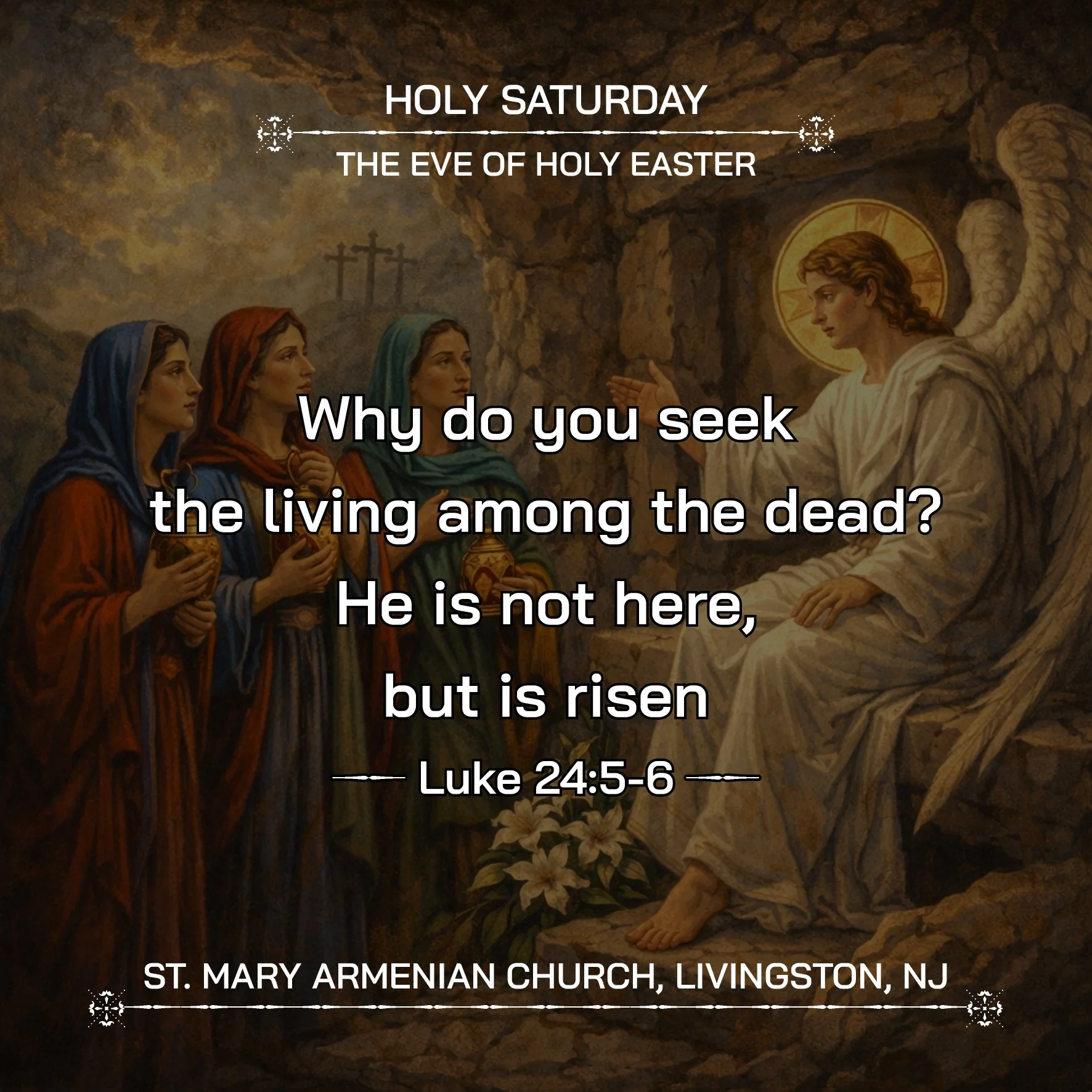
Among the five great feasts, Holy Easter holds the most important and exalted place in the life of a Christian. It has been celebrated with great joy since the glorious Resurrection of Jesus Christ, which is the victory granted to us by Christ—through His death, He crushed death.
Great Saturday represents and reflects the seventh day of Creation, when God rested from all His works. In six days, God created the temporal and perishable world, and on the seventh day, He established rest for the saints. The previous days God honored with creation, but this day He blessed and sanctified.
In the sixth period, the Savior came to suffer willingly. On this most sacred Saturday, the burial of the Lord and His rest in the tomb are remembered (Matthew 27:57–61). On this day, Jesus destroyed the dwelling place of the souls’ torment—hell—and opened the dwelling place of rest—Paradise.
At the coming of the seventh period, the Lord will return again and grant the righteous the Kingdom prepared for them from the beginning of the world—eternal rest. Although Great Saturday is the day of commemorating the Lord’s burial, the principal burial service is performed on the evening of Great Friday.
On the evening of Great Saturday, the service of the Eve of Easter (Jurakalooyts) is celebrated, thus concluding the week of the Lord’s sufferings and proclaiming His Resurrection from the dead.
The Meaning of CANDLELIGHT (JURAKALOOYTS)
The word Ճրագալոյց / Jurakalooyts means “lighting of the lamps.” In ancient times, every Sunday evening, oil was poured into lamps and they were lit. Later, the term came to refer to the evening Divine Liturgy, which in the Armenian Church is celebrated only on the eves of the Nativity and the Resurrection.
At the conclusion of the Chrāgaluyts Divine Liturgy of Holy Easter, the celebrating priest, accompanied by deacons and acolytes serving at the Holy Altar, descends from the altar in solemn procession, carrying candles, incense, the cross with the image of the Resurrection, fans, and bells. A pre-feast ceremony is then performed in the nave.
After the reading of the Gospel, the presiding clergyman, amid the chanting of hymns such as “Today He is Risen” and “Christ is Risen,” censes the faithful gathered in the church and proclaims aloud the life-giving good news:
“Christ is risen from the dead!”
And the Church, united in the joy of the Resurrection, responds:
“Blessed is the Resurrection of Christ!”
With the proclamation of the Holy Resurrection, the Great Fast, which began 48 days earlier, comes to an end. The fast is broken with fish, eggs, and oil.
At the end of the service, the faithful light their candles from the altar’s flame and take them home, symbolically carrying the light of Christ—who enlightens the world—into their lives.
With the Chrāgaluyts Divine Liturgy, the Feast of the Holy Resurrection begins.
It is an ancient tradition, dating back to the Apostles, to greet one another on both the Nativity and the Resurrection with these words. At the time of Christ’s Resurrection, they proclaimed: “The Lord is truly risen!” (Luke 24:34).
In the words “Christ is risen” is contained the essence of our faith, the strength and steadfastness of our hope, and the fullness of eternal joy and blessedness. This joyful proclamation, arising from the heart and soul, makes present in our lives the radiant presence of the Risen Savior. Clearly, these words are not meant to be spoken only on the feast day, but should be inspired by a living faith and love for God.
SCRIPTURE READINGS
~ 1 Corinthians 15:1-11 ~
Moreover, brethren, I declare to you the gospel which I preached to you, which also you received and in which you stand, by which also you are saved, if you hold fast that word which I preached to you--unless you believed in vain. For I delivered to you first of all that which I also received: that Christ died for our sins according to the Scriptures, and that He was buried, and that He rose again the third day according to the Scriptures, and that He was seen by Cephas, then by the twelve. After that He was seen by over five hundred brethren at once, of whom the greater part remain to the present, but some have fallen asleep. After that He was seen by James, then by all the apostles. Then last of all He was seen by me also, as by one born out of due time. For I am the least of the apostles, who am not worthy to be called an apostle, because I persecuted the church of God. But by the grace of God I am what I am, and His grace toward me was not in vain; but I labored more abundantly than they all, yet not I, but the grace of God which was with me. Therefore, whether it was I or they, so we preach and so you believed.
~ The Holy Gospel of St. Matthew 28:1-20 ~
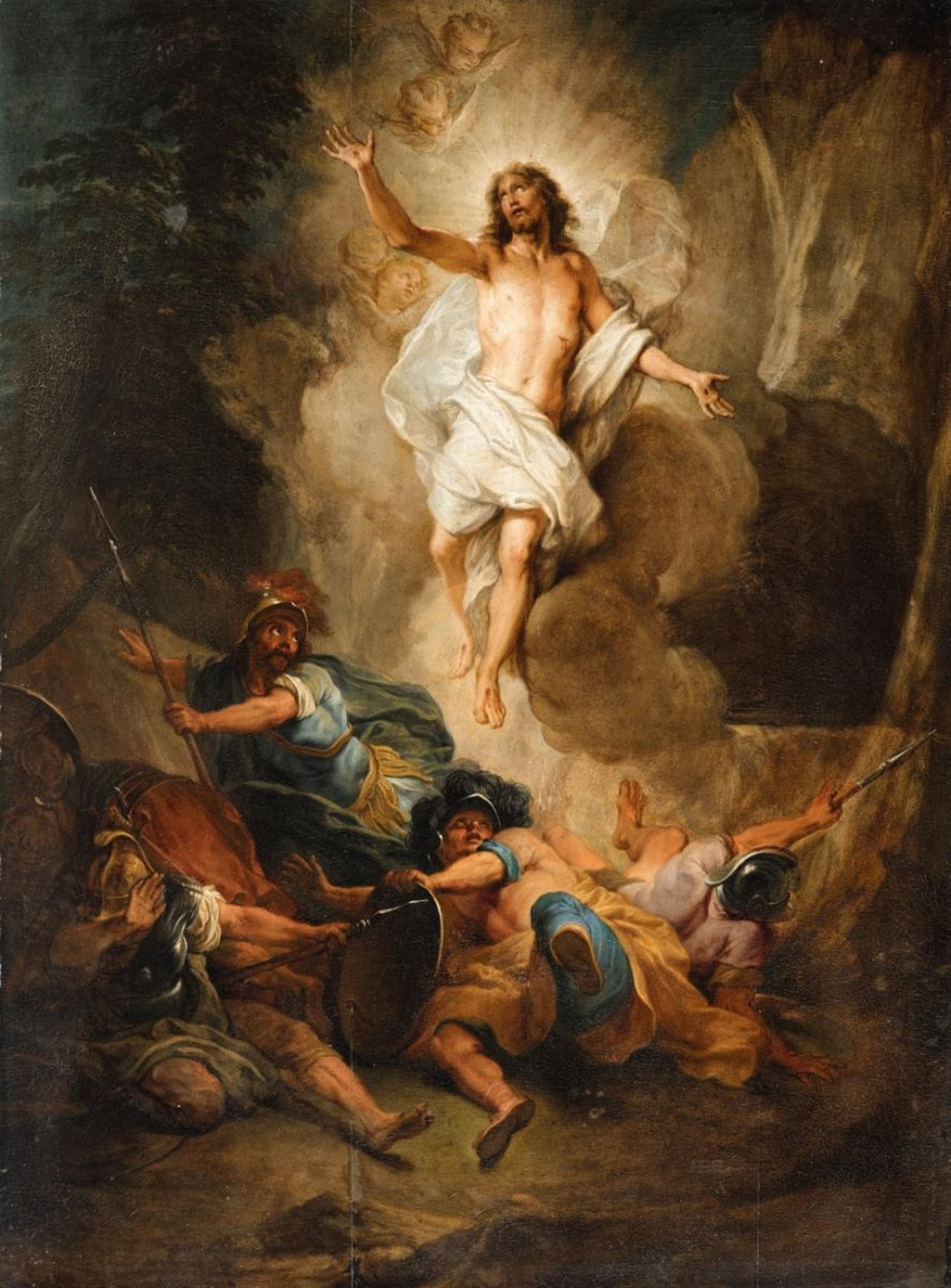
Now after the Sabbath, as the first day of the week began to dawn, Mary Magdalene and the other Mary came to see the tomb. And behold, there was a great earthquake; for an angel of the Lord descended from heaven, and came and rolled back the stone from the door, and sat on it. His countenance was like lightning, and his clothing as white as snow. And the guards shook for fear of him, and became like dead men. But the angel answered and said to the women, "Do not be afraid, for I know that you seek Jesus who was crucified. He is not here; for He is risen, as He said. Come, see the place where the Lord lay. And go quickly and tell His disciples that He is risen from the dead, and indeed He is going before you into Galilee; there you will see Him. Behold, I have told you." So they went out quickly from the tomb with fear and great joy, and ran to bring His disciples word. And as they went to tell His disciples, behold, Jesus met them, saying, "Rejoice!" So they came and held Him by the feet and worshiped Him. Then Jesus said to them, "Do not be afraid. Go and tell My brethren to go to Galilee, and there they will see Me." Now while they were going, behold, some of the guard came into the city and reported to the chief priests all the things that had happened. When they had assembled with the elders and consulted together, they gave a large sum of money to the soldiers, saying, "Tell them, 'His disciples came at night and stole Him away while we slept.' And if this comes to the governor's ears, we will appease him and make you secure." So they took the money and did as they were instructed; and this saying is commonly reported among the Jews until this day. Then the eleven disciples went away into Galilee, to the mountain which Jesus had appointed for them. When they saw Him, they worshiped Him; but some doubted. And Jesus came and spoke to them, saying, "All authority has been given to Me in heaven and on earth. Go therefore and make disciples of all the nations, baptizing them in the name of the Father and of the Son and of the Holy Spirit, teaching them to observe all things that I have commanded you; and lo, I am with you always, even to the end of the age." Amen.